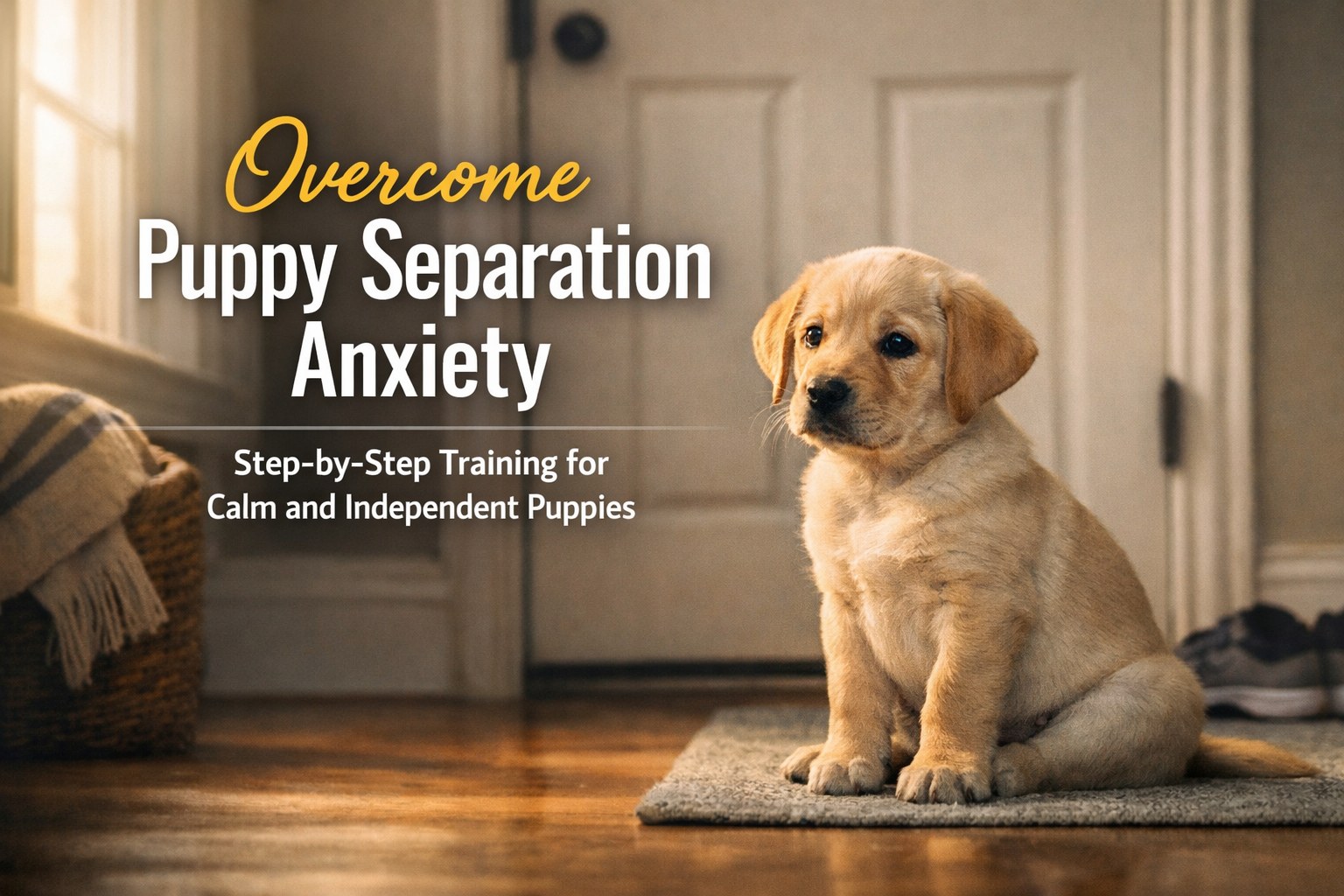
Puppy separation anxiety is among the most difficult emotional challenges that young dogs encounter. When a puppy becomes frantic as soon as the owner departs, this behavior is not a sign of stubbornness or a desire for attention. Instead, it is a stress reaction fueled by fear and attachment issues. Without a well-organized strategy, repeated panic incidents can exacerbate the cycle of anxiety.
Addressing puppy separation anxiety involves more than merely providing toys or wishing the puppy would eventually adjust. The nervous system must be conditioned to understand that being alone is safe. This learning process occurs gradually, through carefully managed steps that avoid inducing complete distress. Each calm experience reinforces the emotional connection positively.
An effective approach to puppy separation anxiety centers around three key principles: avoiding panic episodes, gradually increasing tolerance, and ensuring consistency. Hastening the process typically worsens the situation. Improvement is tracked in seconds before it is assessed in hours. This systematic training regimen aims to restore confidence in a structured manner. The objective is not to impose independence but to foster emotional control through planned exposure.

1. Stabilize the Environment Before Training Begins
Before structured exercises begin, the puppy must stop experiencing uncontrolled panic episodes. Learning cannot occur in a state of high stress. If the puppy continues to experience long absences that trigger distress, the anxiety cycle strengthens. Stabilization protects training progress.
During this stage, long departures should be temporarily minimized. If possible, arrange supervision support. This may include a family member, sitter, or adjusted schedule. The purpose is not permanent dependency. The purpose is to create a controlled learning window.
Baseline tolerance must be identified carefully. Observe how long the puppy remains calm after you leave the room. The first visible stress signal marks the current threshold. Training will begin below this point.
Watch for early threshold indicators:
- Sudden posture stiffness
- Intense staring toward the door
- Rapid breathing unrelated to temperature
- Restless pacing
- Immediate vocalization
These signals define the emotional boundary. Training must remain below this threshold at all times.
Stabilization ensures that puppy separation anxiety is not being reinforced while retraining begins. Once panic episodes are minimized and baseline tolerance is identified, controlled exposure can safely start.

2. Pre-Departure Cue Desensitization
In many cases of puppy separation anxiety, distress begins before the owner leaves. Puppies quickly associate small routines with impending absence. The sound of keys, putting on shoes, or picking up a bag can trigger anticipatory stress. When anxiety begins during these cues, the nervous system is already activated before separation occurs.
Pre-departure cue desensitization removes the predictive power of these signals. The goal is to make departure-related actions emotionally neutral. This process reduces the intensity of puppy separation anxiety before absence training even begins.
First, identify all consistent leaving cues. Common examples include:
- Picking up keys
- Putting on shoes or a coat
- Turning off lights
- Opening and closing doors
- Walking toward the exit
These actions must be practiced repeatedly without actually leaving. For example, pick up the keys and sit down. Put on your shoes and continue working inside the home. Open the door briefly and close it without exiting.
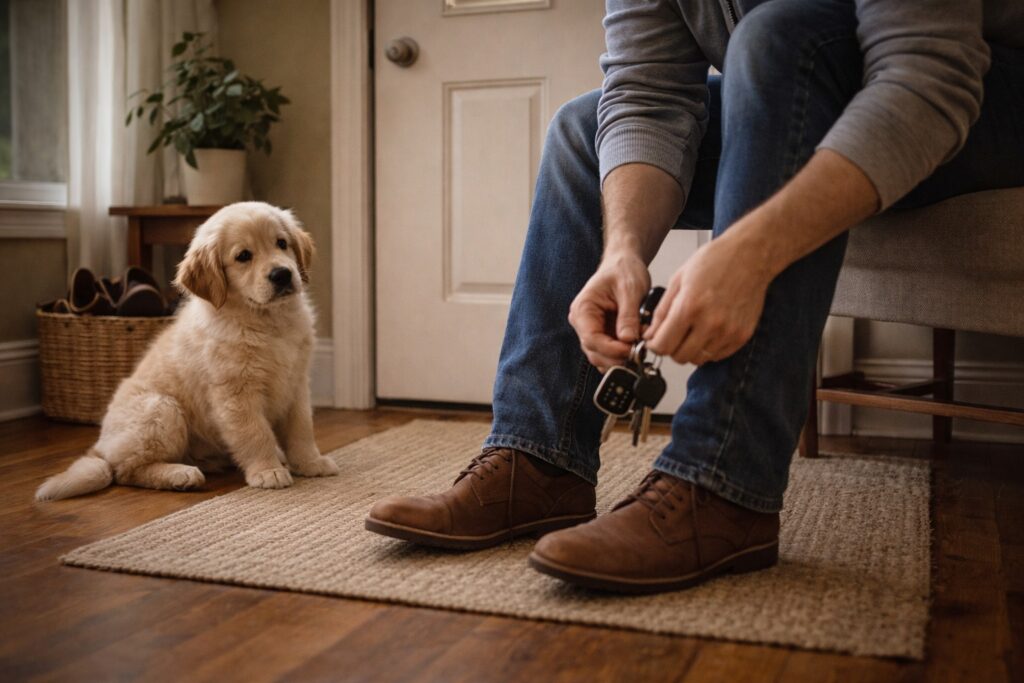
Repetition must be frequent and unpredictable. Each cue should occur multiple times per day in neutral contexts. Over time, the puppy learns that these signals no longer reliably predict absence. Emotional intensity gradually decreases.
Observe the puppy’s body language during this phase. If the puppy freezes, begins pacing, vocalizes, or follows closely when cues appear, desensitization is not yet complete. Continue neutral repetition until the puppy remains relaxed.
Pre-departure desensitization prevents anticipatory spikes in puppy separation anxiety. When cues lose their emotional charge, absence training becomes significantly more stable and controlled.
3. Micro-Absence Training and Threshold Control
Micro-absence training is the foundation of reversing puppy separation anxiety. This stage begins with absences measured in seconds, not minutes. The objective is not tolerance through endurance. The objective is a calm emotional experience during absence.
Training must occur below the puppy’s stress threshold. The stress threshold is the point at which the puppy begins to show early signs of anxiety. If the puppy vocalizes, stiffens, pants, or moves toward the door with urgency, the threshold has been exceeded. Every session must remain below this boundary.
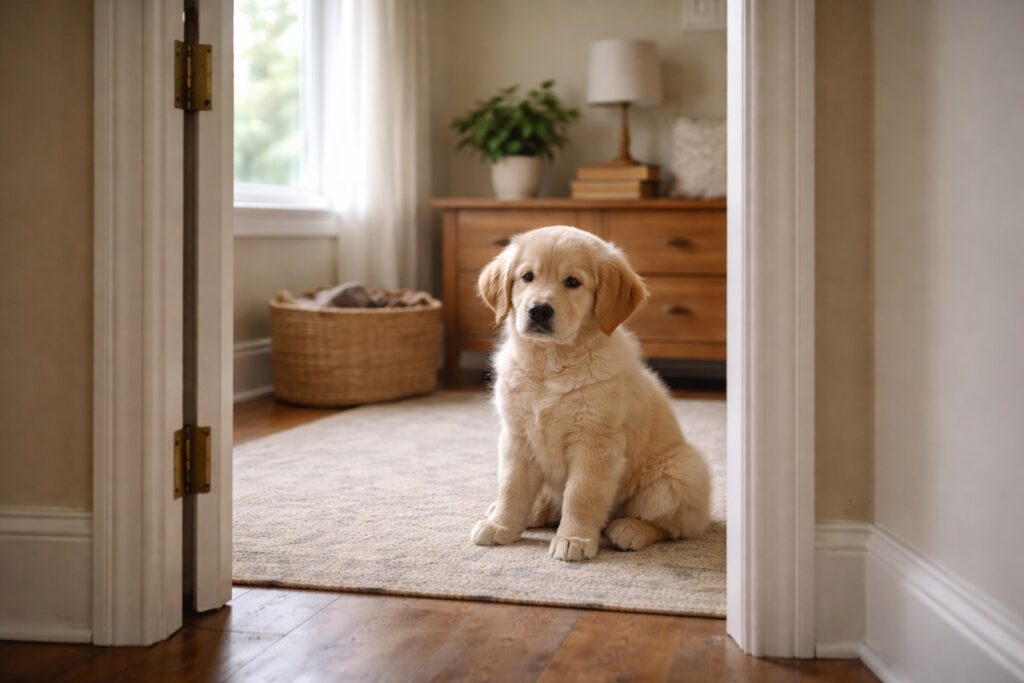
Begin by stepping out of sight for a duration shorter than the baseline identified earlier. For some puppies with separation anxiety, this may be three to five seconds. Return before any visible stress appears. Re-entry should be calm and neutral, without a dramatic greeting.
Each session should follow a consistent structure:
- Ensure the puppy is calm before starting.
- Quietly step out of sight.
- Return before stress signals emerge.
- Pause briefly before repeating.
Multiple repetitions at the same duration build emotional safety. Increase time only after several successful repetitions at the current level. Progression must be incremental and deliberate.
Watch carefully for subtle threshold indicators during micro-absences. These may include:
- Sudden stillness
- Ears pulled back
- Intense orientation toward the door
- Light panting
- Reduced engagement with surroundings
If any of these signs appear, the duration is too long. Reduce the next attempt slightly. Precision protects progress.

Micro-absence training teaches the puppy that short separations are predictable and safe. When executed correctly, puppy separation anxiety gradually shifts from panic expectation to calm anticipation.
4. Structured Duration Expansion From Seconds to Minutes
Once the puppy consistently remains calm during short micro-absences, the duration can begin to expand. This stage must remain gradual. Puppy separation anxiety improves through steady exposure, not sudden leaps in time. Skipping levels often triggers regression.
Duration increases should be modest and based on successful repetition. A puppy that remains calm at ten seconds should next attempt twelve to fifteen seconds, not thirty. The nervous system adapts best to small, predictable extensions.
A practical expansion framework may follow this pattern:
- 5 seconds repeated successfully
- 8 seconds repeated successfully
- 12 seconds repeated successfully
- 20 seconds repeated successfully
- 30 seconds repeated successfully
- 45 seconds repeated successfully
- 1 minute repeated successfully
Each level should include multiple calm repetitions before progressing. Calm means no vocalization, no pacing, no door fixation, and a relaxed body posture. Puppy separation anxiety decreases only when calm experiences outnumber distress experiences.

After one minute is achieved consistently, progression can move into multi-minute intervals. However, the first five to forty minutes are typically the most sensitive window. Many puppies show peak distress during this early absence phase.
If anxiety appears during expansion, reduce the duration to the last successful level. Remain there for additional repetitions before attempting further increase. Regression is not failure. It is information that pacing must slow.
Structured duration expansion builds confidence gradually. When executed with discipline, puppy separation anxiety shifts from an immediate panic response to stable independence tolerance.
5. Calm Departure and Neutral Return Conditioning
The emotional contrast between presence and absence can intensify puppy separation anxiety. If departures are dramatic and reunions are highly emotional, the puppy learns that absence is a significant event. Reducing this emotional contrast stabilizes the overall training process.
Departure should be quiet, brief, and predictable. Avoid extended goodbyes, repeated reassurance, or heightened tone. When leaving, maintain neutral body language and exit without hesitation. The goal is to normalize absence rather than emphasize it.
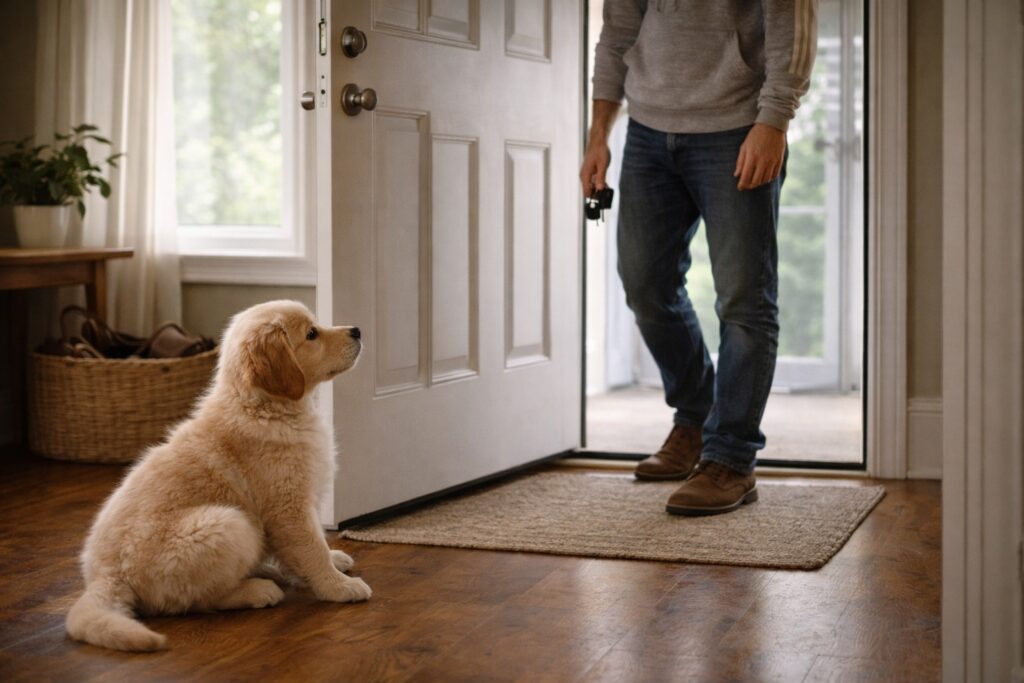
Return behavior is equally important. When re-entering the home, avoid immediate excitement. Wait for the puppy to display calm body language before offering attention. This teaches emotional regulation rather than reinforcing frantic greeting patterns often associated with puppy separation anxiety.
A consistent departure and return structure helps regulate anticipation cycles. The puppy learns that exits and entries are routine transitions, not emotionally charged events. This reduces stress spikes and prevents reinforcement of over-arousal. In cases of puppy separation anxiety, exaggerated greetings can unintentionally strengthen dependency. Calm re-entry conditions emotional stability and reinforces self-settling behavior.
6. Regression Management and Setback Handling
Regression is common during recovery from puppy separation anxiety. Progress is rarely linear. Developmental stages, environmental changes, illness, or schedule shifts can temporarily reduce tolerance. Understanding this prevents unnecessary frustration.
When setbacks occur, the correct response is not to push forward. Duration should return to the last consistently successful level. Rebuild gradually from that point. Attempting to “test” longer absences during instability often reactivates panic patterns.
Common regression triggers include:
- Growth or adolescent developmental shifts
- Household routine changes
- Increased alone-time duration
- Sudden, unexpected long absences
- Minor health discomfort
These triggers do not erase progress. They signal that the emotional threshold temporarily lowered. Puppy separation anxiety responds best to recalibration rather than acceleration.

During regression, increase repetition at shorter durations. Rebuild confidence through multiple calm sessions before extending time again. Each calm experience reinforces safety.
Avoid interpreting regression as stubbornness or refusal. Puppy separation anxiety reflects nervous system sensitivity, not willful behavior. Consistency and controlled pacing restore stability.
7. When Professional Intervention or Medication May Be Necessary
Most cases of puppy separation anxiety improve with structured training. However, some situations require professional support. Severe distress, self-injury, or inability to remain calm even for a few seconds may indicate heightened sensitivity that benefits from expert guidance.
Professional intervention becomes appropriate when the puppy exhibits:
- Continuous vocalization without pause
- Destruction that causes physical injury
- Refusal to eat in any absence context
- Persistent trembling or excessive drooling
- Extreme panic within seconds of separation
In these cases, working with a certified separation anxiety trainer or veterinary behaviorist improves outcomes. Professional supervision ensures correct pacing and prevents unintentional threshold crossing.
Medication may be considered in severe presentations of puppy separation anxiety. Medication does not replace training. It lowers overall anxiety levels so learning can occur. Short-term support can help stabilize the nervous system while behavior modification builds independence.

Medication decisions should involve a veterinarian familiar with behavioral health. Medical evaluation ensures that physical conditions are not contributing to distress. Combined behavioral and medical strategies often produce the most reliable long-term improvement.
Professional involvement is not a sign of failure. Puppy separation anxiety varies in intensity. Severe cases require structured oversight to protect both emotional welfare and household safety.
Conclusion
Collaborating with a veterinary behaviorist or a qualified separation anxiety trainer will improve outcomes in these cases. The correct pace and prevention of accidental threshold crossing are ensured by professional guidance.
In cases where the puppy shows severe signs of separation anxiety, using medication is considered. Training is not a replacement for medication. It alleviates overall anxiety to enable learning. The puppy’s nervous system can be calmed with short-term assistance while developing autonomy with behavior modification.

A veterinarian with experience in behavioral health should be consulted regarding medication. A medical checkup ensures that pain is not being provoked by physical problems. The best long-term outcome is often obtained by integrating behavioral and medicinal strategies.
Engagement in professional events does not mean failure. The puppy’s level of separation anxiety can be severe. To ensure both physical and emotional safety, severe cases require structured supervision.