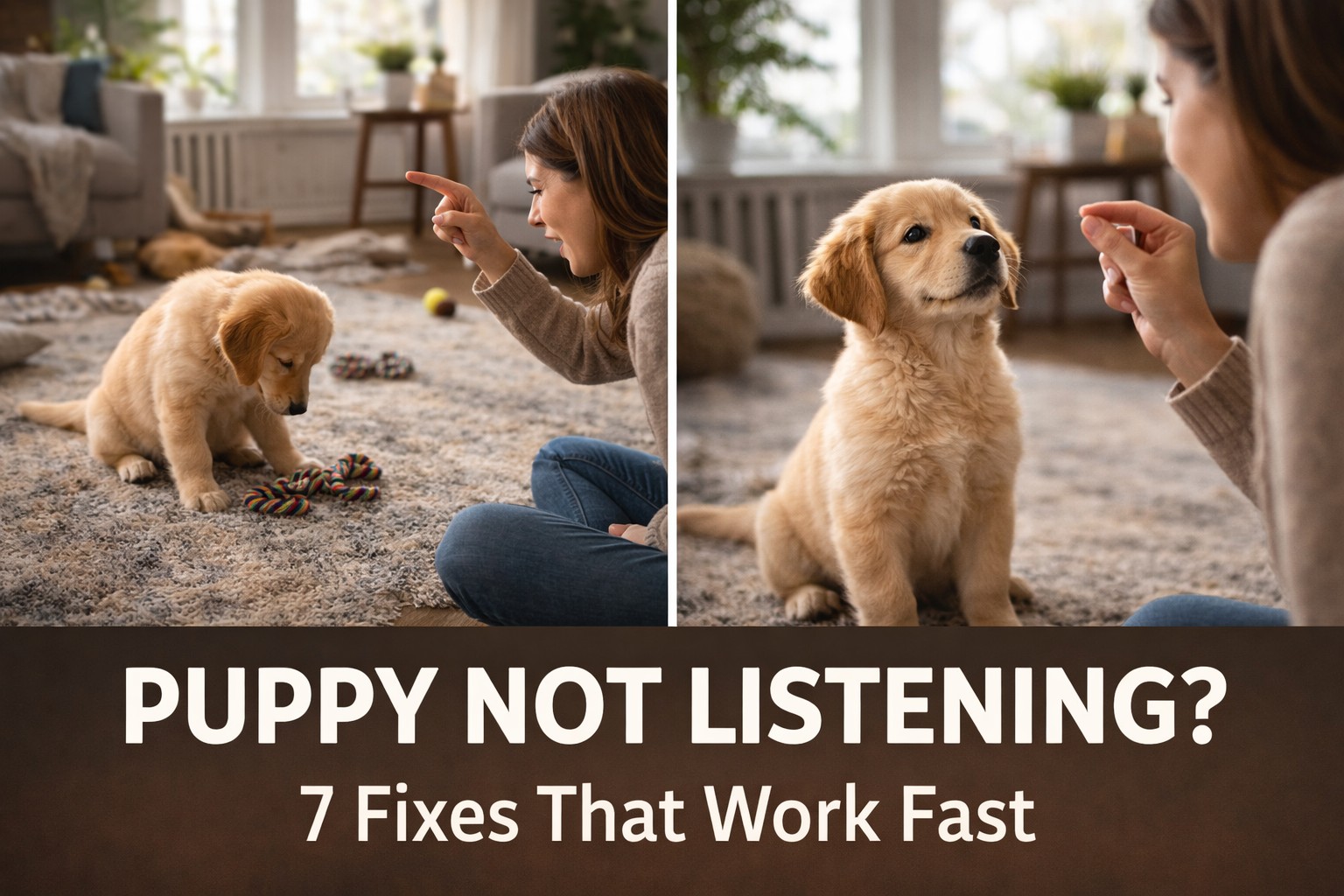
If your puppy is not listening at home, you’re not alone. You call their name, give a command, and they either ignore you or keep doing exactly what they want. It feels frustrating, especially when you expect your puppy to respond inside the house, where there are fewer distractions. But here’s the reality. When a puppy not listening at home becomes a pattern, it’s usually not stubbornness. It’s a training gap.
Your puppy is not trying to disobey you. It simply doesn’t understand what you want, isn’t motivated enough, or is in the wrong mental state to listen. Once you fix these three areas, behavior starts changing quickly. Instead of repeating commands or getting frustrated, you can guide your puppy in a way that actually works.
Why Your Puppy Is Not Listening at Home
Most people assume that if a puppy doesn’t listen at home, something is wrong with the dog. In reality, the issue is usually much simpler. Puppies don’t automatically understand commands just because you say them. Every behavior needs to be taught, practiced, and reinforced in a clear way.
There are a few common reasons behind this. First, your puppy may not understand the command at all. Words like “no” or repeated name-calling don’t carry meaning unless they are trained properly. Second, your puppy might not find it worth listening. If distractions or toys are more rewarding than you, it will choose those every time. Third, your puppy could be too excited, tired, or overstimulated to focus.
What this really means is that listening is not a personality trait. It is a skill. And like any skill, it needs to be built step by step in the right environment.
What “Not Listening” Actually Means (And What You’re Missing)
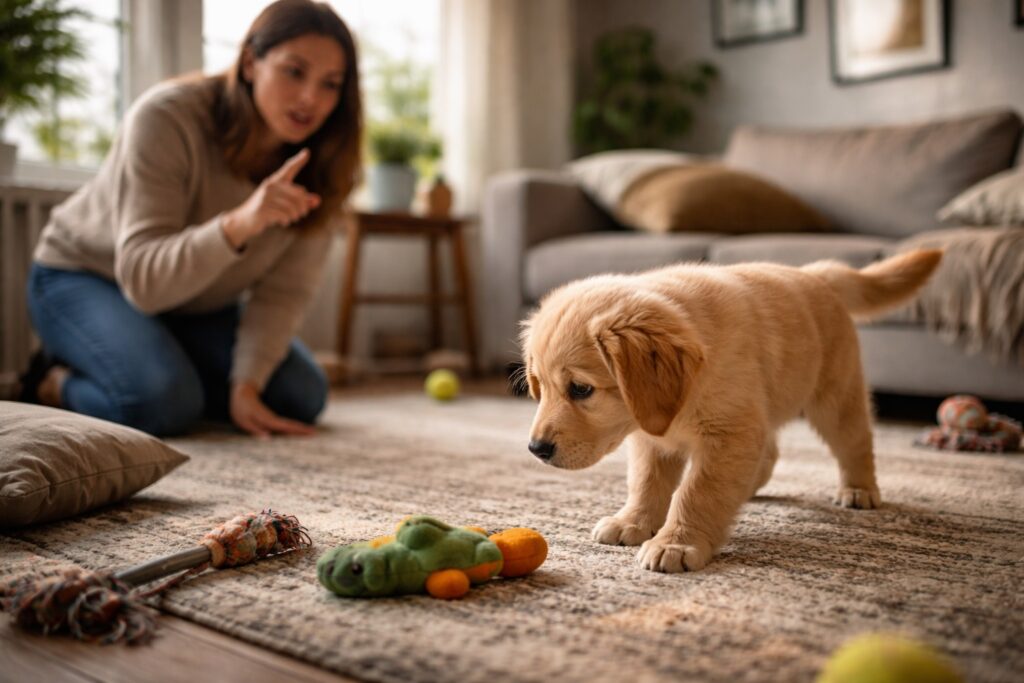
When you say your puppy is not listening at home, what you’re really seeing is a communication breakdown. Your puppy is not ignoring you on purpose. It simply doesn’t clearly understand what behavior you expect in that moment. Think about how you use commands. Sometimes you say “no” for different situations. Sometimes you repeat the same command multiple times without a response. From your puppy’s perspective, this creates confusion instead of clarity. Dogs learn best when each cue leads to one specific action.
There is also a focus issue. If your puppy is not paying attention to you, it cannot follow your command. That is why attention comes before obedience. Without focus, even the best training won’t work. The missing piece for most owners is this. Instead of trying to stop bad behavior, you need to teach your puppy what to do instead. That shift alone changes everything.
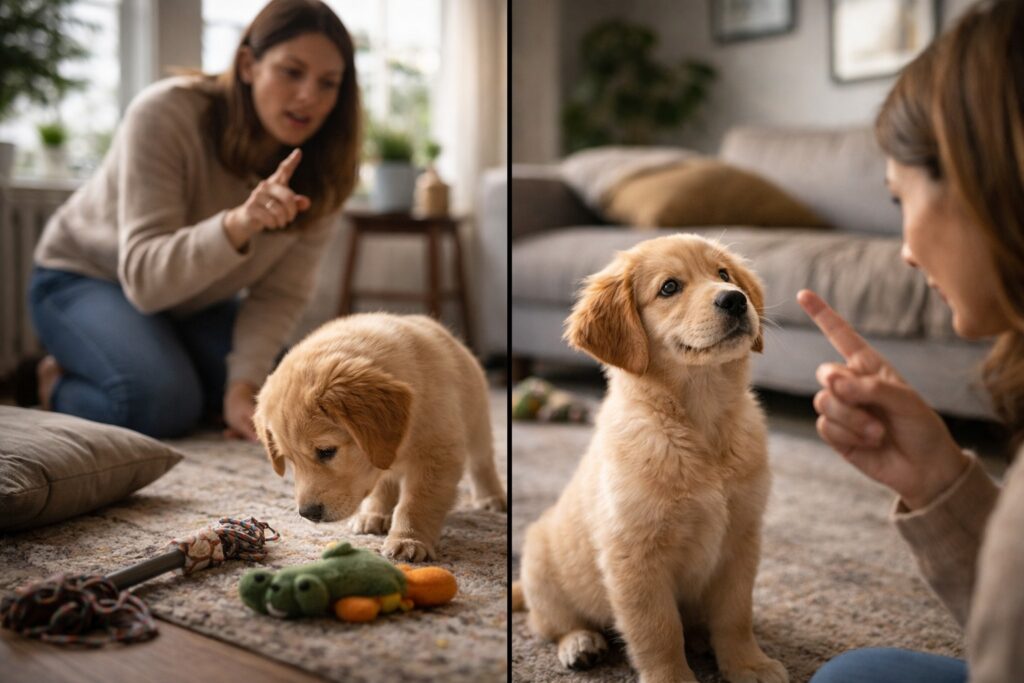
Fix #1: Teach Focus Before Commands (The “Look at Me” Rule)
If your puppy is not paying attention to you, nothing else will work. This is where most training fails. Owners jump straight into commands like “sit” or “come,” but the puppy isn’t even focused. When a puppy not listening at home becomes a problem, the first thing to fix is attention.
Start by teaching a simple focus cue like “look at me.” Hold a treat near your face and reward your puppy the moment it makes eye contact. Repeat this until your puppy naturally looks at you when you say the cue. Keep sessions short and calm so your puppy doesn’t get overwhelmed.
Once your puppy learns to focus on you, commands start working much faster. Eye contact becomes the switch that turns listening on. Without it, you are just talking into the air.
Fix #2: Stop Saying “No” — Replace It With Clear Commands
Saying “no” feels natural, but for your puppy, it doesn’t mean anything specific. It can mean stop jumping, drop that item, or come here. This confusion is one of the biggest reasons a puppy not listening at home becomes frustrating.
Instead of saying “no,” replace it with clear, teachable commands. For example, if your puppy is jumping, ask for a “sit.” If it grabs something it shouldn’t, teach a “drop it” or “trade” command. Each situation should have a specific response that your puppy understands.
When you give clear instructions, your puppy starts learning faster. You are no longer trying to stop behavior. You are guiding it toward the right behavior. That shift removes confusion and builds trust at the same time.
Fix #3: Use High-Value Rewards That Beat Distractions
Your puppy will only listen if it sees a reason to. If a toy, smell, or random object is more exciting than you, it will choose that every time. That’s why reward quality matters more than most people think.
Use rewards your puppy truly loves. This could be small pieces of chicken, cheese, or a favorite toy. The goal is simple. You need to become more rewarding than anything else in the environment. When your puppy realizes that listening to you leads to something valuable, attention improves quickly.
Also, reward timing matters. The moment your puppy follows a command, reward immediately. This creates a clear connection between action and reward. Over time, your puppy starts choosing to listen because it knows exactly what it gets in return.
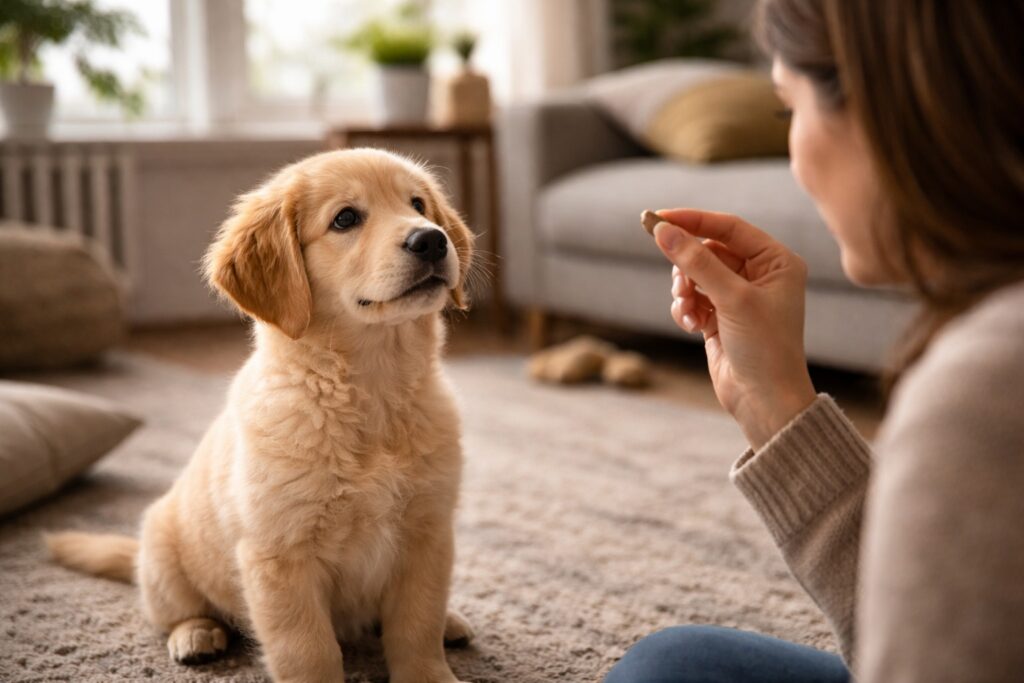
Fix #4: Fix Your Puppy’s Energy First (Exercise + Mental Stimulation)
If your puppy has too much energy, it won’t listen. Simple as that. A tired mind and body make training easier, while excess energy leads to distraction and impulsive behavior. When a puppy not listening at home becomes consistent, energy imbalance is often the hidden reason.
Before training, give your puppy age-appropriate exercise. This doesn’t mean exhausting it completely, but releasing enough energy so it can focus. Along with physical activity, include mental stimulation. Puzzle toys, short training games, or sniffing activities help calm the mind.
Once your puppy’s energy is balanced, you’ll notice a big difference. Commands that were ignored earlier suddenly start working because your puppy is now in the right state to learn.
Fix #5: Train in a Controlled Home Environment First
Even inside your home, distractions exist. Toys, sounds, and movement can easily pull your puppy’s attention away. That’s why you need to control the training environment in the beginning.
Start in a quiet, low-distraction space. Remove toys and keep the area simple. Train one behavior at a time until your puppy understands it clearly. Once it becomes consistent, slowly introduce small distractions and repeat the process.
This step-by-step exposure builds reliability. Instead of expecting perfect behavior immediately, you guide your puppy through increasing levels of difficulty. That’s how real listening develops.
Fix #6: Build Consistency With Short, Daily Training Sessions
Long training sessions don’t work with puppies. Their attention span is limited, and pushing too long leads to frustration. The better approach is short, frequent sessions throughout the day.
Train for a few minutes at a time, multiple times daily. This keeps learning fresh and prevents overload. Consistency matters more than duration. A few minutes of focused practice every day will produce better results than occasional long sessions.
Over time, these small sessions add up. Your puppy starts understanding patterns, and listening becomes more natural instead of forced.
Fix #7: Make Yourself More Engaging Than Everything Else
Here’s something most people overlook. If your puppy finds the environment more interesting than you, it won’t listen. You need to become the most engaging part of your puppy’s world.
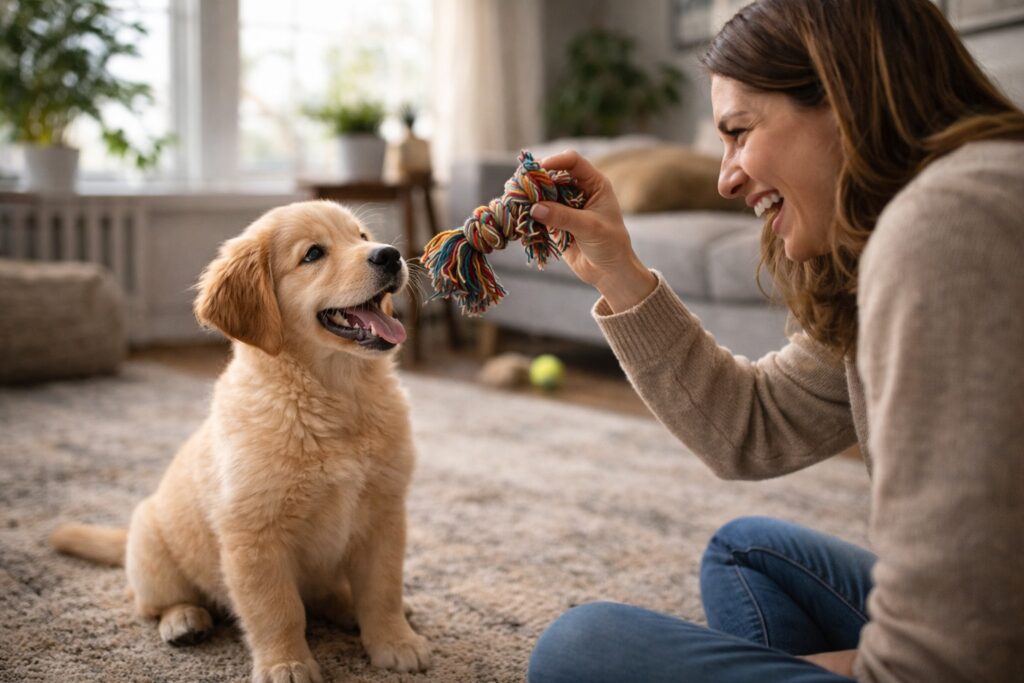
Use a lively tone, move with energy, and turn training into a game. Praise, play, and interaction should feel rewarding. When your puppy enjoys being around you, attention comes naturally.
This doesn’t mean being loud or overwhelming. It means being present and interesting enough that your puppy chooses to focus on you instead of everything else around it.
How Long Does It Take for a Puppy to Start Listening?
There’s no exact timeline, but progress usually starts within days if you apply the right approach. Full consistency takes weeks or even months, depending on your puppy’s age and personality.
What matters is not speed but direction. If your puppy is improving little by little, you’re on the right track. Expecting instant results only leads to frustration. Focus on steady progress instead.
Common Mistakes That Make Puppies Ignore You
One of the biggest mistakes is repeating commands without results. This teaches your puppy that it doesn’t need to respond immediately. Another mistake is using unclear words like “no” without teaching alternatives.
Inconsistency also creates confusion. Changing rules or routines makes it harder for your puppy to understand expectations. Finally, lack of patience can slow everything down. Training requires repetition and calm guidance.
Simple Daily Routine to Make Your Puppy Listen Faster
A structured routine makes everything easier. Feed your puppy at consistent times, schedule short training sessions, and include regular play and rest periods. Predictability reduces stress and improves focus.
Keep training short but consistent. Reward good behavior throughout the day, not just during formal sessions. Over time, your puppy starts associating you with structure and rewards, which naturally improves listening.
Conclusion
If your puppy is not listening at home, the problem is not your dog. It’s usually a mix of unclear communication, low motivation, and poor timing. Once you fix these areas, behavior starts improving quickly.
The key is to stay consistent and focus on what your puppy needs in each moment. Teach clear commands, use strong rewards, and create a calm environment for learning. With the right approach, your puppy doesn’t just listen. It understands you.