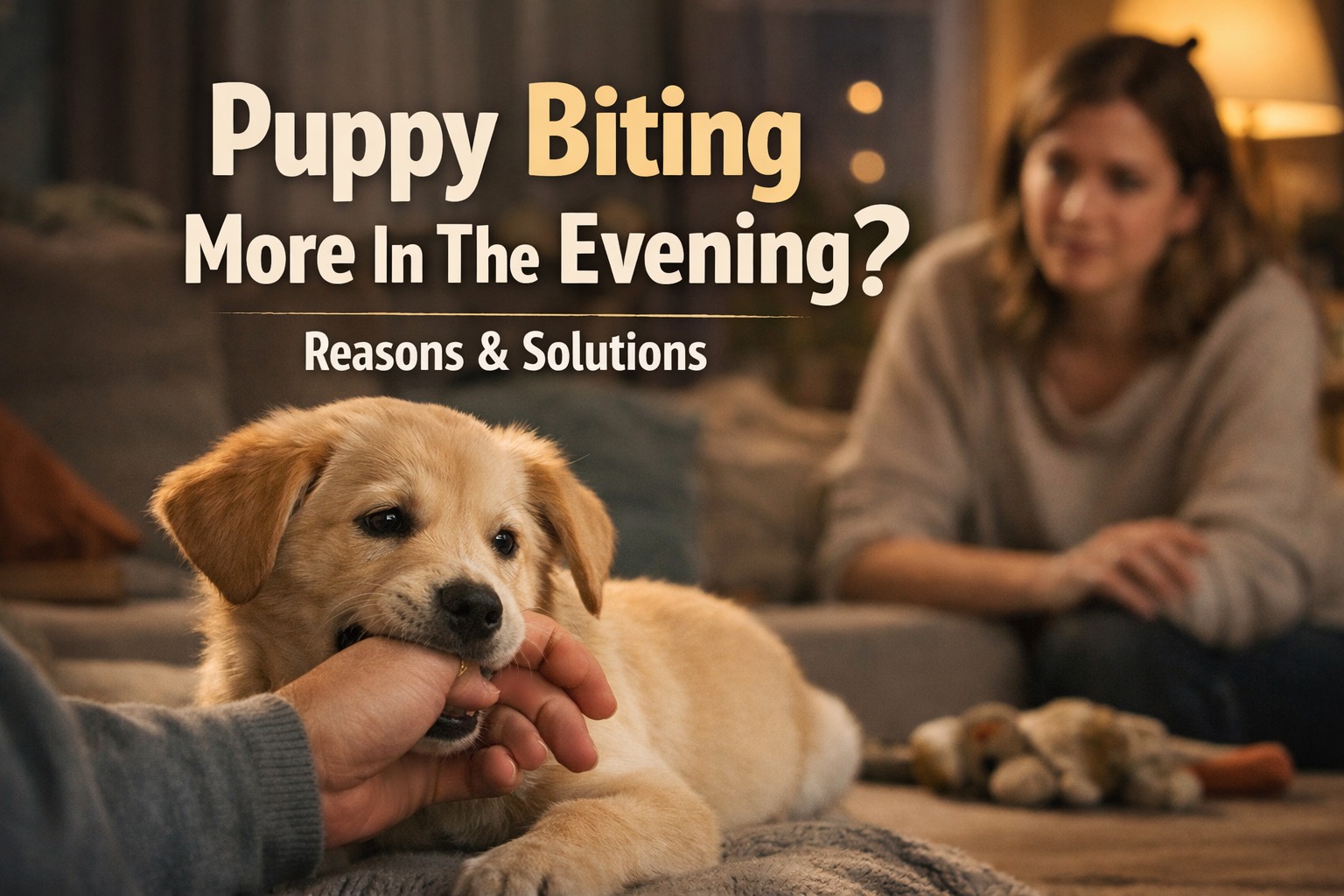
If your puppy turns into a biting machine as evening approaches, you are not imagining it. Many owners feel calm during the day, only to dread the hours before bedtime when the behavior suddenly escalates. Puppy biting more in the evening is one of the most common and misunderstood puppy issues. It often leads owners to think their puppy is aggressive, disobedient, or not learning properly, even when training seems to go well earlier in the day.
This behavior usually has less to do with stubbornness and more to do with how a puppy’s body and brain handle stimulation, fatigue, and excitement. By evening, energy has accumulated, impulse control is depleted, and self-regulation is at its weakest. Without understanding this cycle, owners often react in ways that accidentally intensify the biting instead of reducing it. That confusion creates frustration on both sides, which is exactly what we want to avoid.
This article breaks down why puppy biting more in the evening happens, what mistakes quietly make it worse, and how to stop it using calm, practical, behavior-based solutions. You will learn how to read what your puppy is actually communicating, how to structure evenings to prevent escalation, and how to respond in the moment without shouting, pushing, or feeling overwhelmed. The goal is not just fewer bites, but a calmer, more predictable end to your day.
Why Puppy Biting More in the Evening Is So Common
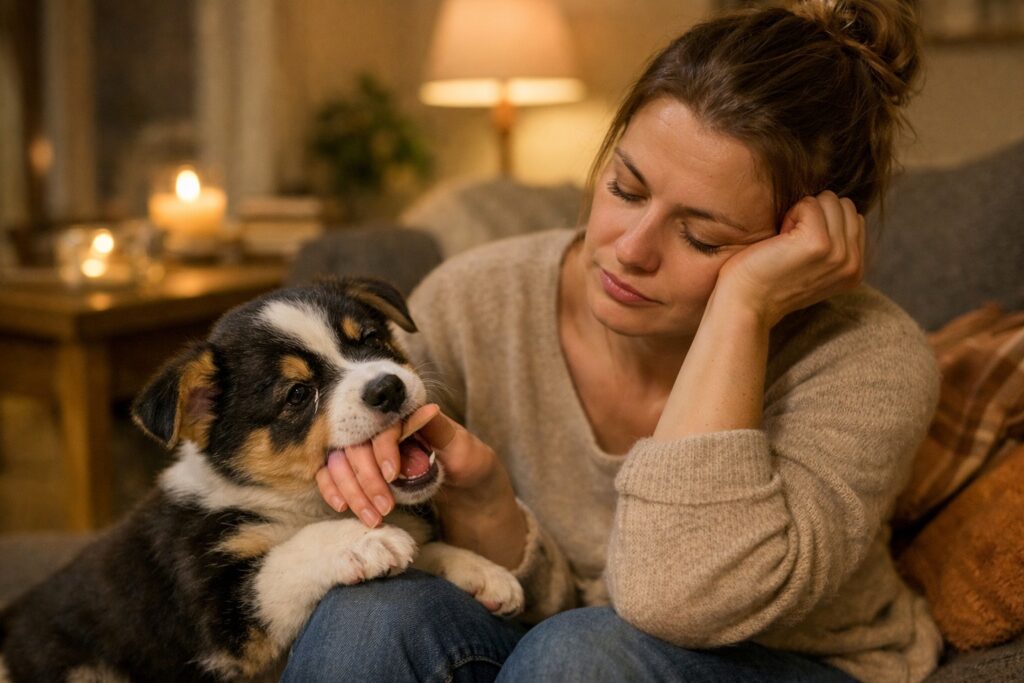
This issue matters because many owners assume something is “going wrong” when evening biting appears suddenly and intensely. In reality, puppy biting more in the evening is usually a predictable result of how a puppy’s day unfolds. Puppies do not reset their energy or emotions automatically. Everything they experience during the day stacks up, and by evening, their ability to cope drops sharply, even if they seemed well-behaved earlier.
Throughout the day, puppies process new sounds, smells, training sessions, people, and movement. Each experience requires mental effort and self-control. By evening, their brain is tired, but their body still has energy. This mismatch creates overstimulation. When puppies lose the ability to regulate impulses, biting becomes an outlet. It is not calculated behavior. It is a stress response mixed with leftover excitement.
Another reason puppy biting more in the evening feels extreme is timing. Evening is when owners finally sit down, relax, or engage closely with their puppy. That close interaction raises arousal levels fast. Hands move, voices change, and play escalates. For an overtired puppy, this combination acts like fuel on a fire. The puppy is not choosing to misbehave. Its nervous system simply cannot slow itself down without guidance.
Understanding this pattern removes a lot of guilt and frustration. Evening biting does not mean your puppy is aggressive, dominant, or failing training. It means the puppy needs help transitioning from stimulation to calm. Once you recognize that evenings are the most vulnerable time of day, you can start preventing the behavior instead of reacting to it after it explodes.
The Science Behind Evening Puppy Behavior (Energy, Brain, Body)
This section matters because understanding the biology behind the behavior prevents emotional reactions and ineffective training. When owners know what is happening inside the puppy, they stop taking the biting personally. Puppy biting more in the evening is strongly linked to how a young dog’s brain manages energy, fatigue, and impulse control as the day progresses.
A puppy’s nervous system is still developing. Self-regulation, the ability to pause before acting, is weak in young dogs and drains quickly. Every interaction during the day uses up that control. By evening, the brain is tired, but the body often still has physical energy. This imbalance creates poor decision-making. Biting becomes an automatic response, not a deliberate choice, because the puppy lacks the neurological brakes to stop itself.
Fatigue plays a counterintuitive role. Many owners believe tired puppies should be calmer, but overtired puppies behave worse. When the brain is exhausted, stress hormones rise, and frustration tolerance drops. Small triggers feel overwhelming. This is why puppy biting more in the evening often appears sudden and intense, even after what seemed like a normal day. The puppy is not energized; it is dysregulated.
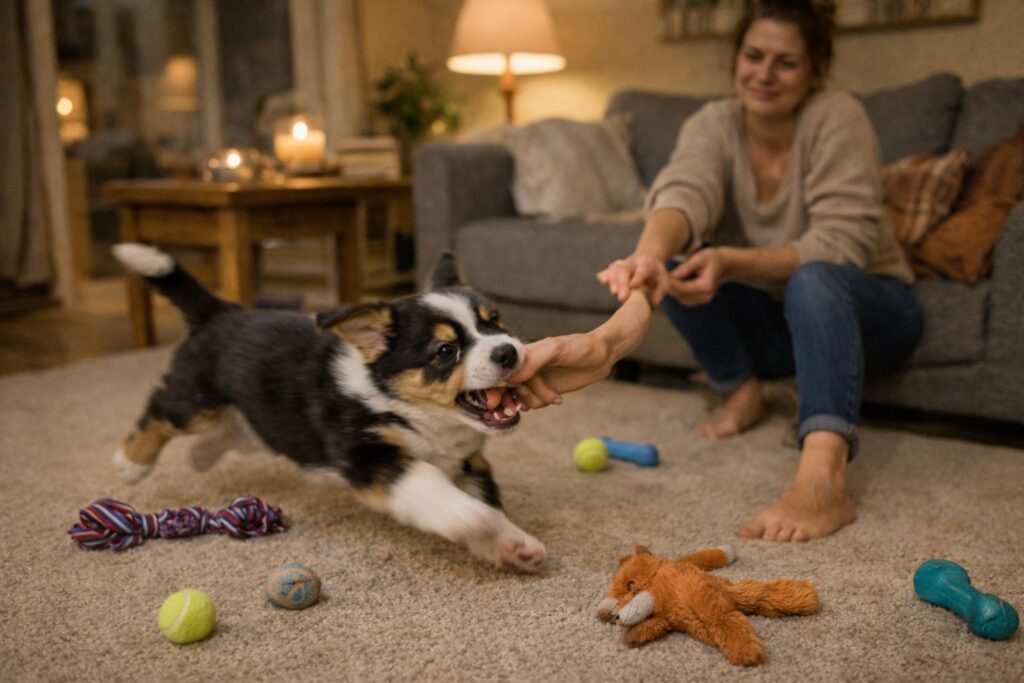
Body movement also contributes to the problem. As owners settle down at night, puppies often receive less structured activity and more unplanned interaction. Irregular play, sudden excitement, or inconsistent cues push arousal levels up without providing an outlet. Without guidance toward calm behavior, the puppy’s body releases that excess stimulation through mouthy behavior. Recognizing this mind–body connection is the foundation for fixing the issue correctly.

Common Owner Mistakes That Make Evening Biting Worse
This section matters because many well-meaning owners unknowingly reinforce the behavior they want to stop. When puppy biting more in the evening becomes routine, it is often not caused by a lack of effort, but by small reactions that escalate arousal. These mistakes usually happen when owners are tired, distracted, or emotionally drained at the end of the day, which makes consistency harder.
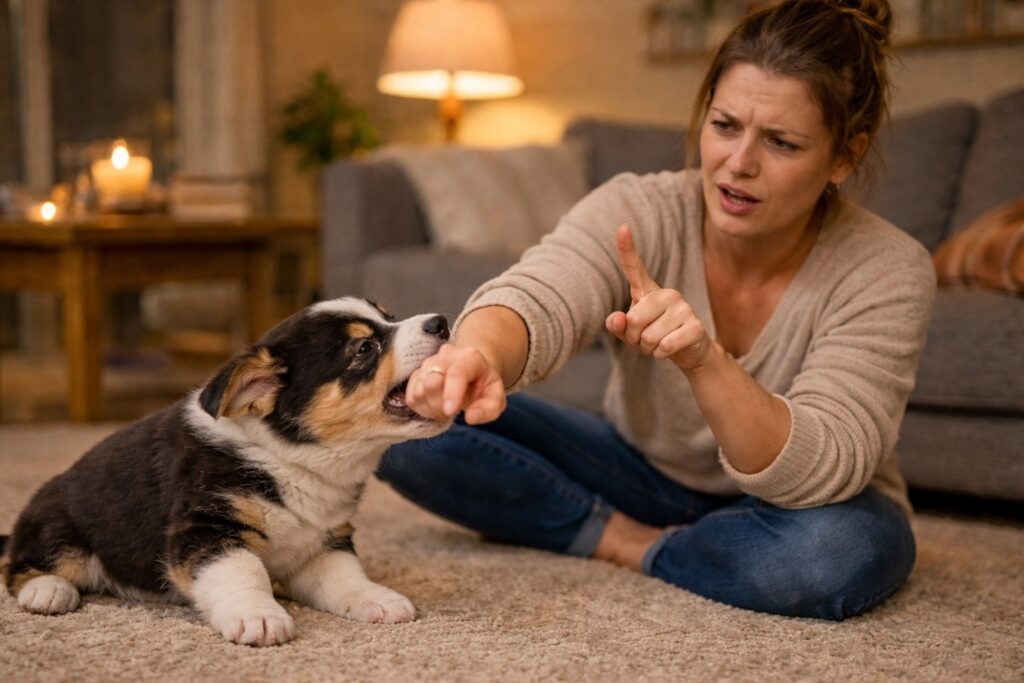
One common mistake is allowing rough play in the evening. Hands become toys, voices get louder, and movements become faster. For an already overstimulated puppy, this pushes arousal past a manageable level. Another frequent error is reacting emotionally. Yelling, pushing the puppy away, or standing up abruptly adds intensity to the moment. To the puppy’s nervous system, that reaction feels like engagement, not correction.
Inconsistency also plays a major role. During the day, owners may redirect biting calmly, but in the evening, they tolerate it “just this once” or suddenly punish it. This mixed messaging confuses the puppy. It does not learn what behavior is expected. Instead, puppy biting more in the evening becomes reinforced through attention, movement, or emotional response, even if that attention is negative.
Overexercising late in the day is another overlooked issue. Long walks, intense fetch, or high-energy games too close to bedtime raise adrenaline without allowing time to decompress. Rather than tiring the puppy out, this creates a wired, restless state. Without structured calm periods, the puppy has no way to transition smoothly into rest, making biting feel unavoidable rather than preventable.
How to Stop Puppy Biting in the Evening (Step-by-Step Solutions)
This section matters because understanding causes alone does not change behavior. Owners dealing with puppy biting more in the evening need clear, realistic actions they can apply consistently. The goal here is not to suppress energy, but to guide it. When evenings are structured correctly, biting reduces naturally because the puppy no longer reaches a state of overload.
The first step is preventing escalation before it starts. Evenings should follow a predictable rhythm. Puppies feel safer and calmer when the order of events stays consistent. Light activity should come earlier, followed by a clear wind-down period. Calm does not appear on its own. It must be taught through repetition, timing, and environment control, not through commands shouted in frustration.
Redirection must also be intentional. Simply handing over a toy is often ineffective if the puppy’s arousal is already high. The redirection should slow the puppy down, not excite it further. Chewing items that encourage steady, repetitive motion work better than squeaky or fast-moving toys. This helps the puppy release tension without escalating mouthy behavior.
Rest is another key solution that many owners underestimate. Puppies need more sleep than most people expect. When naps are skipped or pushed too late, puppy biting more in the evening becomes almost guaranteed. Scheduled rest periods earlier in the day protect the evening hours. A well-rested puppy still has energy, but it retains the ability to regulate impulses and respond to guidance.
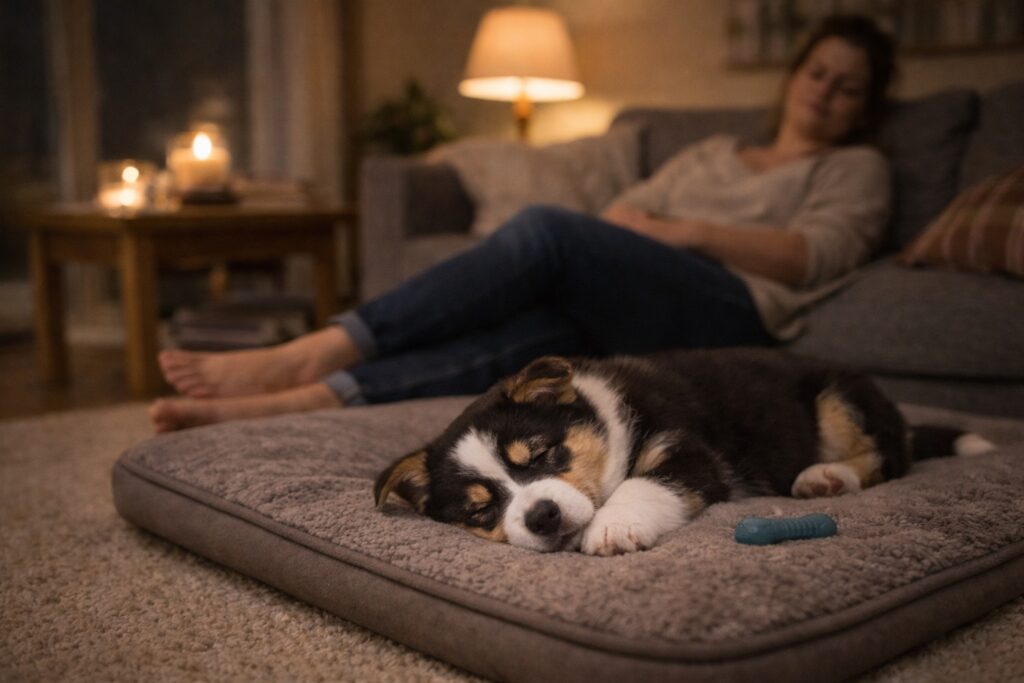
Teaching calm behavior directly is what creates long-term change. Calmness is a skill, not a personality trait. Rewarding quiet moments, using a consistent resting spot, and reducing stimulation gradually help the puppy learn how to settle. Over time, evenings stop feeling chaotic because the puppy learns what comes next and how to handle it.

What to Do in the Exact Moment Your Puppy Starts Biting
This section matters because most mistakes happen in the heat of the moment. When a puppy bites more in the evening, owners often react on instinct rather than strategy. Those instinctive reactions usually increase movement, noise, and emotion, which escalates the puppy’s arousal instead of calming it. Having a clear response plan removes panic and prevents the behavior from spiraling.
The priority is to reduce stimulation immediately. Freeze your hands, lower your voice, and slow your movements. Fast reactions feel exciting to an overstimulated puppy. Calm stillness sends the opposite signal. If biting continues, calmly stand up and remove attention without speaking. This is not punishment. It is communication. The puppy learns that biting ends the interaction, not that it creates drama.
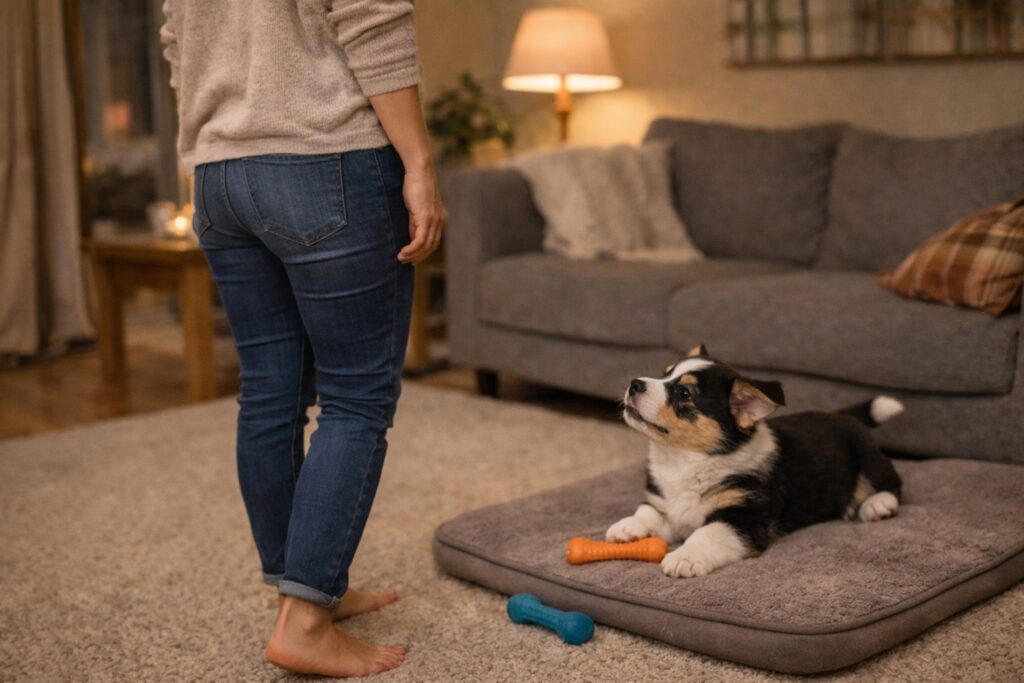
Redirection should only happen once the puppy’s intensity drops slightly. Offering a chew or directing the puppy to a resting area works best after disengagement, not during chaos. Timing is critical. Redirecting too early can reward the biting. Redirecting too late can feel like rejection. This balance is what stops puppy biting more in the evening from becoming a repeated cycle.
Consistency matters more than firmness. Every person in the household must respond the same way. If one person laughs, another yells, and another ignores, the puppy receives conflicting information. Clear, predictable responses help the puppy’s nervous system learn faster. Over time, the puppy begins to pause before biting because the outcome becomes boring and predictable rather than exciting.
When Puppy Biting in the Evening Is NOT Normal
This section matters because not all biting should be dismissed as a normal puppy phase. Many owners hesitate to question the behavior and assume time alone will fix it. In some cases, that delay allows the problem to become harder to manage. Understanding when puppy biting more in the evening crosses the line helps owners respond early and correctly, instead of reacting emotionally or ignoring important warning signs.
Normal evening biting usually looks loose and playful. The puppy’s body stays relaxed, movements remain bouncy, and the puppy can disengage when redirected. In contrast, concerning behavior feels different. If the puppy’s body becomes stiff, the biting intensifies instead of easing, or the puppy repeatedly clamps down without releasing, the behavior may be driven by stress or frustration rather than excess energy.
Age and progression also matter. Young puppies naturally explore the world with their mouths, but improvement should appear gradually with guidance and routine. If puppy biting more in the evening remains intense despite proper rest, structured evenings, and calm responses, it suggests the puppy is struggling to cope rather than simply playing. At this point, additional support becomes appropriate, not excessive.
Physical discomfort can also lower a puppy’s tolerance in the evening. Teething pain, digestive upset, or lack of quality sleep often surface when the puppy is already tired. When biting is paired with sudden behavior changes, restlessness, or appetite shifts, a veterinary check helps rule out underlying discomfort. Addressing the real cause prevents unnecessary training pressure and keeps the puppy’s well-being as the priority.

How Long This Phase Lasts and What Real Progress Looks Like
This section matters because many owners give up too early when they do not see fast results. When a puppy bites more in the evening and continues for weeks, it can feel endless and discouraging. In reality, puppy behavior develops in stages, not overnight. Understanding the normal timeline helps owners stay consistent instead of constantly changing methods that confuse the puppy further.
For most puppies, evening biting peaks during early teething and high-growth periods. As the brain matures, impulse control slowly improves. Progress usually shows up in subtle ways. Biting episodes become shorter, recovery after redirection happens faster, or the puppy starts choosing a chew instead of hands. These small shifts indicate the nervous system is learning, even if biting has not disappeared completely.
Setbacks are part of the process. Missed naps, busy days, guests, or schedule changes often trigger temporary regression. This does not mean training has failed. It means the puppy’s coping skills are still fragile. When routines remain stable, puppy biting more in the evening gradually loses intensity, and predictability improves. Calm evenings become more frequent, even if occasional rough days still happen.
The most reliable sign of real progress is control, not perfection. When biting no longer feels explosive, when you can predict triggers, and when your puppy settles faster with guidance, you are moving in the right direction. Consistency, rest, and calm handling shape long-term behavior far more effectively than force or impatience.

Conclusion
Evening biting can feel exhausting, especially when it happens after a long day and seems to undo all the progress made earlier. The key point to remember is that puppy biting more in the evening is usually not about defiance or aggression. It is a sign that the puppy’s brain and body are overloaded and struggling to self-regulate. When owners shift their mindset from correction to understanding, their responses become calmer and more effective.
The most reliable improvement comes from prevention rather than reaction. Structured evenings, adequate rest, and predictable routines reduce overstimulation before it turns into biting. Calm disengagement, consistent responses, and teaching the puppy how to settle create long-term change. Avoiding emotional reactions and late-night overexcitement protects both the puppy’s nervous system and the owner’s patience.
With time, consistency, and realistic expectations, evening biting fades as impulse control develops. Progress may be slow, but it is measurable and meaningful. When evenings become calmer and biting loses its intensity, you know the approach is working. What starts as a frustrating phase often ends as a lesson in communication, helping build a stronger, more trusting relationship with your puppy.