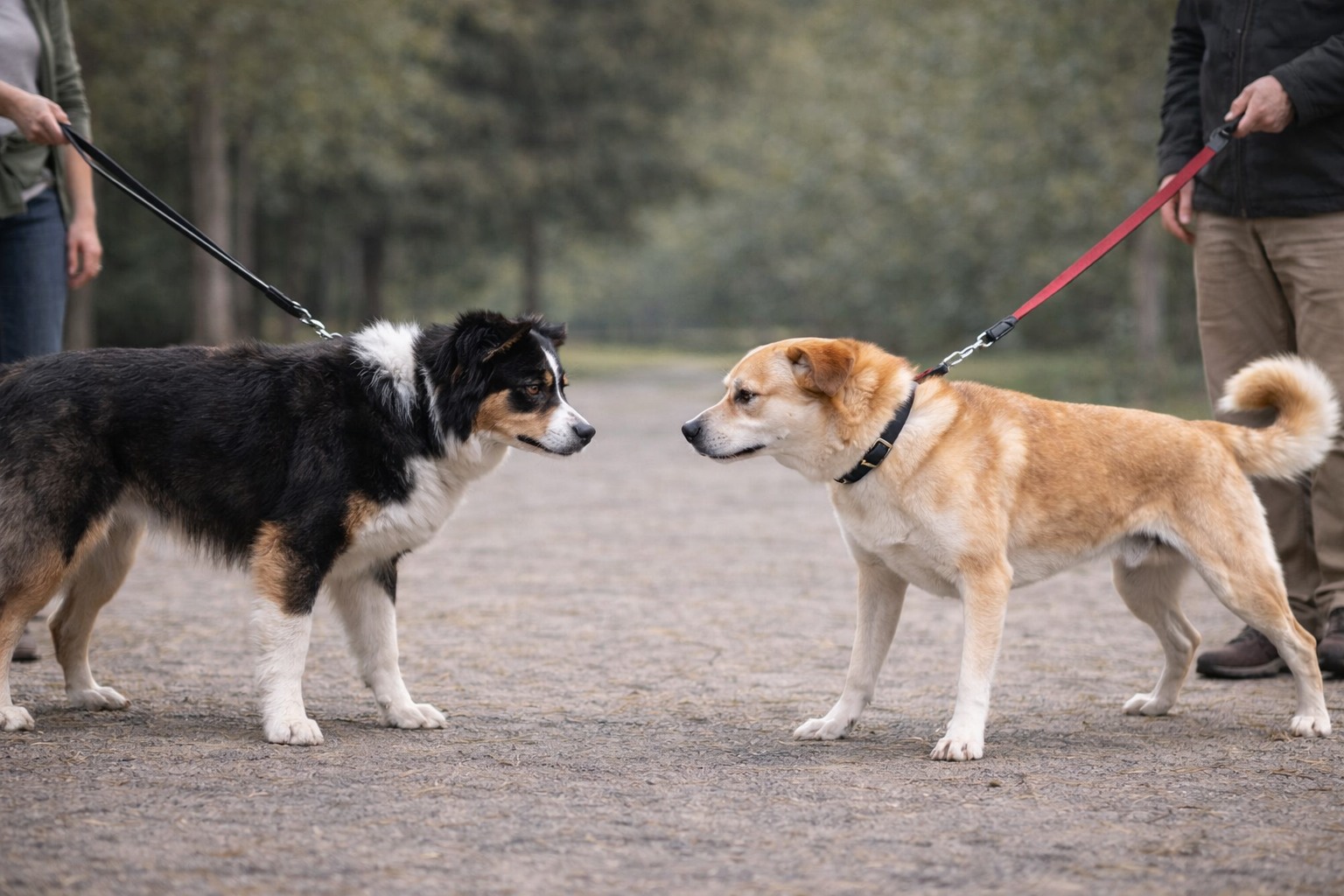
Dog on dog aggression is one of the most stressful behavioral problems an owner can face. It can appear suddenly or gradually, and it often leaves people confused about what triggered it. Understanding dog-on-dog aggression requires more than labeling a dog as dominant or aggressive. It involves recognizing patterns, triggers, body language, and environmental factors that influence behavior.
Many owners assume aggression means a dog is “bad” or beyond help. In reality, most cases of dog-on-dog aggression stem from fear, frustration, poor social experiences, or unmanaged arousal. When the underlying cause is identified correctly, the behavior can often be reduced significantly through structured training and environmental control.
Before jumping into solutions, it is important to understand what this behavior truly represents and why it develops. Without that clarity, training efforts often fail or even make the situation worse.
What Dog on Dog Aggression Really Means
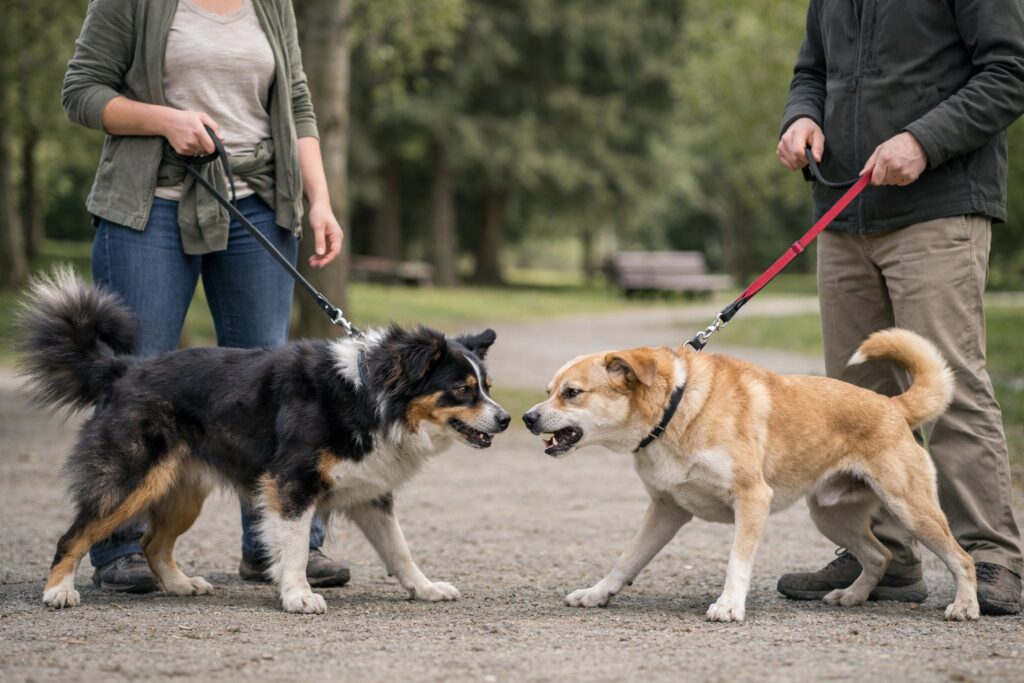
Dog-on-dog aggression refers to hostile or threatening behavior directed by one dog toward another dog. This can include growling, stiff body posture, snapping, lunging, or fighting. The behavior may occur on leash, at dog parks, inside the home, or around specific triggers such as food or toys.
Not all aggressive-looking behavior is true aggression. Dogs may display warning signals to create distance without intending to fight. Many people confuse defensive communication with uncontrolled aggression. Misreading these signals can escalate conflict because owners may react with tension or punishment rather than with management and redirection.
Aggression between dogs often exists on a spectrum. At one end, there is mild reactivity, such as barking and pulling on the leash. At the other end, there are full-on physical fights that require separation. Identifying where a dog falls on this spectrum helps determine the appropriate intervention strategy.
Understanding this distinction matters because treatment for mild reactivity differs from managing severe conflict. Without this assessment, attempts to stop dog on dog aggression may be ineffective or unsafe.
Why Dog on Dog Aggression Happens
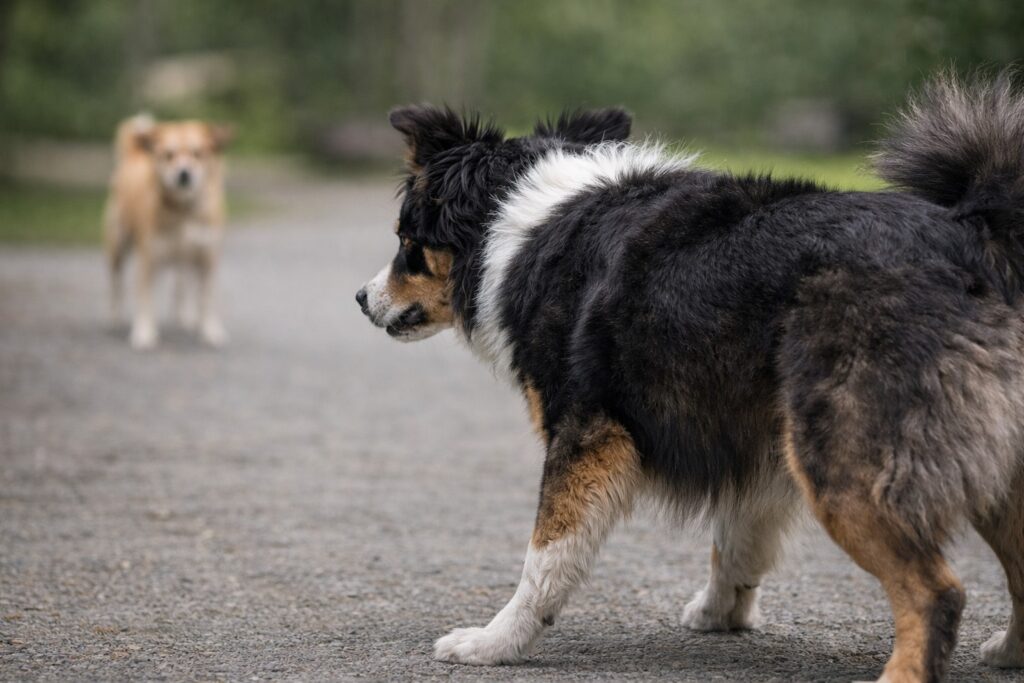
Understanding why dog on dog aggression happens is critical before attempting any correction. Many owners try to stop the behavior without identifying the root cause, which often leads to frustration and inconsistent results. Aggression is rarely random. It usually develops from a specific emotional state combined with environmental triggers.
Different dogs show dog-on-dog aggression for different reasons. Treating all cases the same is one of the biggest mistakes in behavior modification. Identifying the correct category allows training to target the real emotional driver rather than just suppressing visible reactions.
Fear-Based Aggression
Fear is one of the most common causes of dog on dog aggression. A dog that feels unsafe around other dogs may display defensive behavior to create distance. This often appears as barking, lunging, a stiff posture, or snapping when another dog approaches too closely.
These dogs are not trying to dominate. They are trying to prevent a perceived threat. Past negative experiences, poor early socialization, or genetic sensitivity can contribute to this pattern. Punishing fear-based aggression usually intensifies it because the underlying anxiety remains unresolved.
When fear drives the behavior, the focus must shift to controlled exposure and confidence building. Simply forcing interactions often makes dog-on-dog aggression worse.
Frustration and Barrier Reactivity
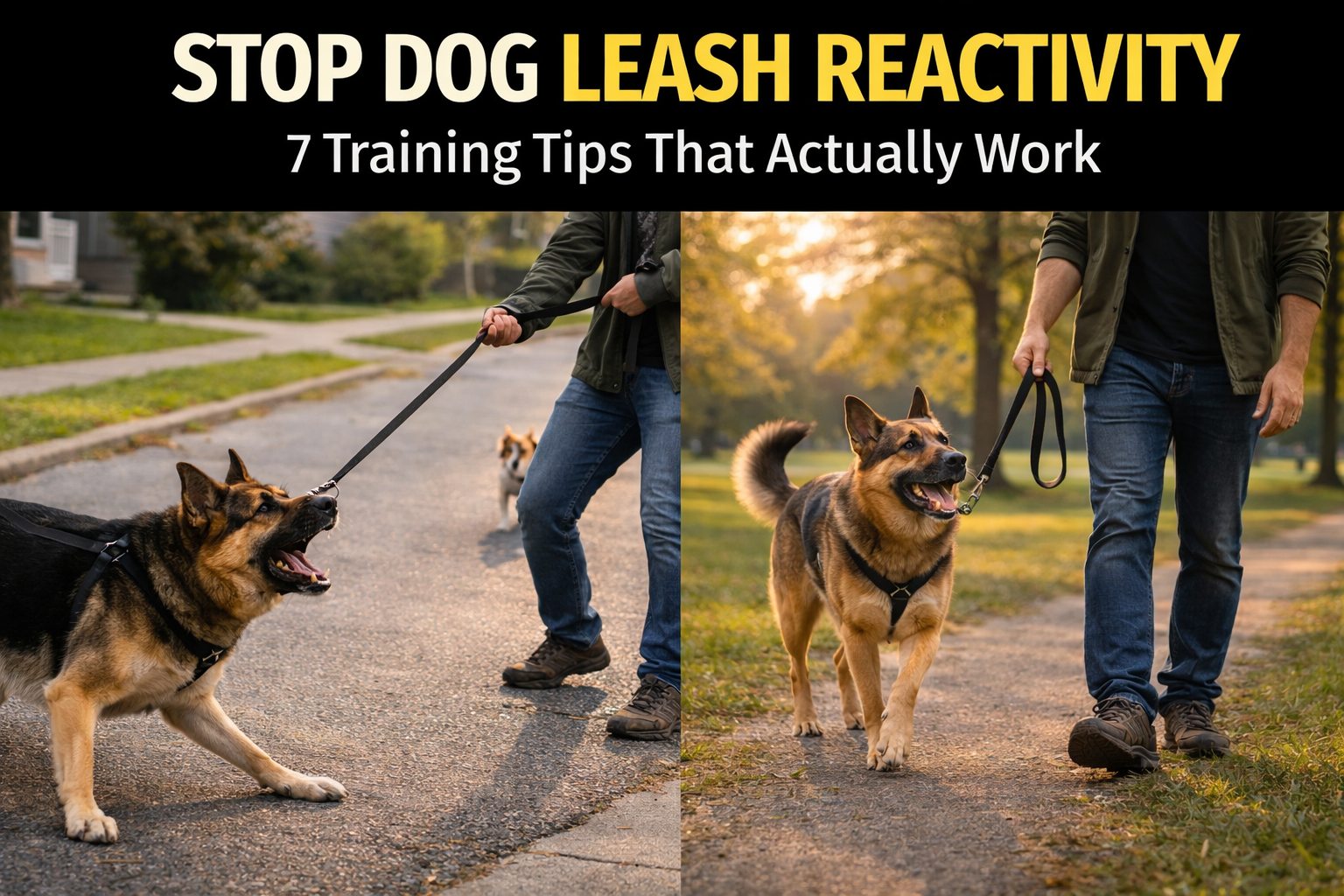
Some dogs appear aggressive only when restrained. This is known as barrier frustration or leash reactivity. The dog may behave calmly off-leash but become reactive when held back by a leash, fence, or window.
The frustration of being unable to approach or move freely can quickly escalate arousal levels. The dog’s emotional state shifts from excitement to explosive behavior. Over time, repeated frustration can condition a pattern of dog on dog aggression even before a real interaction happens.
Managing distance and teaching impulse control becomes essential in these cases. Without addressing arousal regulation, the reaction cycle continues to strengthen.
Territorial and Resource Guarding
Territorial behavior can trigger dog on dog aggression inside the home or yard. A dog may guard sleeping areas, food bowls, toys, or even the owner’s attention. The aggression appears when another dog enters the perceived protected space.
This type of aggression often intensifies as dogs reach social maturity. Resource guarding is rooted in competition and security concerns. It does not necessarily indicate a permanently aggressive temperament, but it requires structured management and clear environmental boundaries.
Ignoring early signs such as stiffening, hovering over items, or subtle growling can allow the behavior to escalate into physical conflict.
Same-Sex and Social Maturity Conflicts
Dog on dog aggression sometimes appears between dogs of the same sex, particularly once they reach social maturity between eighteen months and three years of age. Hormonal influence, status tension, and personality clashes can contribute to conflict.
In multi-dog households, dogs that once coexisted peacefully may begin to show tension as they mature. This shift surprises many owners because the aggression seems sudden. In reality, it often develops gradually through small unresolved disputes.
Recognizing these patterns early allows intervention before serious fights occur. Management and behavior modification can reduce risk, but in some cases, long-term separation strategies may be necessary for safety.
Early Warning Signs Most Owners Miss
Most serious cases of dog on dog aggression do not begin with sudden fights. They develop through subtle warning signals that owners often overlook. Recognizing these early signs allows intervention before behavior escalates into lunging, snapping, or physical conflict.
Common early warning signs include:
- Stiff body posture is a clear indicator that tension is rising. When a dog suddenly freezes, tightens its muscles, and holds its head high while focusing on another dog, it signals that the interaction is no longer relaxed and may escalate within seconds.
- Intense, unbroken staring is a form of social pressure between dogs. Prolonged direct eye contact combined with a rigid stance often precedes conflict, especially when neither dog disengages or looks away.
- Closed mouth with forward weight shift is a subtle but important change in body language. A relaxed dog typically moves fluidly and breathes naturally, but when the mouth tightens and the body leans forward, arousal levels increase rapidly.
- Low growling is an early communication signal rather than misbehavior. It indicates discomfort or boundary setting, and suppressing it can remove a valuable warning phase that helps prevent sudden escalation in dog-on-dog aggression.
- Raised hackles are a physical sign of heightened emotional arousal. While it does not always indicate aggression, it shows that the nervous system is activated and the dog is emotionally stimulated.
- Blocking behavior is a social control signal often seen in multi-dog households. Standing in doorways, hovering over resources, or physically positioning in front of another dog can indicate emerging tension.
Interrupting interactions at these early stages is significantly easier than managing a physical altercation. Owners who learn to recognize these patterns reduce the intensity and frequency of dog-on-dog aggression over time.
Common Mistakes That Make Dog-on-Dog Aggression Worse
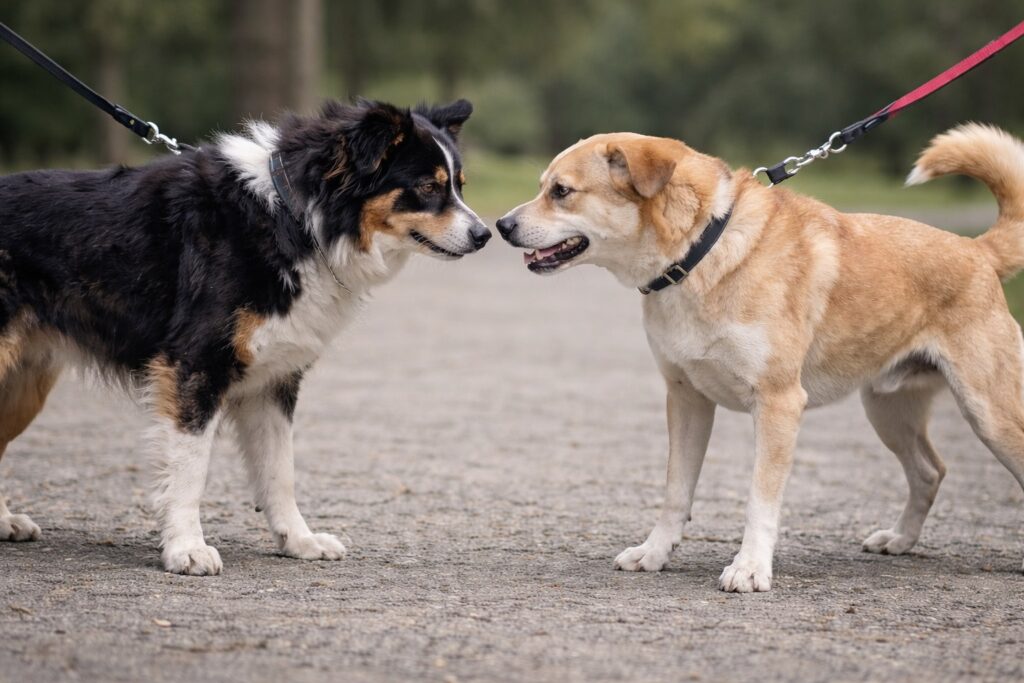
When managing dog on dog aggression, many owners unintentionally strengthen the behavior through incorrect responses. Without understanding how stress and learning interact, well-meaning actions can escalate tension instead of reducing it. Avoiding these mistakes is essential before applying structured training methods.
Common mistakes include:
- Punishing the visible reaction often suppresses behavior temporarily but increases anxiety underneath, making future dog-on-dog aggression more intense.
- Forcing rapid social exposure overwhelms reactive dogs and builds stronger negative associations rather than confidence.
- Allowing repeated tense encounters teaches the dog to rehearse aggression, which strengthens the response pattern over time.
- Inconsistent boundaries create unpredictability, increasing arousal because the dog cannot anticipate outcomes.
- Mislabeling the behavior as dominance leads to inappropriate correction methods that fail to address fear or insecurity.
- Expecting immediate results causes owners to abandon structured behavior plans before meaningful emotional change occurs.
Correcting these management errors significantly improves the success rate of behavior modification strategies.
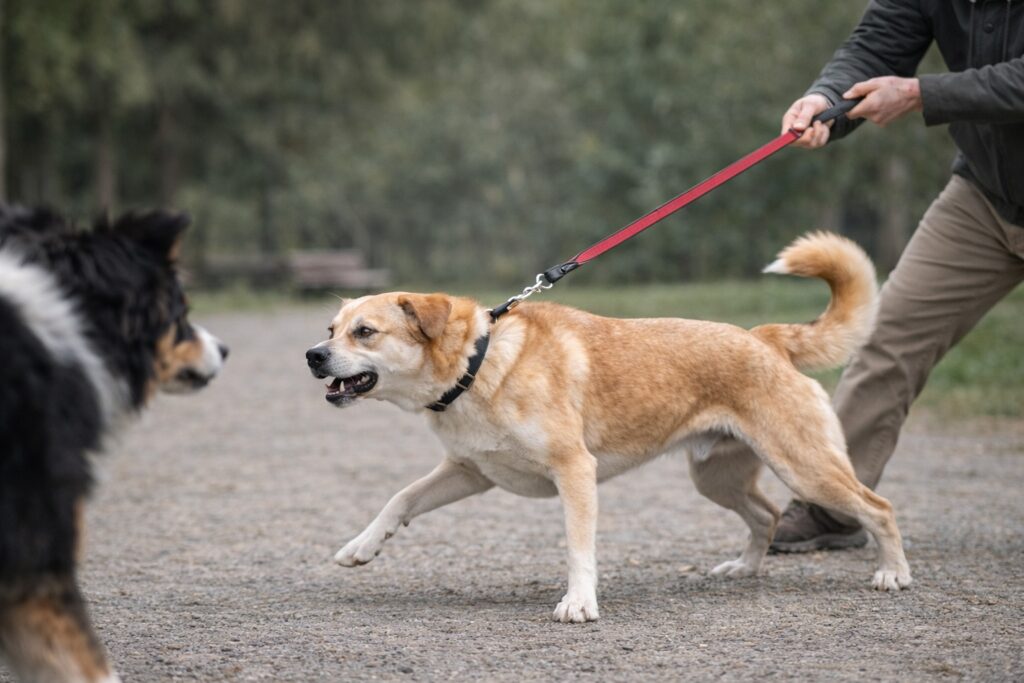
How to Stop Dog-on-Dog Aggression Safely and Effectively
Stopping dog-on-dog aggression requires structured behavior modification, not random correction. The goal is not simply to stop barking or lunging. The real objective is to change the dog’s emotional response to other dogs. When emotion changes, behavior becomes easier to control.
The process must focus on trigger management, controlled exposure, and reinforcement of alternative behaviors. Skipping structure often leads to temporary improvement followed by relapse. The following framework outlines a practical and safe approach.
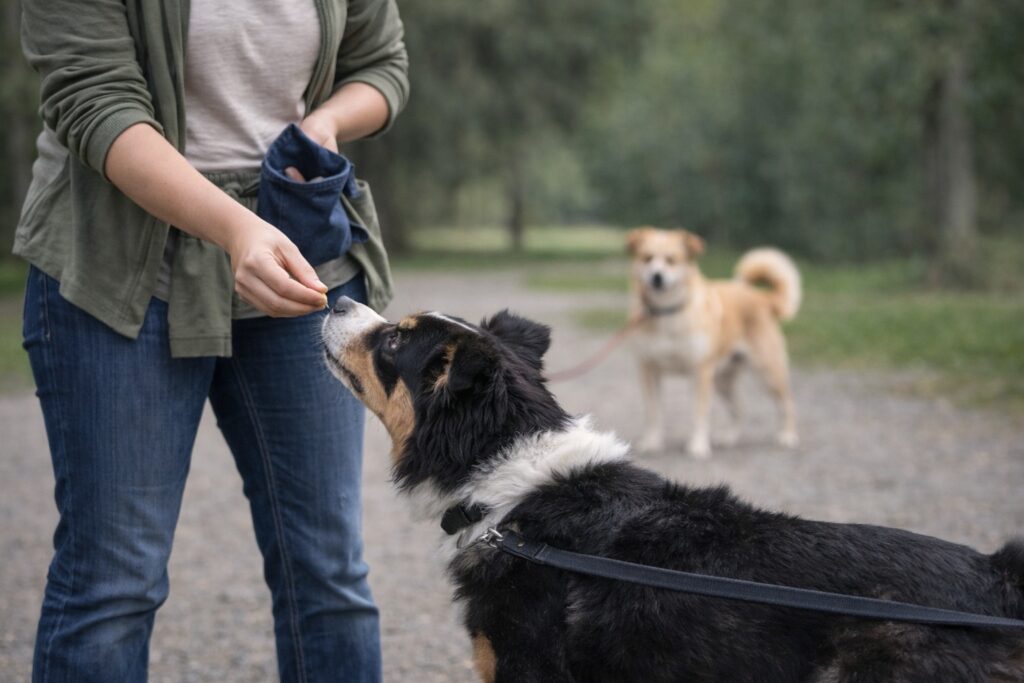
Identify Specific Triggers
Dog on dog aggression rarely occurs in every situation. It is usually tied to distance, environment, leash presence, specific dog types, or resource access. Identifying patterns allows targeted intervention instead of generalized correction.
Start by observing when the reaction happens. Is it only on leash? Only with unfamiliar dogs? Only near food? Precise trigger mapping reduces unpredictability and creates a training plan built on real data rather than assumptions.
Create Controlled Distance
Distance is one of the most powerful tools when managing dog on dog aggression. A dog that reacts at five feet may remain calm at twenty feet. Training should begin at a distance where the dog notices another dog but remains under control.
Working under threshold prevents emotional overload. Once the dog can stay relaxed at a safe distance, gradual reduction becomes possible. Progress must remain slow and controlled to prevent setbacks.
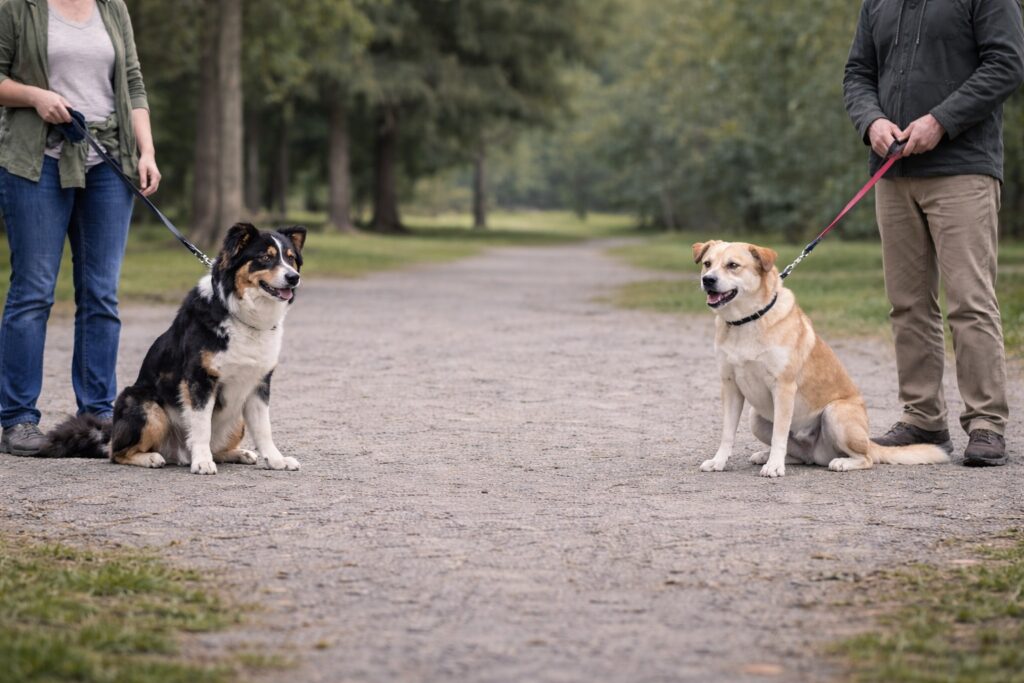
Reinforce Alternative Behaviors
Instead of focusing only on stopping aggression, teach the dog what to do instead. Reward eye contact with the handler, calm sitting, or disengagement from the trigger. Replacement behaviors shift focus away from confrontation.
Consistent reinforcement builds a new behavioral pattern. Over time, the dog learns that calm responses produce positive outcomes while reactive behavior does not receive reinforcement.
Manage the Environment
Prevention is not avoidance; it is strategic control. Avoid high-risk environments during the training phase. Structured walks, controlled play sessions, and careful introductions reduce rehearsal of aggressive behavior.
Each prevented reaction protects training progress. Repeated uncontrolled exposure slows improvement and increases stress.
Monitor Progress and Adjust Gradually
Behavior change is not linear. Some days show improvement, while others show regression. Measuring progress through reduced intensity or shorter reaction duration helps track realistic improvement.
Patience is essential. Consistency over weeks and months produces lasting change in dog-on-dog aggression.
How Long Does It Take to Fix Dog-on-Dog Aggression?
One of the most common questions owners ask is how long it takes to resolve dog on dog aggression. The honest answer depends on severity, history, and consistency of training. Mild reactivity may improve within several weeks, while long-established aggression patterns often require several months of structured work.
Progress should be measured in intensity reduction, not instant elimination. If lunging becomes barking, and barking becomes brief tension without escalation, that represents improvement. Expecting immediate calm behavior in all environments is unrealistic and often leads to frustration.
Consistency plays a major role in the timeline. Daily structured exposure at controlled distances produces faster improvement than occasional training sessions. Conversely, repeated uncontrolled encounters can reset progress and extend the rehabilitation period.
Age and learning history also influence recovery time. Younger dogs with limited rehearsal of aggression often respond more quickly to behavior modification. Dogs with years of repeated reactive experiences require longer reconditioning to replace established patterns. Understanding realistic timelines prevents discouragement. Dog-on-dog aggression can often be significantly reduced, but sustainable change rarely happens overnight.
When Professional Help Is Necessary
While many mild cases of dog on dog aggression can be improved through structured training, some situations require professional intervention. Recognizing when the behavior exceeds safe management is critical for both human and canine safety. Waiting too long to seek help can increase risk and make rehabilitation more difficult.
Escalating intensity is another warning sign. If reactions are becoming faster, louder, or more explosive despite consistent management, the underlying emotional trigger may be stronger than initially assumed. A qualified behavior professional can evaluate environmental and emotional factors more precisely.
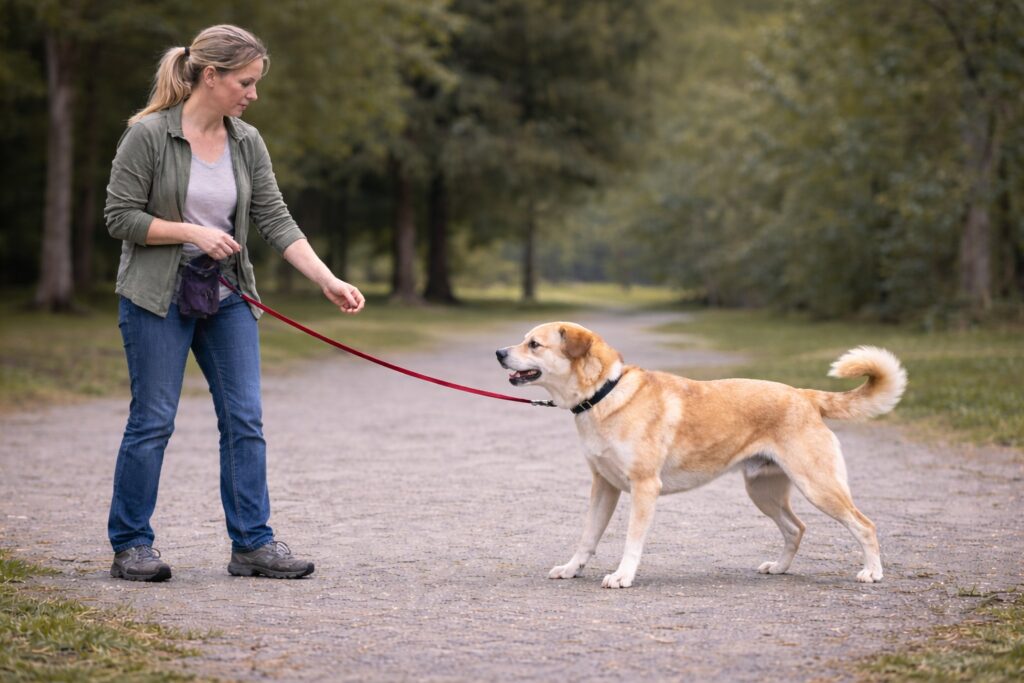
Certified trainers who specialize in behavior modification, or veterinary behaviorists in severe cases, can design structured desensitization programs tailored to the dog’s specific triggers. In some cases, medical evaluation may also be necessary to rule out pain-related aggression.
Seeking professional help is not an admission of failure. It is a proactive step toward preventing escalation and ensuring long-term safety. Early expert guidance often shortens recovery time and improves outcomes in complex cases of dog-on-dog aggression.
Can Dog-on-Dog Aggression Be Fully Cured?
Many owners hope that dog-on-dog aggression can be eliminated. The realistic answer depends on the underlying cause, severity, and how early intervention begins. Some dogs may always require controlled introductions, leash management, or environmental boundaries. The goal shifts from total elimination to reliable management and emotional stability.
It is important to distinguish between “cured” and “controlled.” A dog that can calmly pass other dogs at a safe distance without lunging has made meaningful progress, even if high-intensity situations still require caution. Genetics, early socialization history, and repeated rehearsal of aggression influence long-term outcomes. Dogs with deeply ingrained patterns may always need structured oversight, especially in unpredictable environments such as crowded dog parks.
The most successful cases share one common factor: consistency. When training, management, and environmental control remain stable over time, emotional reconditioning becomes durable. Relapses typically occur when structure fades. Dog-on-dog aggression does not automatically define a dog’s temperament or quality of life. With proper understanding and consistent effort, many dogs learn to navigate social environments more calmly and safely.
Conclusion
Dog-on-dog aggression is a complex behavior that rarely appears without reason. It develops through emotional triggers such as fear, frustration, territorial tension, or social maturity shifts. Understanding these underlying causes is far more effective than simply reacting to visible outbursts. When owners learn to recognize early warning signs and avoid common mistakes, they reduce the likelihood of escalation significantly.
Lasting improvement requires structured behavior modification, controlled exposure, and consistent reinforcement of calm alternatives. Progress should be measured in emotional stability and reduced intensity, not instant perfection. While some cases of dog-on-dog aggression can be greatly minimized, others require long-term management and realistic expectations.
The key is clarity. When triggers are identified, boundaries are consistent, and training is patient and deliberate, many dogs can coexist more safely around others. Dog-on-dog aggression does not automatically mean permanent conflict. With the right approach, safety, predictability, and improvement are achievable outcomes.