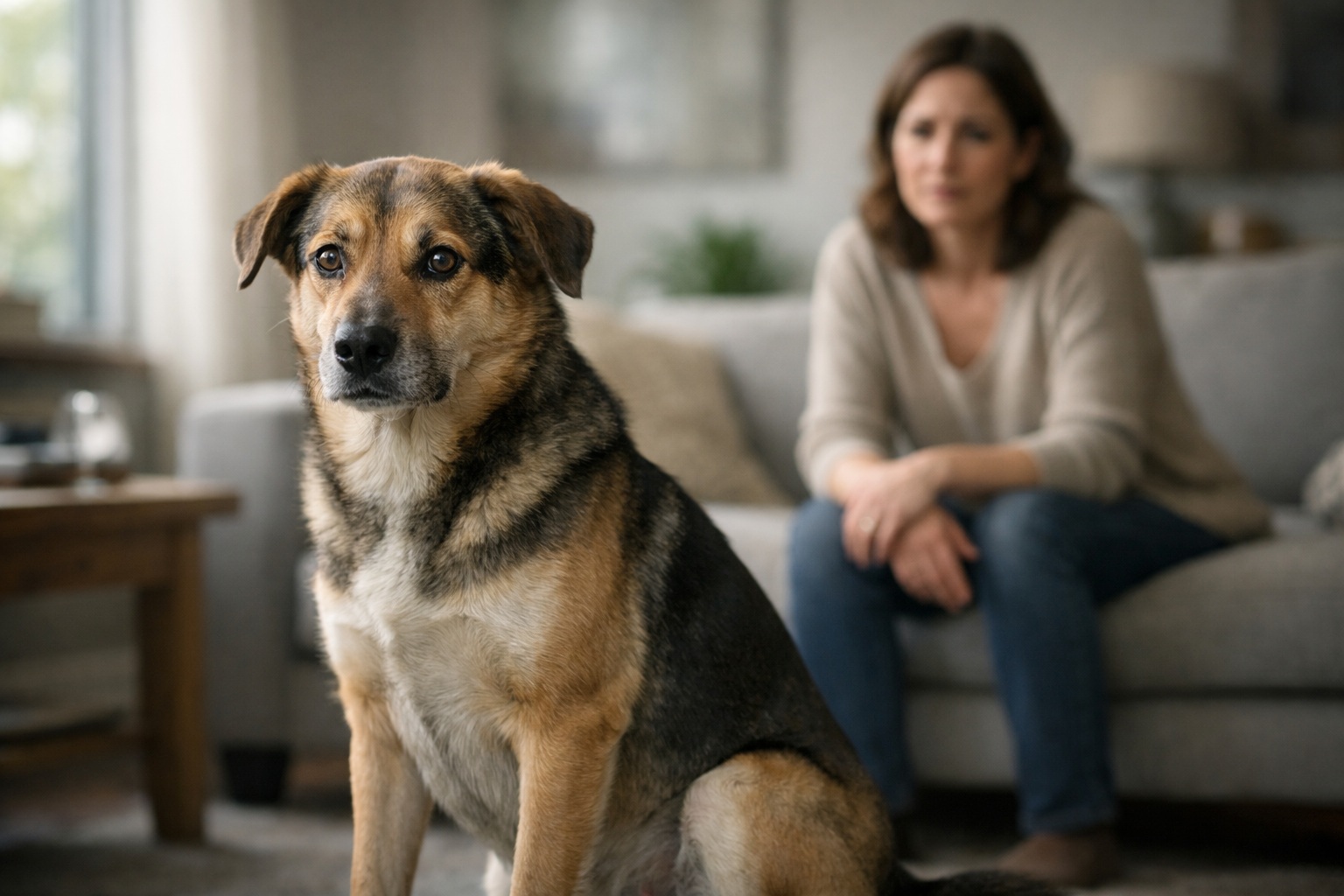
Dog anxiety symptoms can start quietly. A little pacing. A tight mouth. A tail that sits lower than usual. At first, it looks small. But if those signals repeat or intensify, they can turn into destructive behavior, aggression, or chronic stress. Early action makes a measurable difference. When you respond correctly at the first signs, you can often prevent long-term anxiety patterns from forming.
Many owners wait until behavior becomes disruptive before intervening. That delay allows the stress response to strengthen neurologically. Recognizing dog anxiety symptoms early allows you to stabilize the situation before fear becomes a habit.
How to Recognize Early Dog Anxiety Symptoms Before They Escalate
Early dog anxiety symptoms are often subtle. They rarely begin with barking wildly or chewing doors. They usually begin with body language shifts.
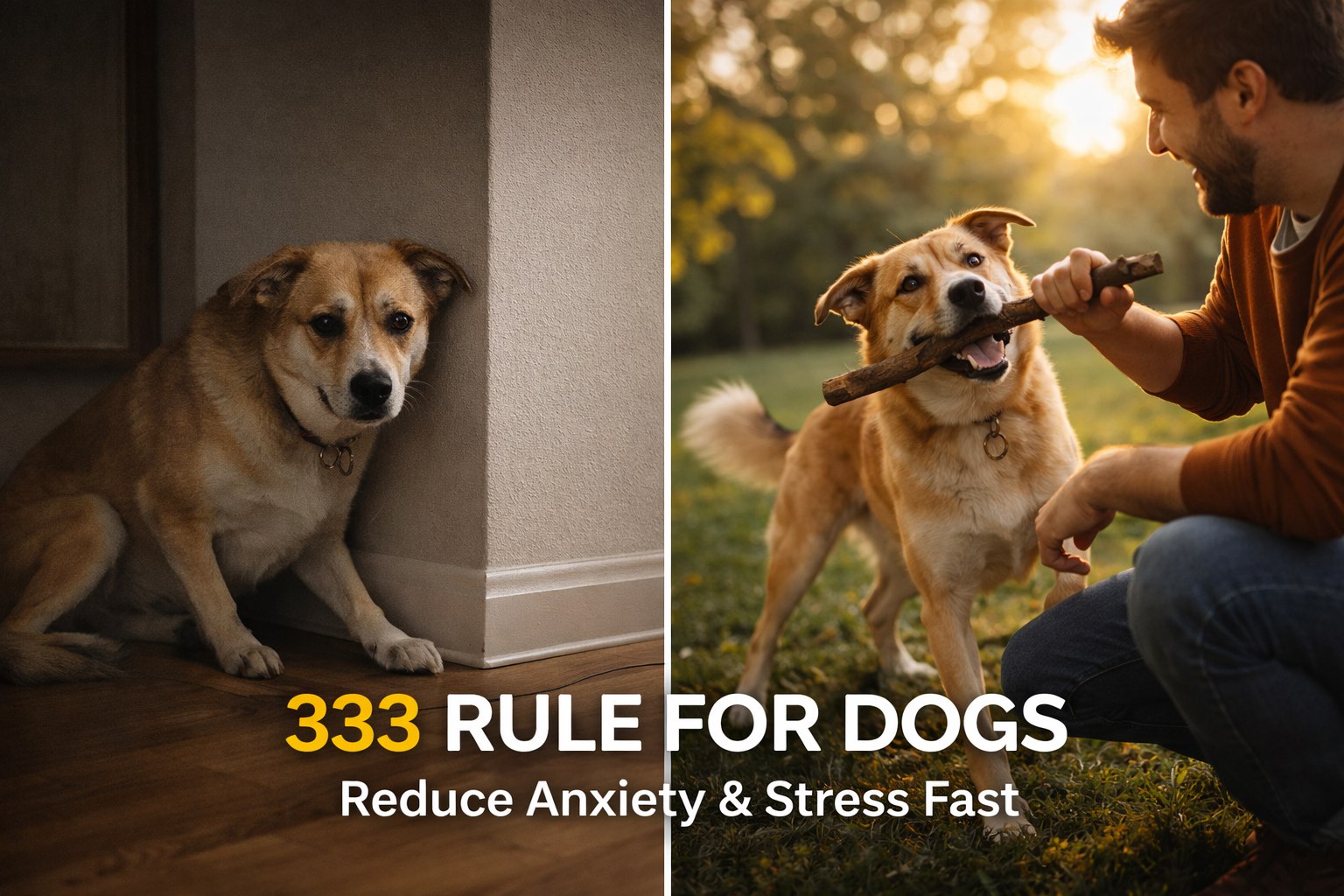
A relaxed dog carries weight evenly, keeps soft eyes, and moves fluidly. When anxiety appears, posture changes first. Muscles tighten. The tail lowers. Ears shift back. The mouth closes more firmly. These signals can last only seconds, which is why many owners miss them.
Subtle Stress Signals Most Owners Miss
Common early dog anxiety symptoms include:
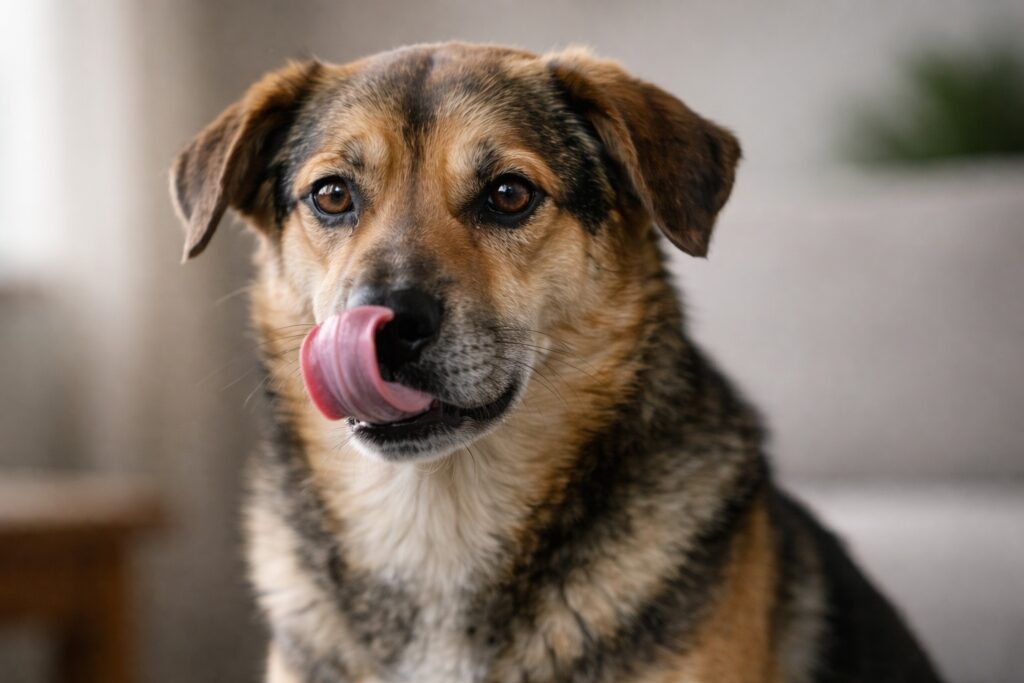
- Lip licking when no food is present
- Yawning without fatigue
- Turning the head away
- Freezing briefly
- Slow, hesitant movement
- Rapid blinking
- Ground sniffing out of context
These are displacement behaviors. They signal internal discomfort before outward panic begins. If these signals repeat in the same situation, that pattern matters more than any single behavior.
When Normal Stress Becomes Concerning
Stress is not automatically harmful. A short reaction to a loud noise is normal. Anxiety becomes concerning when recovery is slow or incomplete.
You should pay attention when:
- The same trigger produces stronger reactions over time
- Recovery takes longer than a few minutes
- New triggers begin producing similar responses
- Avoidance increases
Dog anxiety symptoms are defined not just by intensity, but by persistence and expansion.
Dog Anxiety Symptoms by Severity: Mild, Moderate, and Red-Flag Signs
When evaluating dog anxiety symptoms, severity determines urgency. The difference between mild discomfort and red-flag behavior affects what you do next.
| Severity Level | Typical Dog Anxiety Symptoms | Nervous System State | What It Means |
|---|---|---|---|
| Mild | Lip licking, brief pacing, slight trembling, ears back, tail lowered | Alert but thinking | Early discomfort. Best time to intervene. |
| Moderate | Repeated pacing, panting without heat, hiding, refusing food, drooling | Heightened arousal | Stress is sustained. Environmental adjustment required. |
| Severe / Red Flag | Immediate removal from the trigger. Safety priority. | Fight-or-flight activated | Immediate removal from the trigger. Safety priority. |
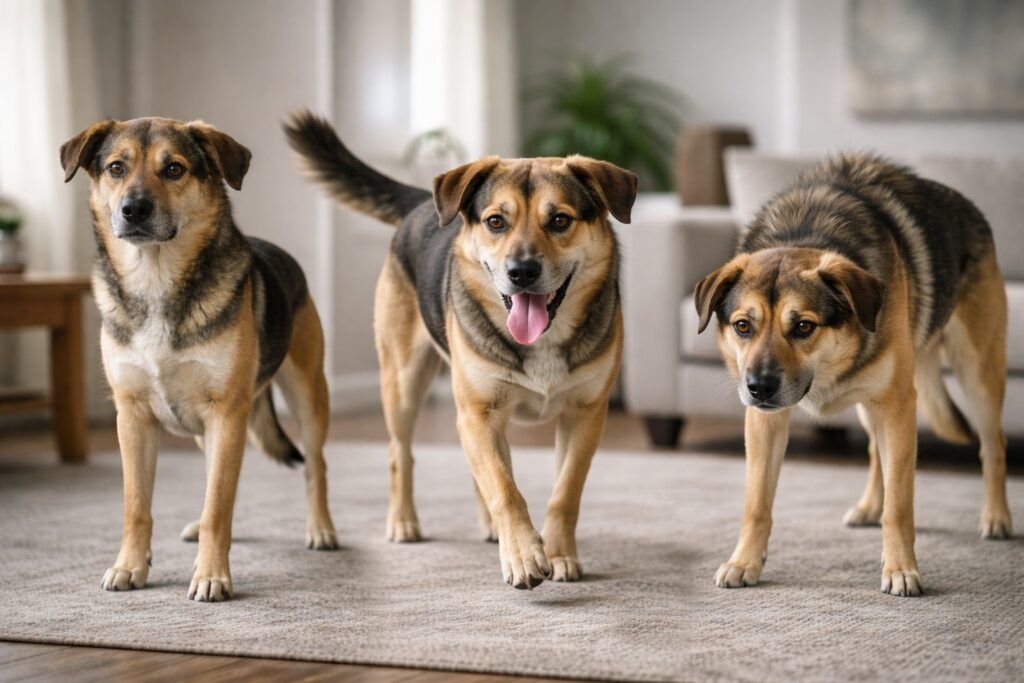
Severity categories are decision tools. Mild dog anxiety symptoms mean the dog is uncomfortable but still able to think and respond. This is the most effective intervention window. Moderate symptoms indicate sustained stress where environmental control becomes more important than training. Red-flag symptoms signal full fight-or-flight activation, where safety and distance take priority over correction.
Anxiety usually escalates when early signals fail to reduce the trigger. Avoidance becomes vocal protest, and protest can become defensive behavior if pressure continues. When you respond at the mild stage, you interrupt that progression before it hardens into a repeated pattern.
Why Dog Anxiety Symptoms Worsen Over Time
Dog anxiety symptoms rarely stay static. If the trigger remains unmanaged, the reaction typically intensifies. What starts as hesitation can progress into avoidance, then panic, then defensive aggression. This progression is predictable because it is driven by the nervous system.
When a dog experiences fear repeatedly without resolution, the brain strengthens that fear pathway. The next exposure produces a faster and stronger response. Over time, the threshold lowers. Smaller triggers begin producing bigger reactions.
The Escalation Pattern From Avoidance to Aggression
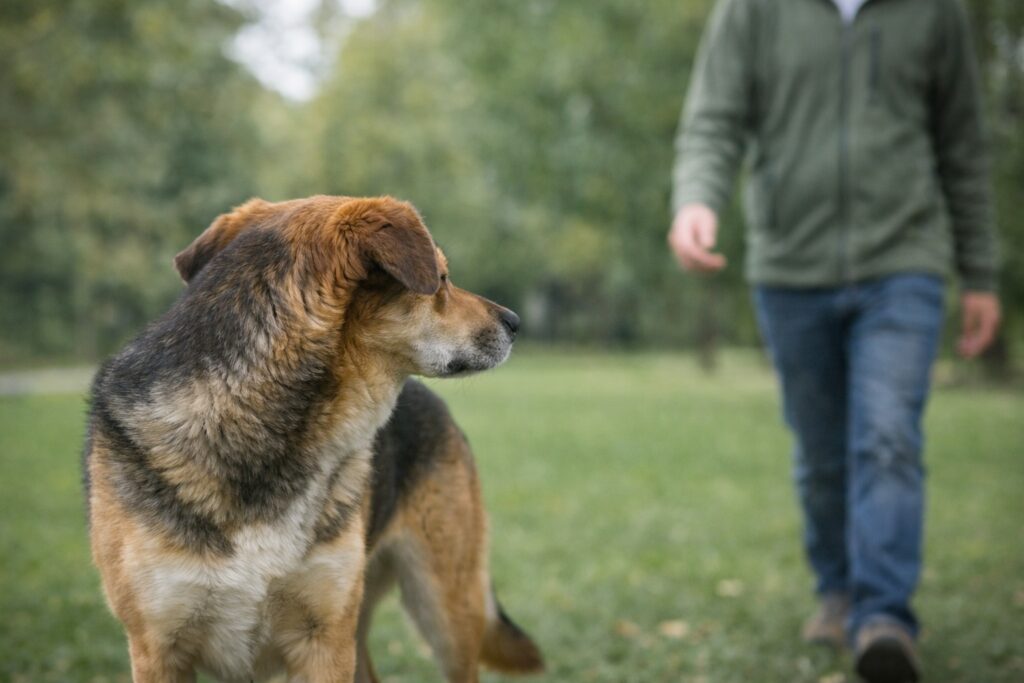
Most dogs do not jump straight to aggression. The sequence often looks like this:
- Subtle avoidance
- Increased vigilance
- Withdrawal or hiding
- Vocal protest
- Defensive display
- Snap or bite
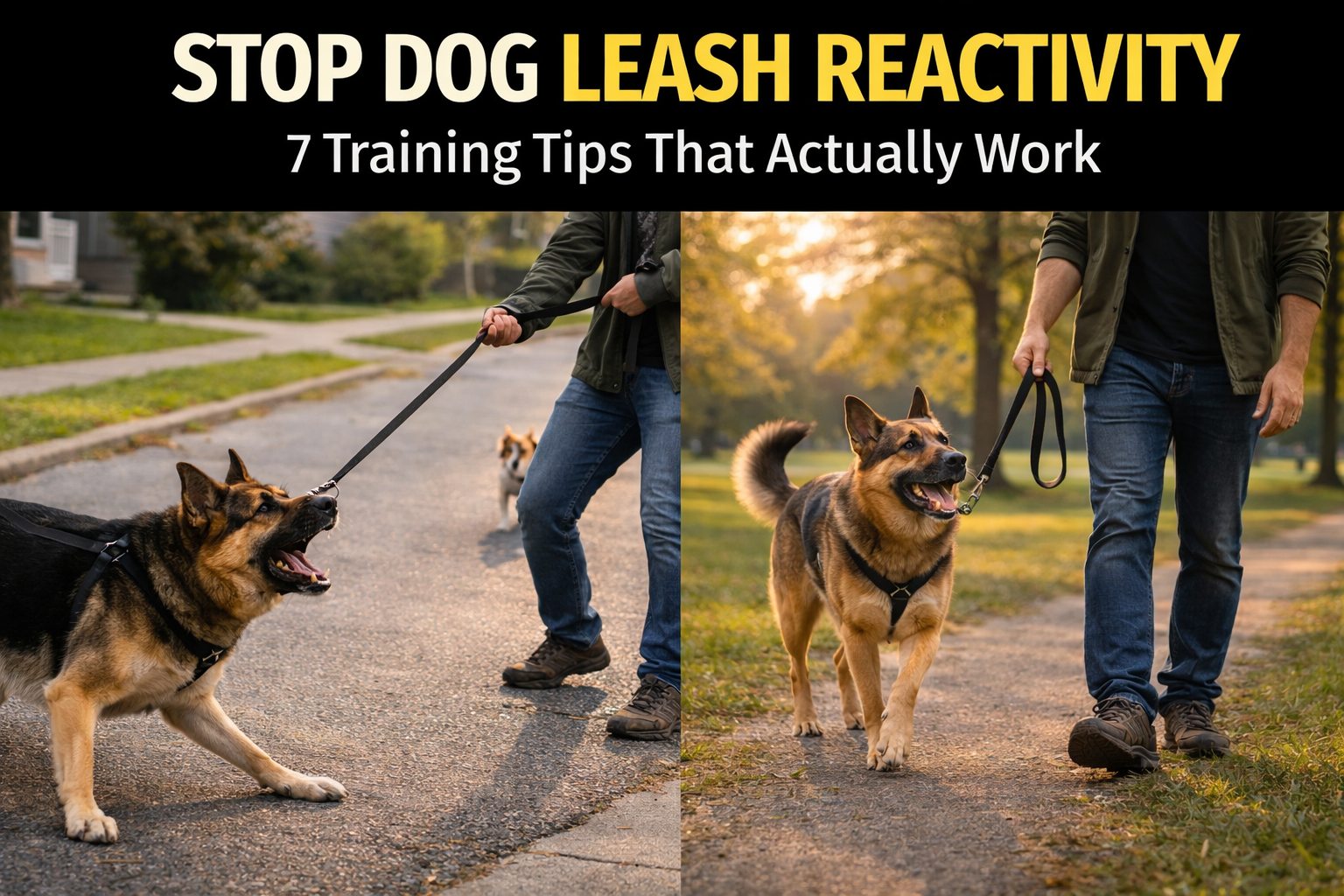
Aggression is usually a last resort communication tool. It appears that earlier dog anxiety symptoms were ignored or unsuccessful at creating distance from the trigger. Recognizing early signals prevents this escalation.
How Repeated Stress Affects the Nervous System
Chronic exposure to stress hormones changes behavior. Cortisol remains elevated longer. Recovery time increases. Sleep may decrease. Appetite can fluctuate.
Research in canine behavioral medicine shows that repeated activation of the stress response reduces emotional resilience. That is why early intervention matters. Each unmanaged episode increases the likelihood that dog anxiety symptoms become chronic.
What to Do Immediately After You Notice Dog Anxiety Symptoms
The first response determines whether anxiety decreases or intensifies. The goal is stabilization, not correction.
Step 1: Remove or Reduce the Trigger
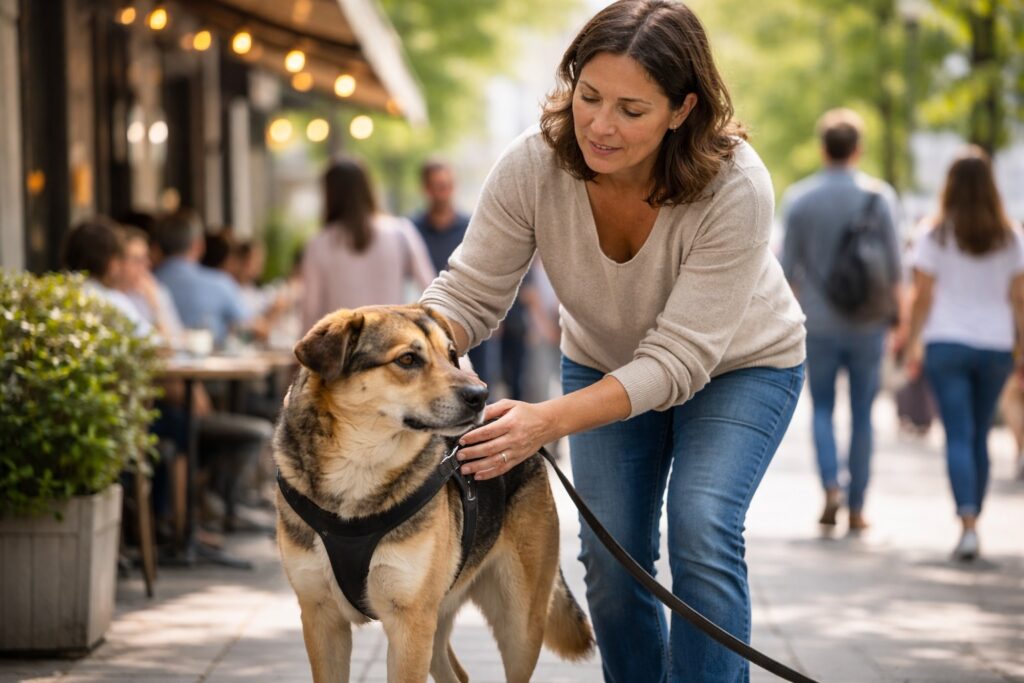
Distance lowers arousal. If a stranger, loud sound, or unfamiliar dog is present, increase space immediately. If the trigger is environmental, move the dog to a quieter area.
Do not force exposure in the name of “getting used to it.” Flooding increases fear memory consolidation.
Step 2: Stabilize the Environment
Lower stimulation. Reduce noise. Avoid sudden movements. Speak calmly. Offer access to a familiar resting space.
Predictability regulates stress. If the dog associates a specific bed, crate, or room with safety, guide them there without pressure.

Step 3: Avoid Common Early Mistakes
Certain responses unintentionally worsen dog anxiety symptoms:
- Punishing fear reactions
- Forcing physical contact
- Blocking escape routes
- Inconsistent reactions from different family members
- Repeatedly testing the trigger
Fear is an emotional state, not defiance. Punishment increases unpredictability, which increases anxiety.
Should You Comfort, Distract, or Ignore a Dog Showing Anxiety?
This is one of the most misunderstood parts of managing dog anxiety symptoms. Many people worry that comforting a fearful dog will “reinforce the fear.” That idea misunderstands how emotions work.
Fear is not a trained behavior. It is an emotional state driven by the nervous system. You cannot reward fear into existence. What you can reinforce is calm behavior that follows.
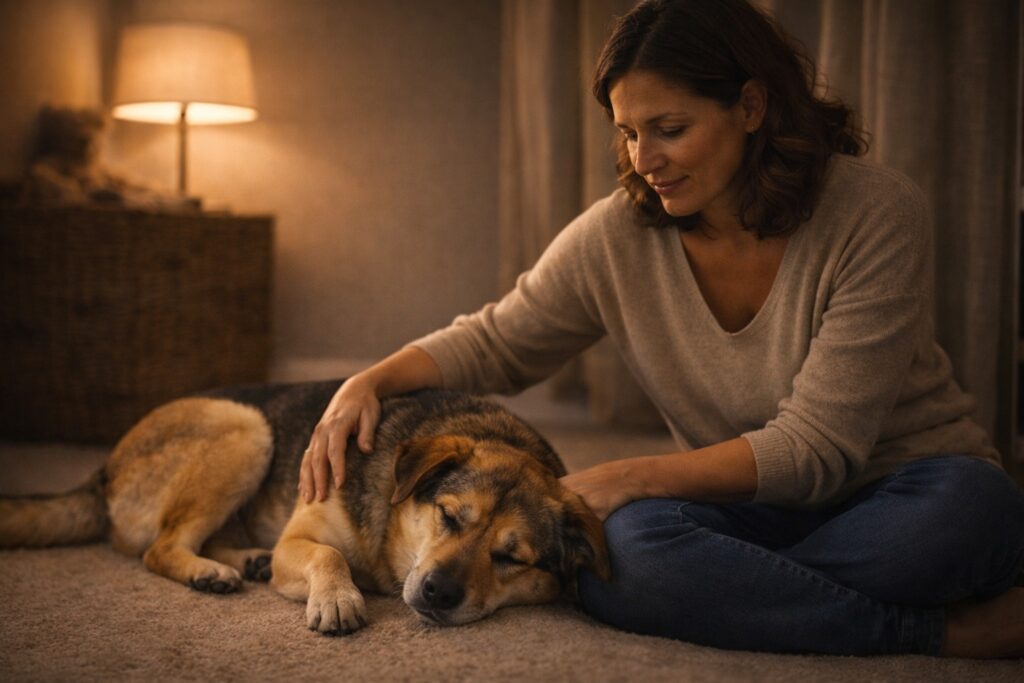
If a dog seeks proximity during anxiety, calm reassurance is appropriate. Slow movements. Soft voice. Gentle presence. What matters is your energy. Dramatic reactions increase arousal. Neutral, steady behavior lowers it.
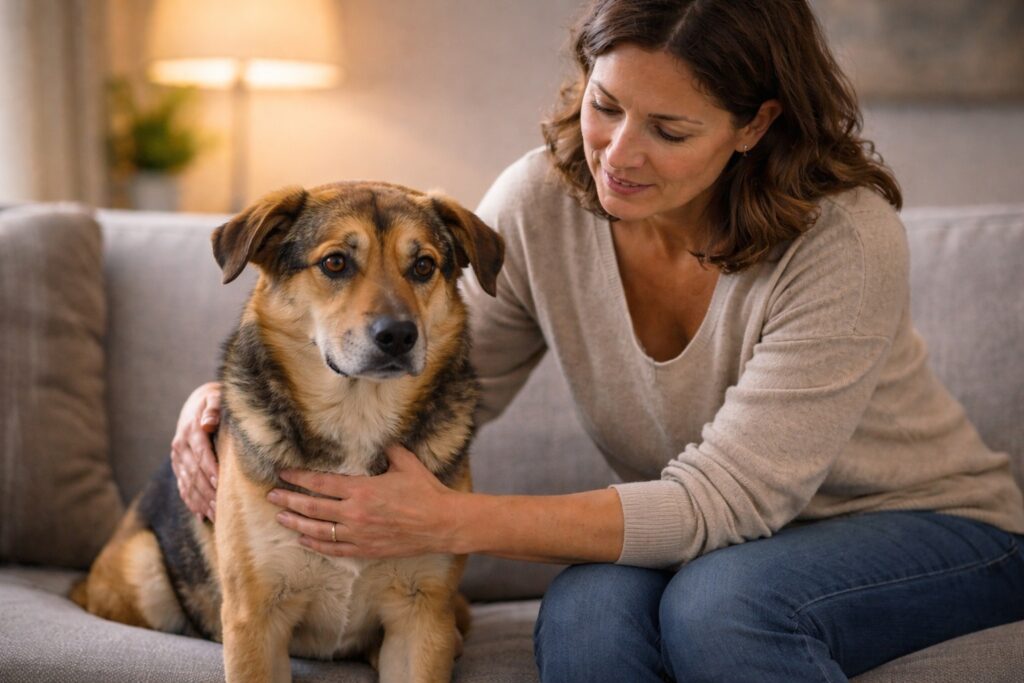
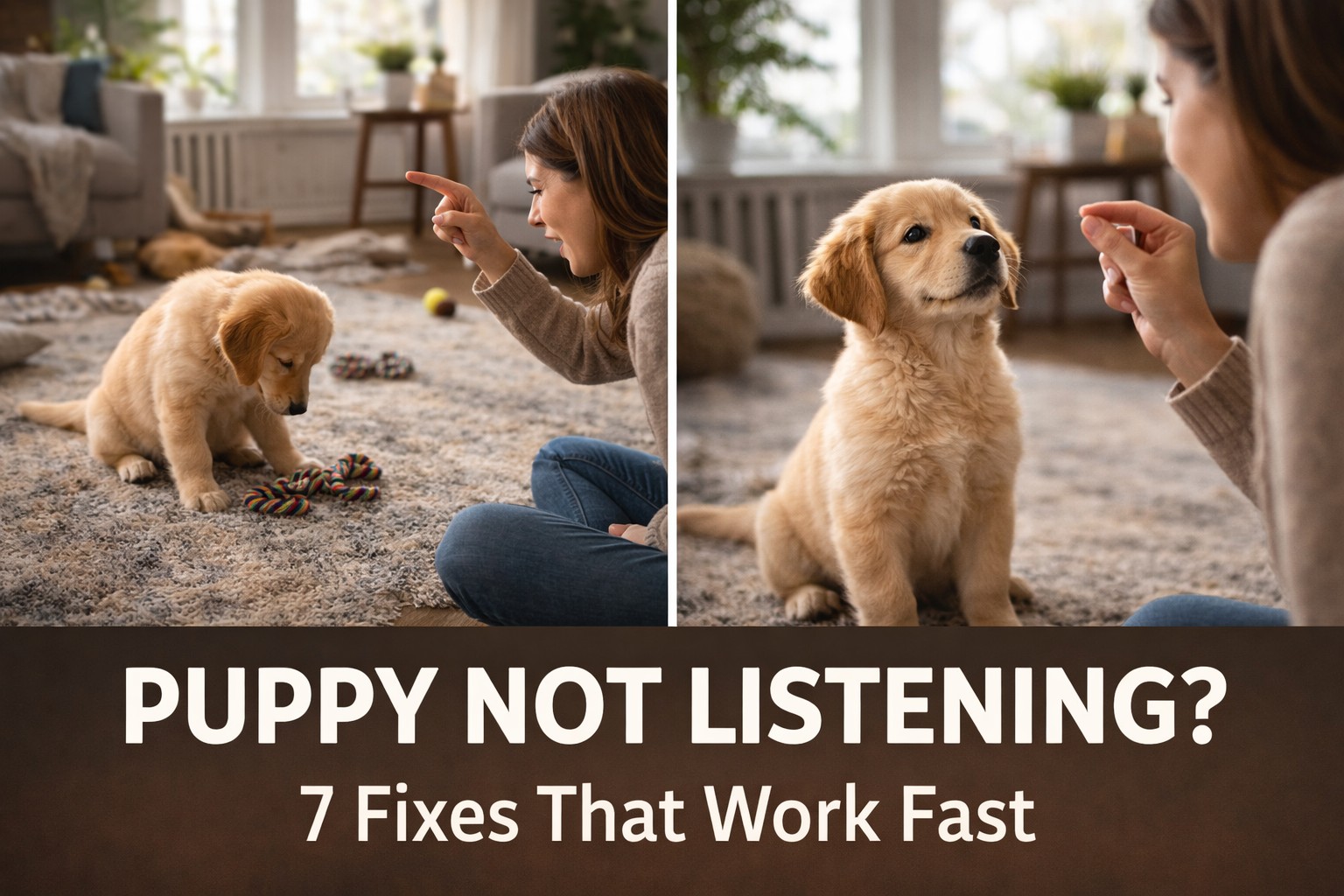
Distraction can work, but timing is critical. If the dog is still thinking and able to take food, structured redirection helps. Asking for a known cue like sit or touch can shift focus. If food is refused or stress signals intensify, stop. Continued demands increase pressure.
Ignoring anxiety is rarely effective. When early dog anxiety symptoms appear, a lack of response can allow escalation. The better strategy is measured intervention without overreacting.
The rule is simple:
- Calm presence is helpful.
- Structured redirection is useful at mild stages.
- Forcing engagement is harmful.
When Dog Anxiety Symptoms Require a Veterinary Visit
Not every anxious moment requires medical involvement. Patterns determine the threshold.
You should consult a veterinarian when:
- Dog anxiety symptoms occur daily
- New aggression appears
- House soiling develops suddenly
- Appetite decreases
- Sleep patterns change
- Recovery from stress becomes prolonged
- Anxiety spreads to new triggers
Pain is a common hidden driver. Dental disease, arthritis, gastrointestinal discomfort, hormonal imbalances, and neurological issues can all present as anxiety-like behavior.
Medical evaluation is not an overreaction. It is risk control. Many chronic anxiety cases improve significantly once the underlying discomfort is addressed.
Medical Conditions That Mimic Anxiety
Several conditions can resemble dog anxiety symptoms:
- Cognitive dysfunction in senior dogs
- Thyroid imbalance
- Chronic pain
- Hearing or vision loss
- Gastrointestinal inflammation
If symptoms appear suddenly or intensify quickly, rule out medical causes first.

When Behavior Training Alone Is Not Enough
If structured training and environmental adjustments fail to reduce symptoms within several weeks, escalation may already be neurologically conditioned.
At that point, combining behavior modification with medical support often produces better outcomes than training alone.

Early Intervention Strategies That Prevent Chronic Anxiety
Once dog anxiety symptoms appear more than once, prevention becomes structured work. The goal shifts from reacting to episodes to building resilience.
Early intervention does not mean overwhelming the dog with training. It means strengthening stability so stress responses weaken over time.
Build Predictability and Routine
Predictability lowers anxiety because it reduces uncertainty. Feed at consistent times. Walk on a stable schedule. Keep sleep areas consistent. Ask for the same simple behaviors before routine activities.
When daily life follows a pattern, the nervous system relaxes. Dogs that know what happens next show fewer reactive responses to minor disruptions.
Even small rituals help. Sitting before being leashed. Going to a mat during meals. Entering a crate at night. These patterns create control points that reduce stress chemistry.
Use Controlled Exposure, Not Forced Exposure
Avoiding every trigger permanently is rarely realistic. The solution is controlled exposure at tolerable intensity.
If dog anxiety symptoms appear around strangers, begin at a distance where the dog remains calm. Gradually reduce the distance only when relaxation is consistent. Progression must be slow enough that the dog never crosses into panic.
Flooding, forcing prolonged exposure, often backfires. Controlled desensitization strengthens confidence without overwhelming the nervous system.
Increase Physical and Mental Regulation
Exercise reduces baseline stress hormones. Regular walks, structured play, and scent-based activities improve emotional regulation.
Mental stimulation matters as much as physical activity. Puzzle toys, scent games, and short training sessions strengthen focus and problem-solving ability. Dogs with adequate enrichment show better stress recovery.
Consistency across these areas reduces the intensity and frequency of dog anxiety symptoms over time.
Medication for Dog Anxiety Symptoms: When Is It Appropriate?
Medication is not the first step for mild dog anxiety symptoms. But it is also not a failure. When anxiety begins to interfere with daily function, learning ability, or safety, medical support becomes a legitimate tool.
The key question is not, “Should I avoid medication?”
The real question is, “Is the anxiety severe enough that the nervous system cannot regulate on its own?”
Medication is typically appropriate when:
- Dog anxiety symptoms occur frequently despite environmental control
- The dog cannot focus enough to learn during training
- Aggression emerges from fear
- Panic responses are intense
- Separation anxiety leads to self-injury or destructive exit behavior
- Recovery time remains prolonged after each episode
In these cases, the nervous system may be overly sensitized, making behavioral modification alone insufficient.
Veterinarians may prescribe daily medications such as fluoxetine or clomipramine for chronic anxiety. Situational medications such as trazodone, gabapentin, or dexmedetomidine may be used before predictable stress events. The purpose is not sedation. The goal is emotional stabilization, so learning can occur.
Medication often works best as a temporary bridge. When stress levels decrease, behavioral strategies become more effective. Some dogs require long-term support, especially in cases involving genetics or early developmental deficits.
The decision should always follow veterinary evaluation. Underlying pain, endocrine issues, or neurological conditions must be ruled out first. When properly prescribed and monitored, medication can significantly reduce the intensity of dog anxiety symptoms and improve the quality of life.
Conclusion
Dog anxiety symptoms rarely begin dramatically. They start small, a shift in posture, a hesitation, a pattern that repeats. Early recognition gives you leverage. When you intervene at the mild stage, you interrupt escalation before it strengthens.
Distance from triggers, environmental stability, predictable routines, and calm guidance reduce stress chemistry. If symptoms persist or intensify, veterinary evaluation is essential for both safety and long-term behavioral health.
The most important principle is timing. The earlier you act, the easier anxiety is to manage. When dog anxiety symptoms are handled with structure instead of emotion, you give your dog the best chance to regain confidence and stability.