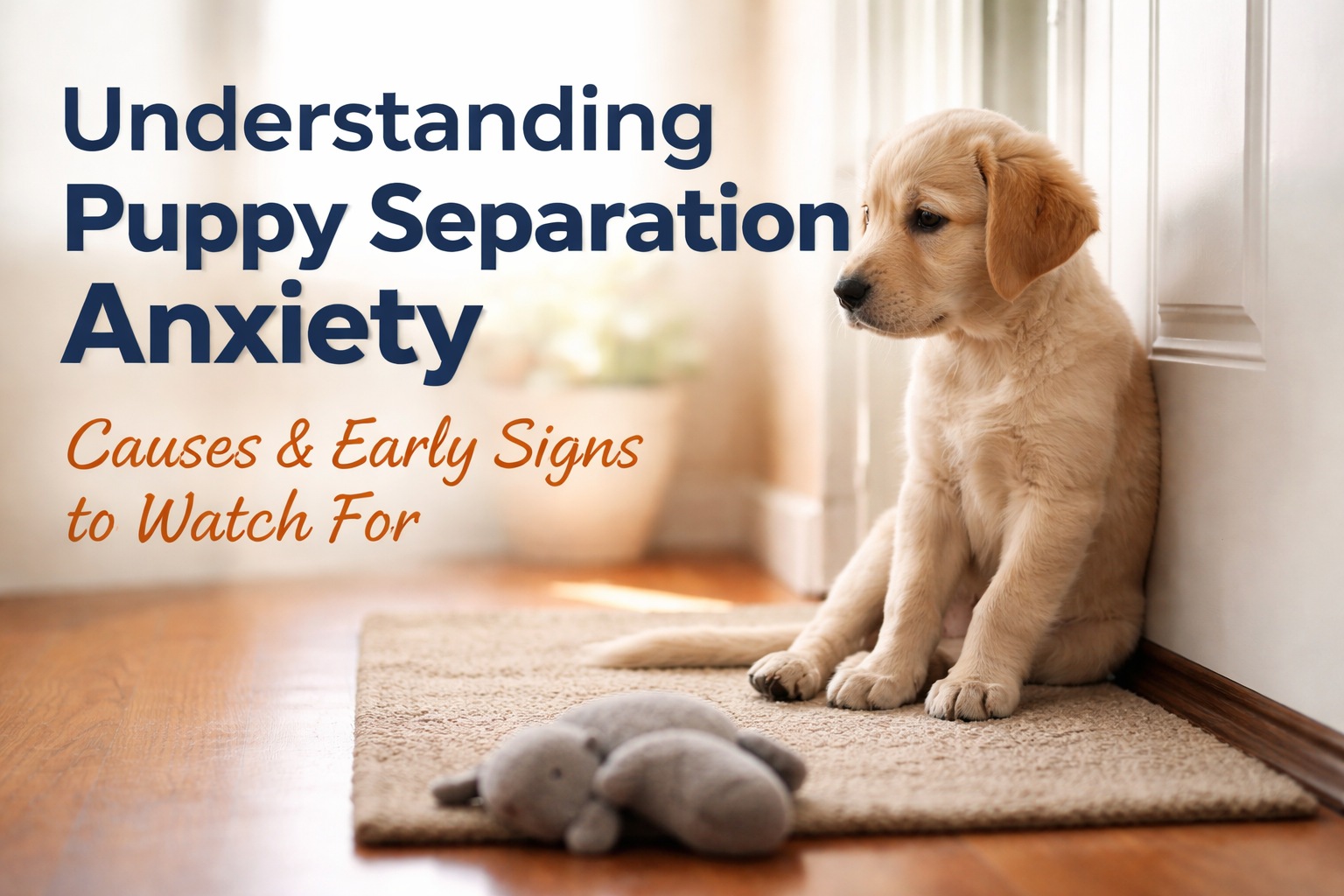
Puppy separation anxiety is a stress response that occurs when a young dog becomes distressed at being left alone. Unlike simple boredom or normal puppy mischief, puppy separation anxiety involves genuine panic. The puppy is not acting out of spite or stubbornness. The behavior is driven by fear and an immature ability to cope with temporary isolation.
Many owners mistake early puppy separation anxiety for normal developmental behavior. Chewing, whining, and accidents can be common in young dogs. The difference lies in intensity, timing, and emotional state. When distress begins within minutes of departure and escalates quickly, it often signals more than routine puppy adjustment.
Understanding puppy separation anxiety early is critical because the condition can strengthen over time if misinterpreted. Puppies are neurologically immature. Their stress-regulation systems are still developing, which makes them more vulnerable to forming anxiety-based patterns during early bonding stages. Recognizing early signs allows intervention before the behavior becomes deeply conditioned.
What Puppy Separation Anxiety Actually Is
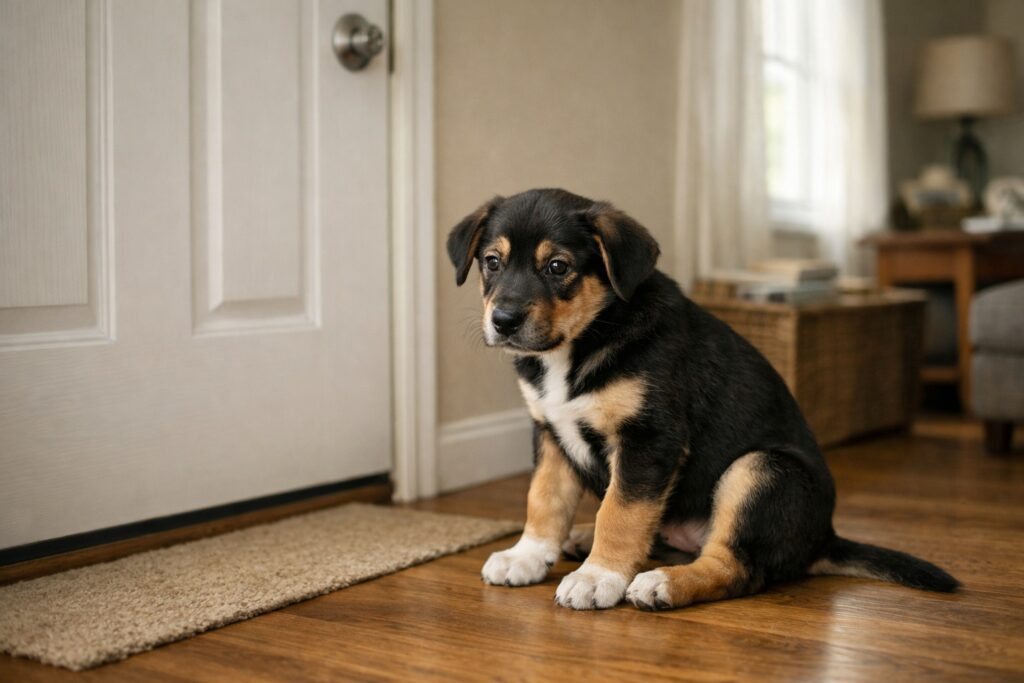
Puppy separation anxiety is not simply a dislike of being alone. It is a state of emotional distress triggered specifically by separation from an attachment figure. The puppy experiences the absence as unsafe rather than inconvenient. This reaction can activate stress hormones that heighten panic-like behavior.
In young dogs, attachment bonds form rapidly. During early developmental windows, especially between eight and sixteen weeks, puppies rely heavily on consistent presence. If independence skills are not gradually introduced, the puppy may struggle to self-soothe when alone. Puppy separation anxiety often develops during this sensitive stage.
The defining feature of puppy separation anxiety is context specificity. The behavior appears when the owner leaves or prepares to leave. It does not typically occur while the owner is present. This separation-based trigger distinguishes anxiety from general behavioral problems.
How It Differs From Normal Puppy Behavior
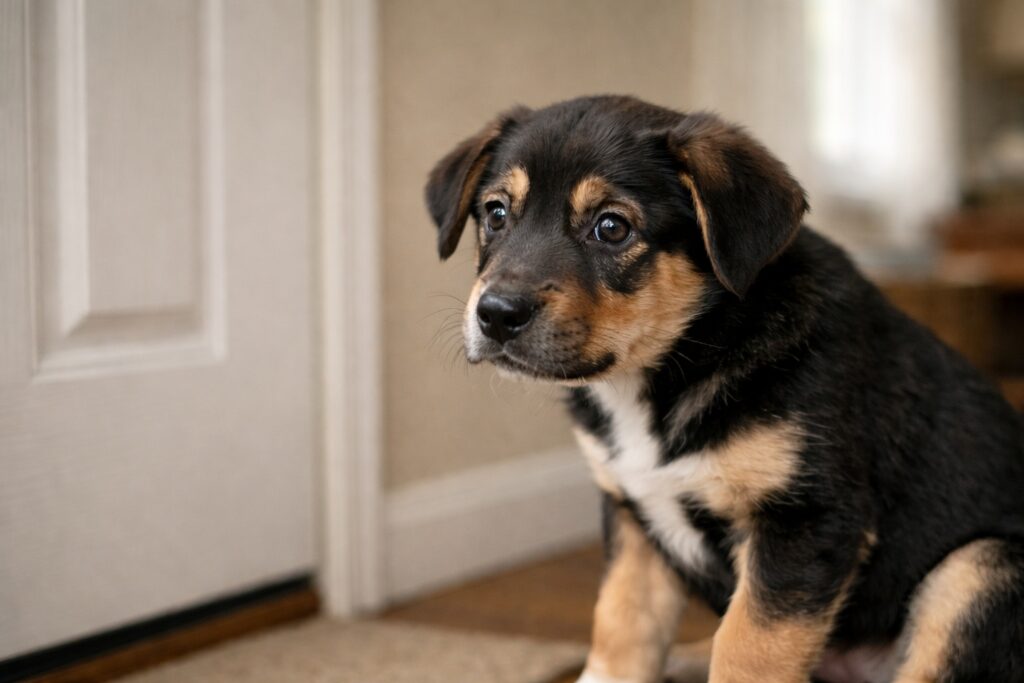
Normal puppy behavior includes exploratory chewing, playful barking, and occasional house accidents. These behaviors are not always emotionally charged. A bored puppy may chew calmly and then nap. A puppy with separation anxiety, however, displays escalating distress and difficulty settling.
The emotional state is the key difference. With puppy separation anxiety, destruction often occurs near doors or exit points. Vocalization tends to be persistent rather than sporadic. The puppy may show trembling, pacing, or excessive salivation. These signals reflect panic rather than curiosity.
Another distinguishing factor is the recovery pattern. A normally mischievous puppy returns to baseline quickly. A puppy experiencing separation anxiety may remain hyper-aroused for an extended period and greet the owner with extreme excitement that appears disproportionate to the time apart.
Why Puppies React More Intensely Than Adult Dogs
Puppies lack fully developed coping mechanisms. Their nervous systems are still learning how to regulate stress. When separated from their primary attachment figure, their biological response can be stronger than that of many adult dogs. Puppy separation anxiety, therefore, often appears more dramatic in its early stages.
Young dogs also have limited experience with safe independence. If most early bonding experiences involve constant proximity, the sudden absence can feel destabilizing. Without gradual exposure to short, positive separations, the puppy may interpret departure as abandonment.
Additionally, puppies are in a learning phase where associations form quickly. If early alone experiences involve fear or confusion, puppy separation anxiety can solidify as a conditioned response. The earlier the signs are recognized, the easier it becomes to prevent escalation.
Early Signs of Puppy Separation Anxiety Most Owners Overlook
Puppy separation anxiety rarely begins with dramatic destruction. In many cases, subtle stress signals appear first. Owners often notice whining or mild restlessness but assume it is part of normal adjustment. The difference lies in pattern consistency. When distress occurs specifically around departure and escalates quickly, it may indicate the development of puppy separation anxiety.
Early detection is important because anxiety strengthens through repetition. Each distressed episode reinforces the puppy’s association between being alone and feeling unsafe. Identifying early signs of puppy separation anxiety allows owners to intervene before panic becomes the default response.
Obvious Distress Behaviors
The most recognizable signs of puppy separation anxiety involve vocalization and destruction. Puppies may bark, howl, or whine persistently within minutes of the owner leaving. This vocal behavior is not casual noise. It is often continuous and emotionally charged rather than intermittent.
Destructive behavior is another visible marker. Chewing door frames, scratching at windows, or damaging objects near exits often signals distress-driven behavior. When destruction is concentrated around areas associated with departure, it strongly suggests puppy separation anxiety rather than simple teething.
Toileting accidents may also occur. A puppy who is otherwise making progress with house training may suddenly urinate or defecate shortly after being left alone. When these accidents are linked specifically to separation, they can indicate stress rather than incomplete training.
Excessive greeting behavior upon return is another common sign. A puppy with separation anxiety may display extreme excitement, jumping, vocalizing, or frantic behavior as though the absence lasted far longer than it did. This intensity reflects relief from distress rather than simple happiness.
Subtle Stress Signals Before Destruction Begins
Not all puppies with separation anxiety destroy furniture or bark loudly. Many display quiet stress behaviors that are easier to miss. Trembling, panting without heat or exercise, and excessive drooling can occur shortly after separation. These signs often go unnoticed unless actively observed.
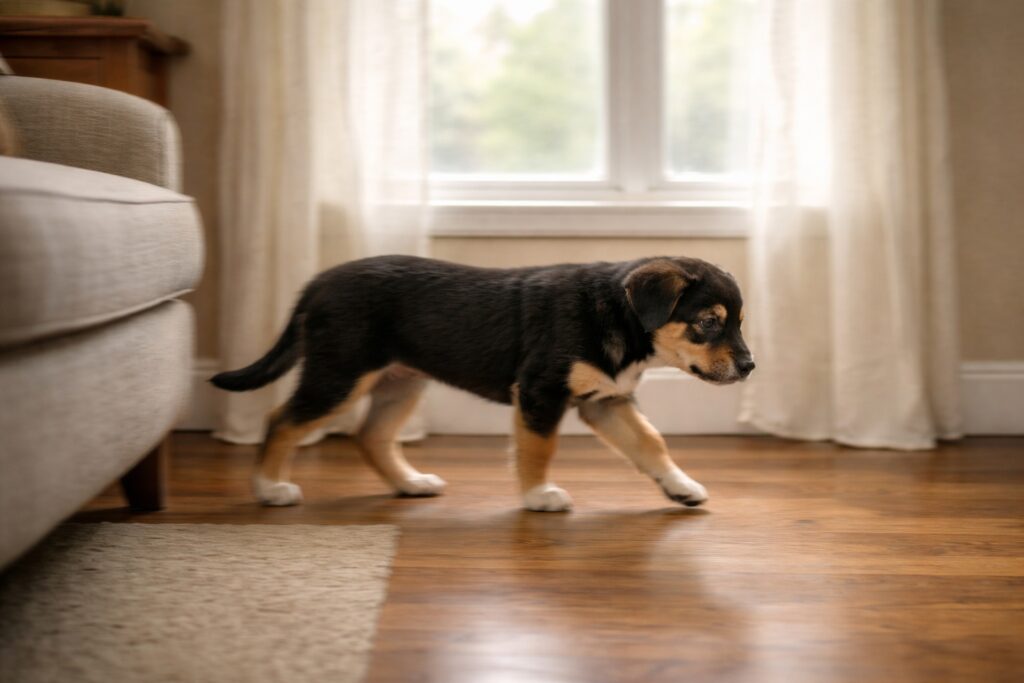
Some puppies pace in repetitive patterns. They may move back and forth near doors or circle in fixed routes. Repetitive pacing is a displacement behavior commonly associated with anxiety. When this pacing appears only during absence, it may signal early-stage puppy separation anxiety.
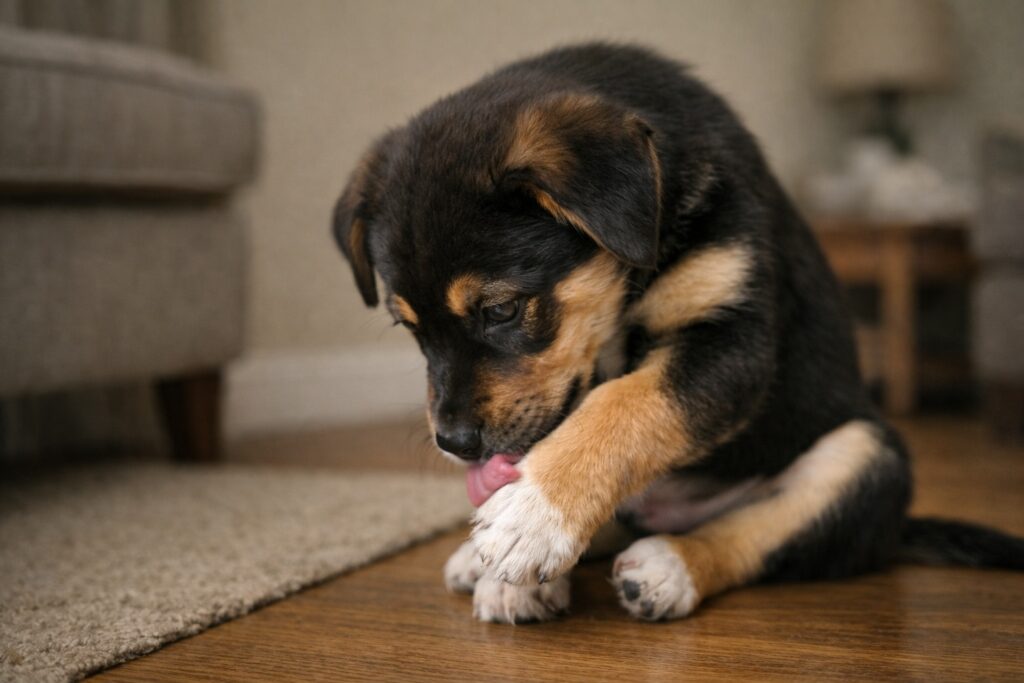
Loss of appetite during alone time is another subtle indicator. A puppy who happily eats treats when the owner is present but refuses food or ignores enrichment when alone may be too anxious to engage. In cases of puppy separation anxiety, stress can suppress normal exploratory behavior, including eating.
Self-soothing behaviors can also emerge. Excessive paw licking, tail chewing, or minor self-injury may appear in more advanced stages. These behaviors are not attention-seeking. They reflect attempts to regulate overwhelming stress.
Behaviors That Appear Only Before or After You Leave
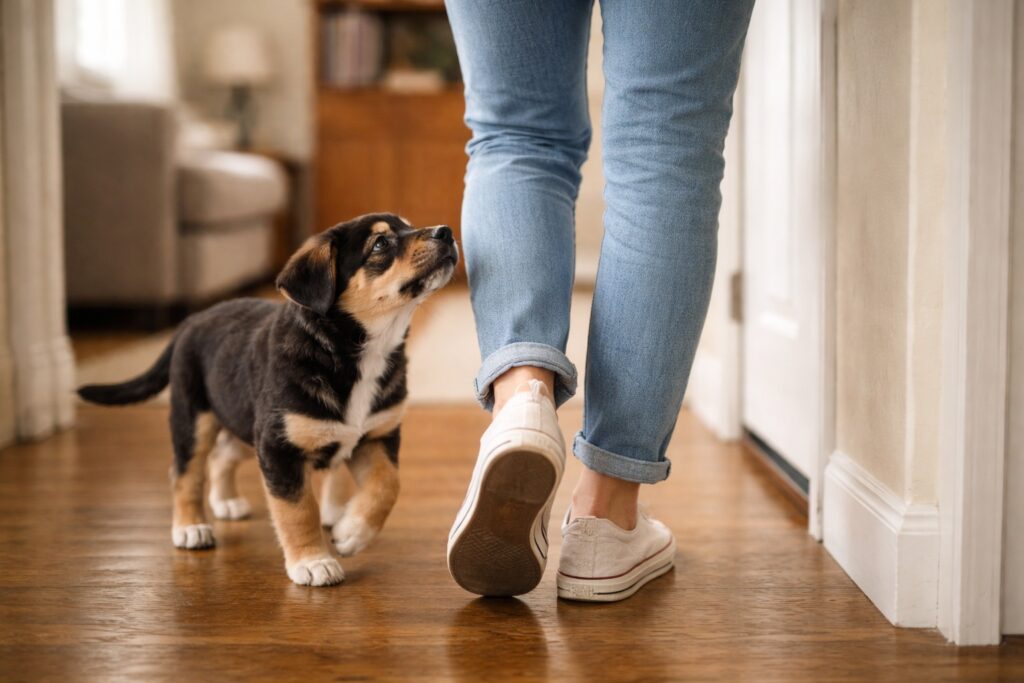
Pre-departure anxiety is often overlooked. A puppy may begin pacing, whining, or following closely when it notices keys, shoes, or a coat being picked up. This anticipatory reaction suggests the puppy has learned to associate these cues with separation. In puppy separation anxiety, distress can begin even before the owner exits.
Some puppies become unusually clingy before departure. They may refuse to settle, position themselves near the door, or display restlessness. This behavior differs from normal attachment because it is linked specifically to leaving routines.
Timing is a critical diagnostic clue. Puppy separation anxiety typically triggers behavior within a short window after departure, often within the first few minutes. When distress begins quickly and is closely tied to absence, it strengthens the likelihood that anxiety is the underlying cause.
Early signs of puppy separation anxiety may appear mild, but their pattern and context matter more than their intensity. Recognizing these warning signals allows owners to differentiate between developmental behavior and emerging emotional distress.
Puppy Separation Anxiety vs Normal Puppy Problems
One of the biggest sources of confusion for owners is distinguishing puppy separation anxiety from common developmental behaviors. Puppies chew, bark, and have accidents as part of growing up. The difference lies in emotional intensity, timing, and context. Puppy separation anxiety is separation-triggered distress, not general immaturity.
Mislabeling normal behavior as anxiety can lead to unnecessary worry. At the same time, dismissing genuine puppy separation anxiety as “just a phase” can allow the problem to strengthen. Clear differentiation prevents both overreaction and underestimation.
Boredom vs Anxiety
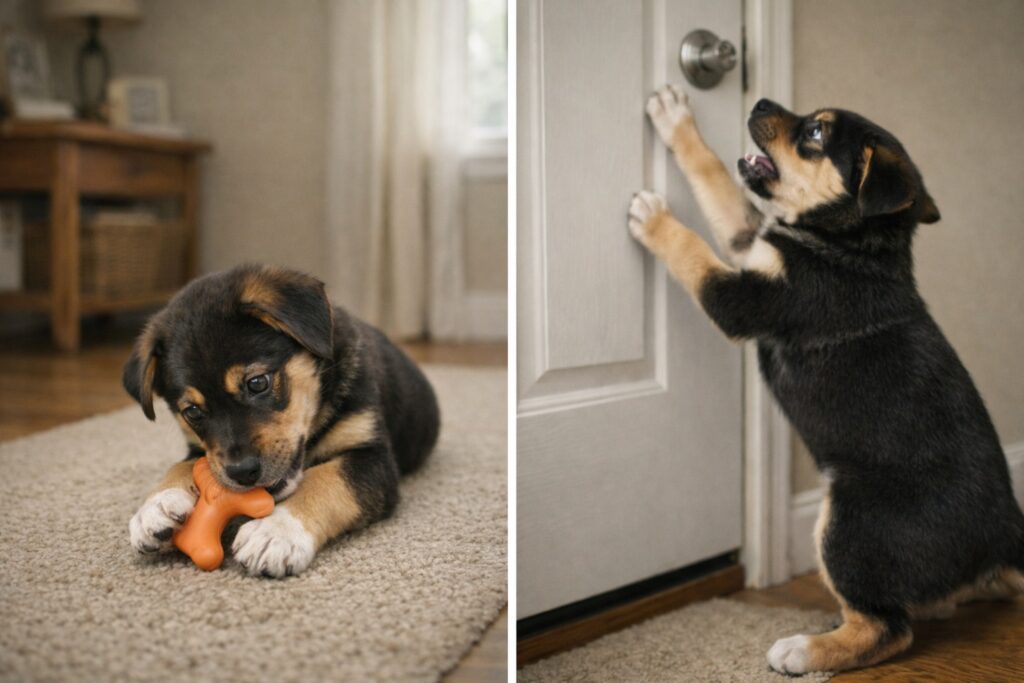
A bored puppy typically engages in casual activity. It may chew toys, wander, or explore calmly. Boredom-related destruction is often scattered and not specifically focused on exit points. Once energy is spent, the puppy settles or sleeps.
In puppy separation anxiety, behavior escalates quickly and appears emotionally charged. Destruction is frequently directed at doors or windows. Vocalization tends to be persistent. The puppy struggles to settle and may not rest at all during the absence.
| Feature | Boredom | Puppy Separation Anxiety |
|---|---|---|
| Emotional state | Calm or mildly restless | Panicked or highly distressed |
| Timing | Specifically, when left alone | Specifically when left alone |
| Destruction focus | Random objects | Near exits or owner scent areas |
| Ability to settle | Eventually naps | Remains hyper-alert |
| Food interest | Eats treats | May refuse food when alone |
Incomplete House Training vs Anxiety-Related Toileting
Young puppies are still learning bladder control. Accidents during normal play or after drinking water are common. These incidents are not necessarily emotional.
With puppy separation anxiety, toileting accidents often occur shortly after the owner leaves. The puppy may have already eliminated before departure, yet still urinate again during absence. This pattern suggests stress-related loss of control rather than incomplete training.
Timing again provides clarity. When accidents consistently coincide with separation and not with general activity, puppy separation anxiety should be considered.
What Causes Puppy Separation Anxiety to Develop
Puppy separation anxiety does not occur at random. It develops through a combination of attachment patterns, environmental changes, developmental sensitivity, and individual temperament. In many cases, the problem begins subtly and strengthens over time through repeated emotional learning. Understanding what causes puppy separation anxiety allows owners to identify risk factors before distress becomes deeply conditioned.
While not every puppy exposed to these triggers will develop anxiety, certain patterns significantly increase vulnerability. The earlier these patterns are recognized, the easier it becomes to prevent escalation.
Attachment Patterns During Early Bonding
Puppies form strong attachments quickly. During early bonding weeks, consistent presence builds security. However, when constant proximity becomes the norm without gradual independence training, the puppy may struggle to cope when alone. Puppy separation anxiety often develops when independence is never introduced in small, safe increments.
Over-attachment is rarely intentional. Owners naturally want to comfort and supervise a new puppy. But if the puppy never experiences short, calm separations during the early weeks, it may fail to learn that absence is temporary and safe. Without these experiences, separation can feel unpredictable and threatening.
Another factor is reinforcement of clingy behavior. If a puppy is consistently rewarded with attention whenever it follows or demands proximity, it may begin to rely entirely on the owner’s presence for emotional regulation. In such cases, puppy separation anxiety forms not from lack of love but from lack of independence conditioning.
Hidden Risk Factors That Increase Vulnerability
Certain puppies are temperamentally more prone to anxiety. Genetic predisposition plays a role. Some breeds or bloodlines demonstrate heightened sensitivity to environmental change. While genetics do not guarantee puppy separation anxiety, they can increase susceptibility.
Early life instability is another factor. Puppies who experience multiple homes, early maternal separation, or inconsistent caregiving may develop heightened attachment dependence. These early disruptions can shape emotional coping capacity.
Understanding these causes reframes the issue. Puppy separation anxiety is rarely about stubbornness or manipulation. It develops through emotional learning, environmental consistency, and biological sensitivity. Recognizing contributing factors helps owners see the behavior as a stress response rather than misbehavior.
When Early Signs Signal a Growing Problem
Not every whine or chew marks the beginning of puppy separation anxiety. However, certain patterns indicate that distress is intensifying rather than fading. The key is escalation. When early signs grow in frequency, intensity, or duration, puppy separation anxiety may be forming a conditioned response rather than a temporary adjustment phase.
Progression matters more than isolated incidents. A single anxious episode after a long absence does not confirm a disorder. Repeated anxiety responses tied consistently to separation are stronger indicators that the problem is developing.
Time-to-Onset Patterns
One of the clearest markers of puppy separation anxiety is how quickly behavior begins after departure. Distress that starts within minutes, sometimes immediately after the door closes, suggests a strong separation trigger. The shorter the latency period, the more conditioned the response may be.
Pre-departure anxiety is another warning sign. If the puppy reacts to cues such as picking up keys or putting on shoes, it indicates anticipation-based stress. When anxiety begins before separation itself, the association has strengthened.
Intensity and Escalation Markers
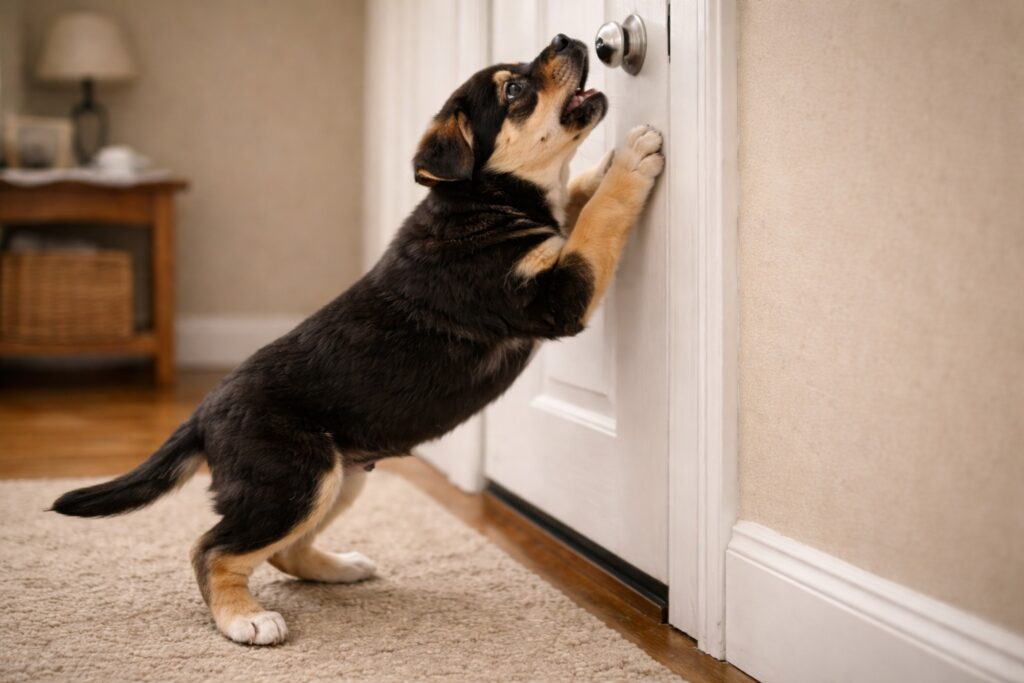
Escalation in severity signals a growing issue. Early whining may progress to persistent howling. Mild scratching may become frantic clawing at doors. Occasional accidents may increase in frequency and occur despite prior elimination.
Another escalation marker is recovery delay. A puppy who remains hyper-aroused long after the owner returns may be struggling to regulate stress hormones. Extreme greeting intensity that appears disproportionate to the absence duration can reinforce this concern.
Conclusion
Puppy separation anxiety is not a sign of disobedience or manipulation. It is a stress response rooted in attachment, developmental sensitivity, and emotional learning. When a puppy reacts intensely to being left alone, the behavior reflects fear and an inability to self-regulate rather than defiance. Recognizing this distinction changes how the issue is understood and approached.
Early signs of puppy separation anxiety often appear subtly. Timing, escalation, and context provide the clearest indicators. Distress that begins within minutes of departure, intensifies over time, or includes physiological stress markers signals more than routine puppy adjustment. Differentiating anxiety from boredom, crate frustration, or incomplete house training prevents misinterpretation and delayed response.
Understanding what causes puppy separation anxiety empowers owners to act thoughtfully. Attachment patterns, sudden schedule changes, developmental stages, and temperament all contribute to vulnerability. The earlier these patterns are recognized, the more effectively long-term escalation can be prevented. Clear observation, calm assessment, and informed decision-making remain the foundation for protecting a puppy’s emotional well-being.