People often get confused when dogs jump on them. They think the dog is being friendly. The thing is, when dogs jump on people, it can be a big problem. Dogs get really excited. As they get bigger and stronger, they can hurt people when they jump. They can scratch people. Even make them fall. This is especially bad for kids and old people. So it is very important to know how to stop a dog from jumping. Teach your dog not to jump on people. Dog jumping is a deal, and we need to stop dogs from jumping.
People think dogs jump up because they are being stubborn or want to be in charge. The truth is, dogs jump up because they have learned that it gets them something. Dogs jump up because it works for them. They get attention, people look at them, touch them, or they get excited, even if people are yelling at them. After a while, jumping up just becomes something they do without thinking. Knowing this is the step to figuring out how to get dogs to stop jumping on people in a way that is fair and gentle, to the dogs.
The good news is that jumping can be resolved without force, punishment, or intimidation. When handled correctly, dogs can learn polite greetings that work at home, at the door, and in public spaces. This guide explains how to stop a dog from jumping using six clear, practical tips that focus on prevention, training, and consistency. Each step builds on the previous one, creating lasting behavior change rather than temporary control.
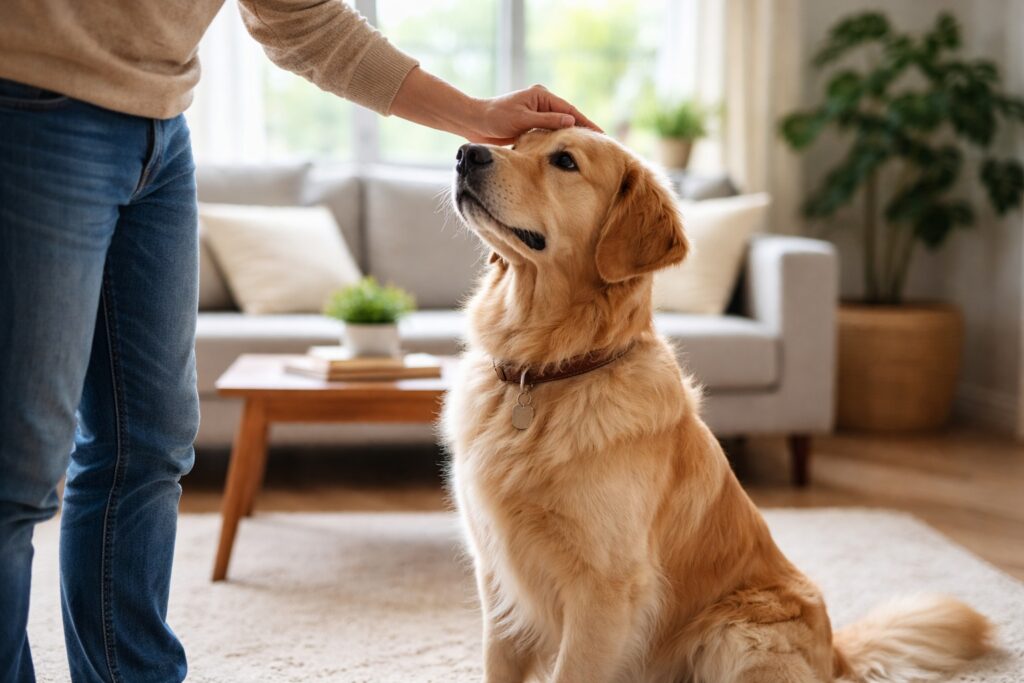
1. Understand Why Dogs Jump on People
Before focusing on how to stop a dog from jumping, it is important to understand why the behavior exists in the first place. Dogs are social animals. Greeting behaviors come naturally, but dogs do not instinctively understand human preferences. Jumping is often a dog’s way of getting closer to a person’s face, hands, or voice.
In many cases, jumping starts unintentionally. Puppies jump, people laugh, pet them, or talk to them, and the puppy learns that jumping leads to attention. Even pushing the dog away or saying “no” can reinforce the behavior. To a dog, attention is attention. Over time, the habit becomes stronger.
Other contributing factors include poor impulse control, excess energy, lack of clear rules, and the absence of a taught alternative behavior. Dogs are not born knowing how to greet politely. That behavior must be taught. Once the motivation behind jumping is understood, it becomes much easier to apply the correct strategy to stop it.
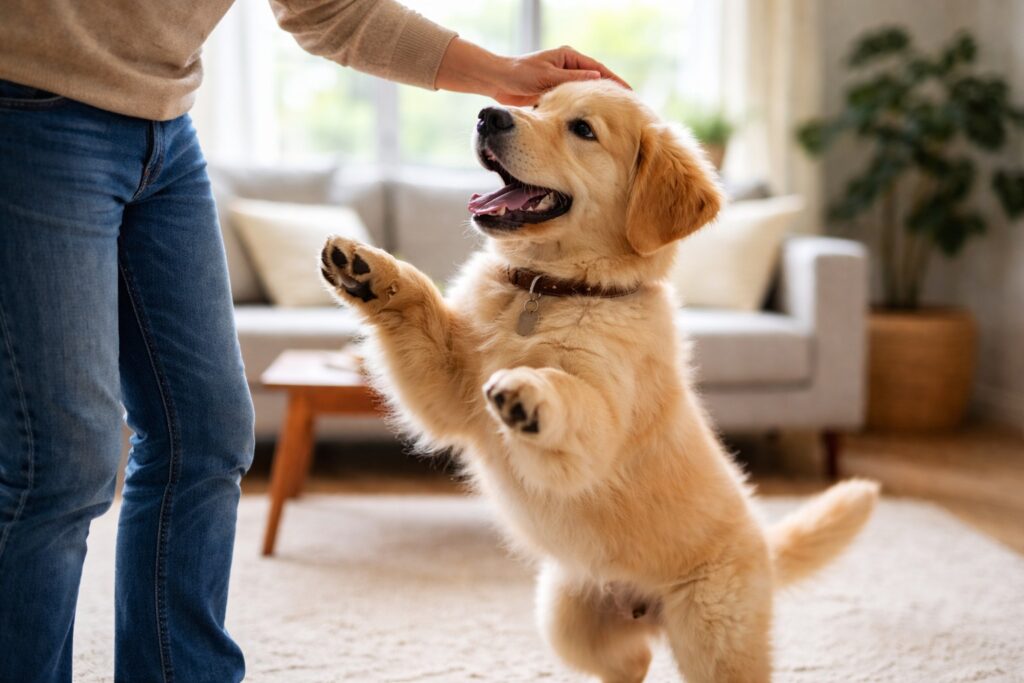
2. Prevent Jumping Before It Happens
One of the most overlooked parts of learning how to stop a dog from jumping on people is prevention. Training cannot succeed if a dog keeps practicing the unwanted behavior. Every successful jump reinforces the habit.
Management Strategies That Reduce Jumping
Management means controlling the environment so jumping is less likely to occur. This is especially important during the early stages of training.
Common management tools include:
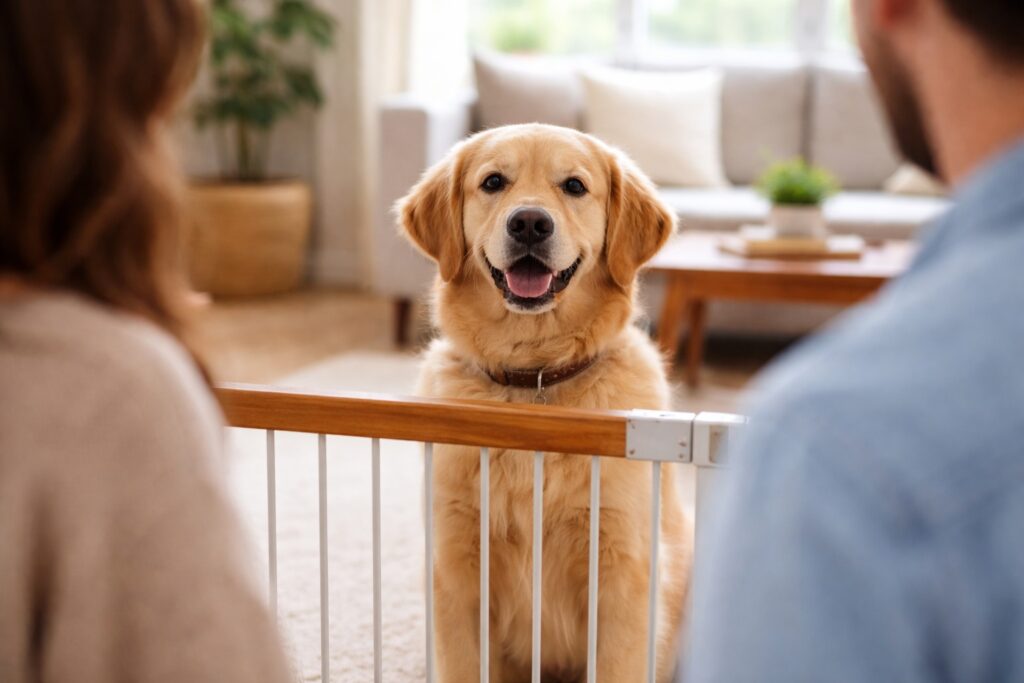
- Using baby gates or exercise pens when guests arrive
- Placing the dog in another room briefly during high excitement moments
- Keeping the dog on a leash indoors when visitors enter
- Crating the dog for short periods when needed
These strategies are not permanent solutions. They are temporary supports that prevent rehearsal of jumping while training is in progress. Preventing practice speeds up learning and reduces frustration for everyone involved.
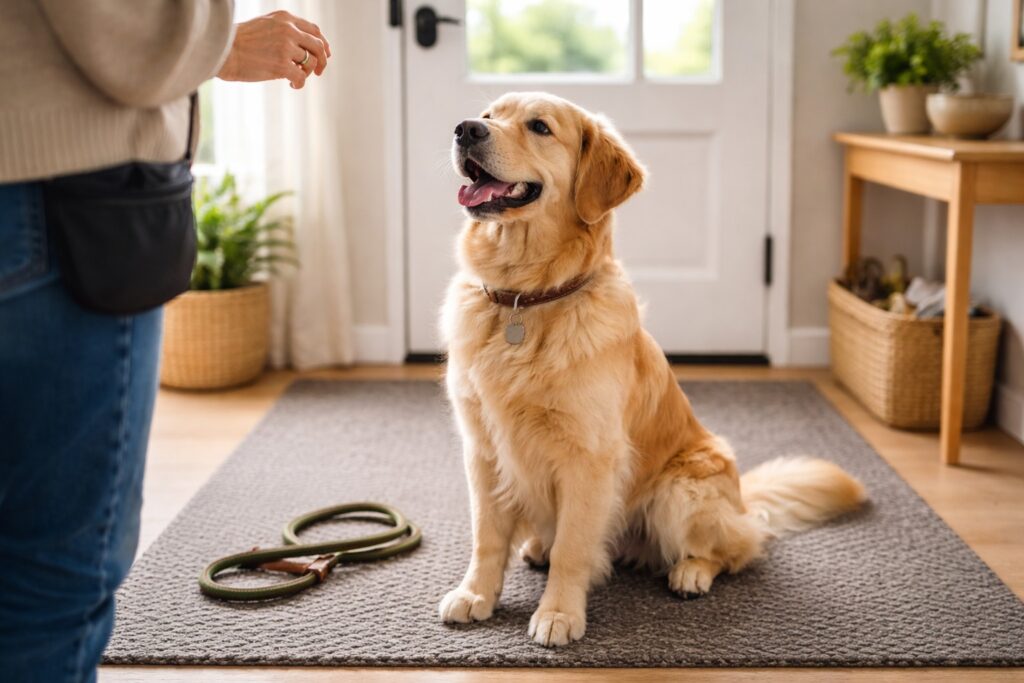
3. Teach a Clear Replacement Behavior
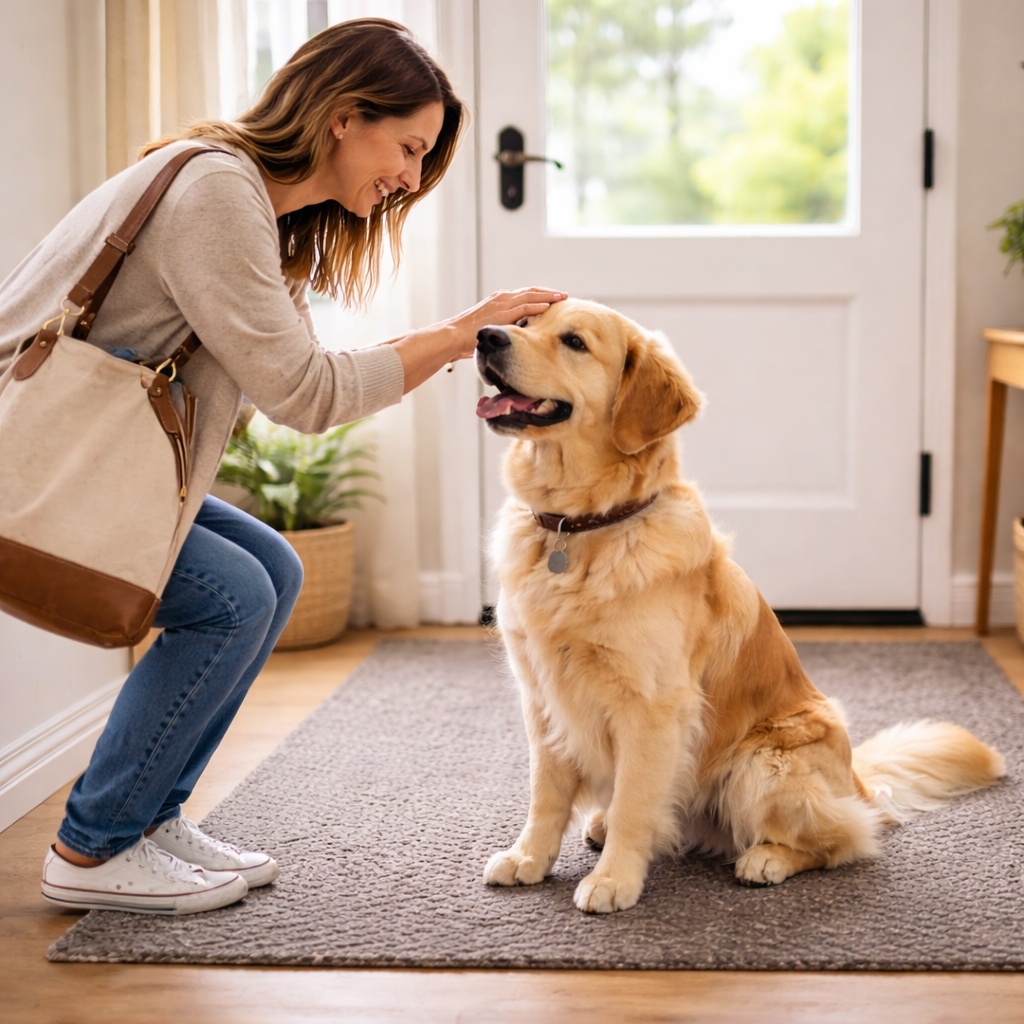
Jumping does not stop just because it is ignored. Dogs need to be shown what to do instead. The most effective replacement behavior when learning how to stop a dog from jumping is sitting.
A dog cannot sit and jump at the same time. Sitting also creates a calm body posture that naturally discourages excitement.
Teaching the Sit Response for Greetings
The sit behavior should be practiced long before guests arrive. Training sessions should be short, structured, and calm.
Key points for teaching sit:
- Use a small, high-value treat held close to the dog’s nose
- Slowly lift the treat upward so the dog’s rear moves toward the floor
- Reward immediately when the dog sits
- Practice in multiple locations, not just one room
Once the dog consistently sits on cue, the behavior can be linked to greetings. Sitting becomes the dog’s default way of asking for attention.
4. Control Energy Through Physical and Mental Stimulation
It is often assumed that jumping is purely a training issue. In reality, energy levels play a major role. Dogs with excess energy struggle to control their impulses, especially during exciting moments. Managing energy is a critical part of learning how to stop a dog from jumping on people.
Physical Outlets That Reduce Jumping
Structured physical activities help release pent-up energy in a controlled way.
Effective options include:
- Daily walks with consistent pacing
- Tug games with clear start and stop rules
- Wearing a lightweight dog backpack during walks
- Stair exercises under supervision
Exercise should be appropriate for the dog’s age, size, and health. Overexertion can increase arousal rather than reduce it.
Mental Stimulation That Promotes Calm Behavior
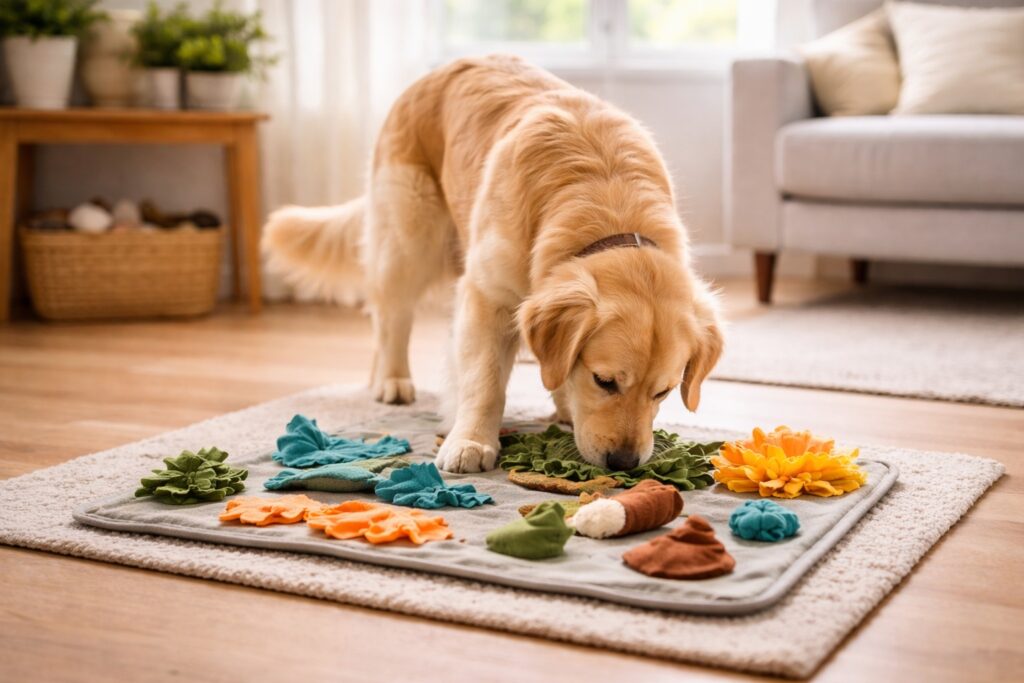
Mental work often tires dogs more effectively than physical exercise alone. Scent-based activities are beneficial because dogs use a large portion of their brain while sniffing.
Helpful mental activities include:
- Snuffle mats for meals
- Treat-dispensing puzzle toys
- Simple scent games using hidden food
- Short training sessions throughout the day
A mentally satisfied dog is more capable of self-control, which directly supports polite greeting behavior.
5. Practice Greetings in Low-Distraction Settings
Many people attempt to fix jumping during real-life greetings. This often leads to failure. Training should begin in calm, controlled environments where success is likely. This step is essential when learning how to stop a dog from jumping reliably.
Practice should start without visitors. The dog should rehearse greeting behaviors with familiar people who understand the rules.
Structured Practice Sessions
Practice sessions should be:
- Short, lasting one to two minutes
- Repeated two to three times per day
- Calm and predictable
The goal is repetition without overwhelm. As the dog improves, distractions can slowly be added, such as door knocks, doorbells, or new people. Progress should always match the dog’s ability to succeed.
If jumping reappears, it is a sign that the difficulty level increased too quickly. Training should move back to an easier stage before progressing again.
6. Be Consistent and Remove Reinforcement
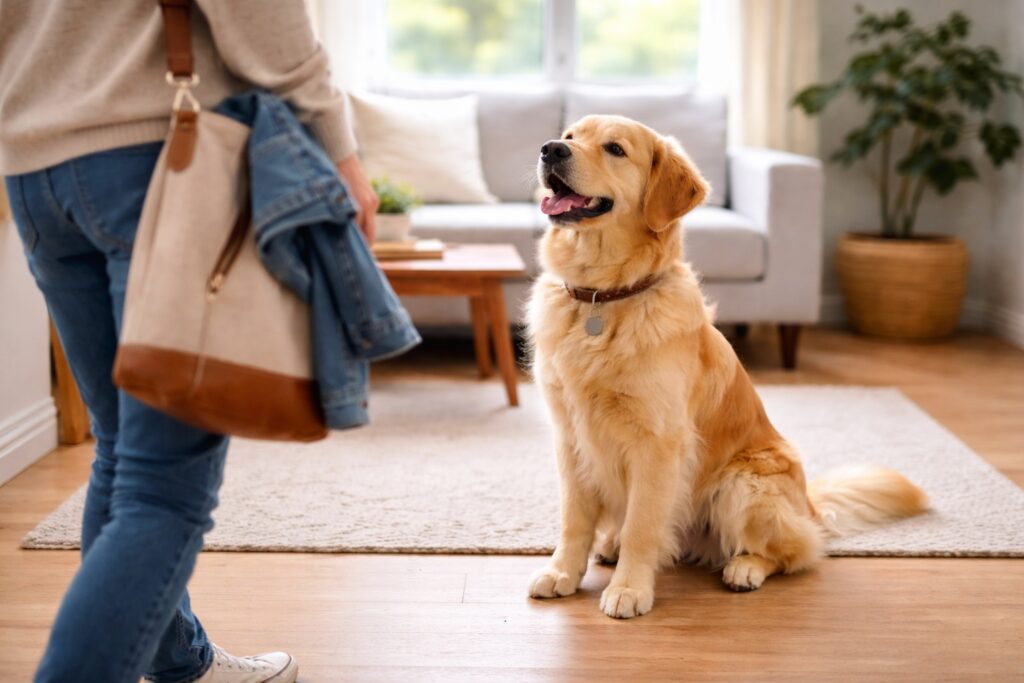
Consistency is the foundation of success when learning how to stop a dog from jumping on people. Mixed messages slow progress. If jumping is allowed sometimes but not others, the dog will keep trying.
Every person interacting with the dog must follow the same rules. Jumping should never result in attention.
What to Do When Jumping Happens
If a dog jumps:
- Turn away calmly
- Avoid eye contact, touching, or talking
- Wait for all four paws to return to the floor
- Ask for a sit and reward once calm
If the dog continues jumping, the best response is to remove attention entirely by stepping away or leaving the room briefly. This teaches the dog that jumping makes people go away, while calm behavior makes people stay.
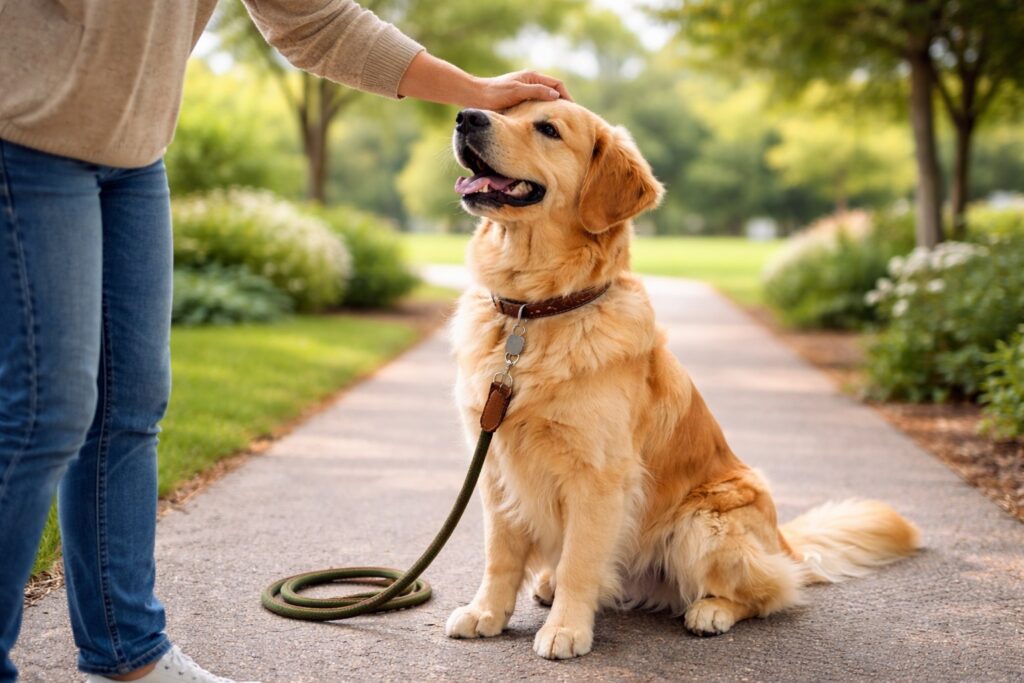
Consistency also applies outside the home. On walks or in public spaces, people should be asked not to greet the dog unless the dog is sitting. This protects the training process and keeps expectations clear.
Common Misconceptions About Dog Jumping
Many people believe jumping is a sign of dominance. This is incorrect. Jumping is usually a learned attention-seeking behavior, not an attempt to control people.
Another common misconception is that dogs will grow out of jumping. Without training, the opposite usually happens. Behaviors that are rewarded become stronger over time.
Some believe punishment is necessary to stop jumping. In reality, punishment often increases anxiety and excitement, making jumping worse. Clear guidance, structure, and reinforcement of calm behaviors are far more effective.
Conclusion
To stop a dog from jumping on people, you need to be patient and have a plan. You have to be consistent. You do not need to use force or scare the dog. The dog jumps because of what it has learned, not because it is being bad.
When you give the dog things to do,o control what is going on around it, and let it get rid of its extra energy, it will start to greet people nicely. This is because the dog will learn that polite greetings are a choice. Learning how to stop a dog from jumping on people is about helping the dog make good choices.
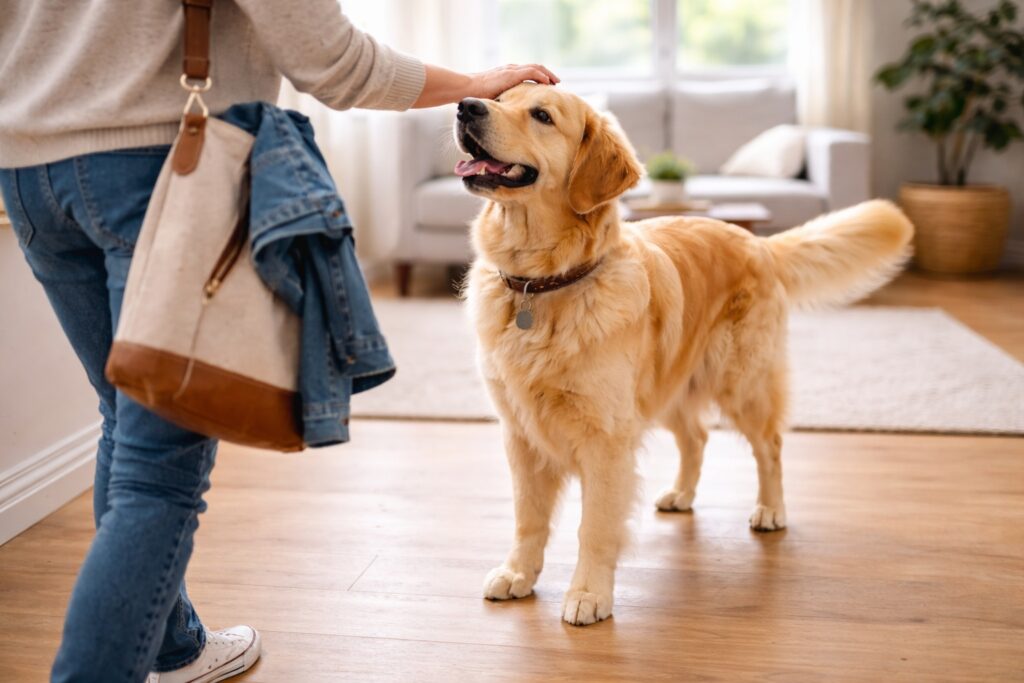
To get results, you have to stop the bad behavior from happening. You have to teach a behavior like sitting down and make sure everyone stays calm when they interact with each other. Every time they do this, you should give them feedback. At first, it might seem like things are not changing fast. If you keep doing things the same way over and over, you will start to see real changes that last.
With the right approach, dogs can learn to greet people calmly at home, at the door, and in public. Polite greetings are not just possible. They are achievable with thoughtful training and consistent follow-through.