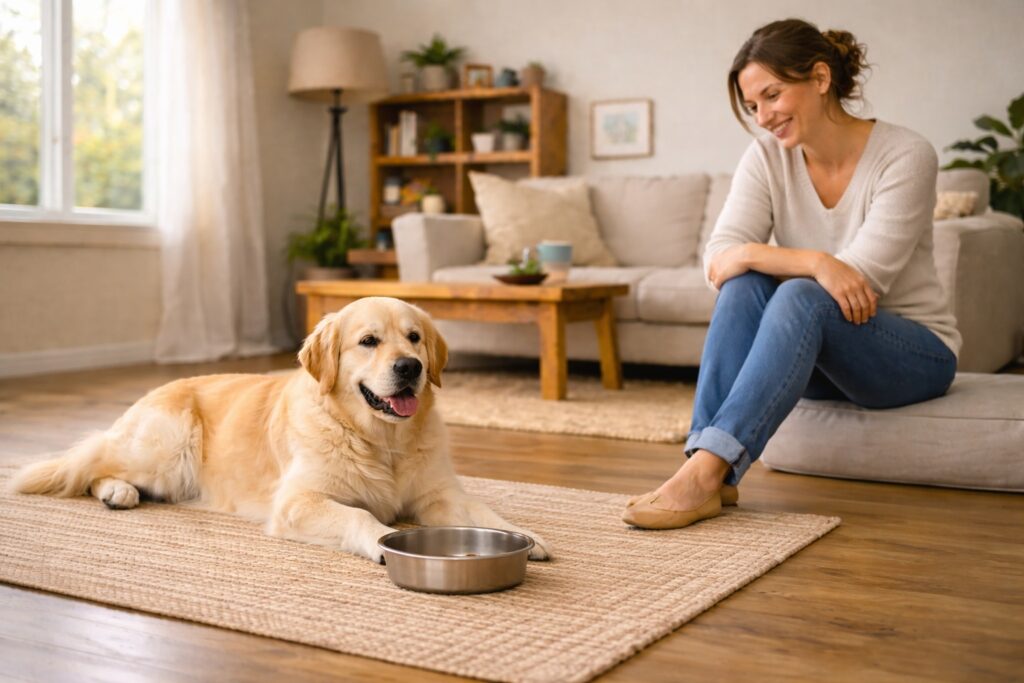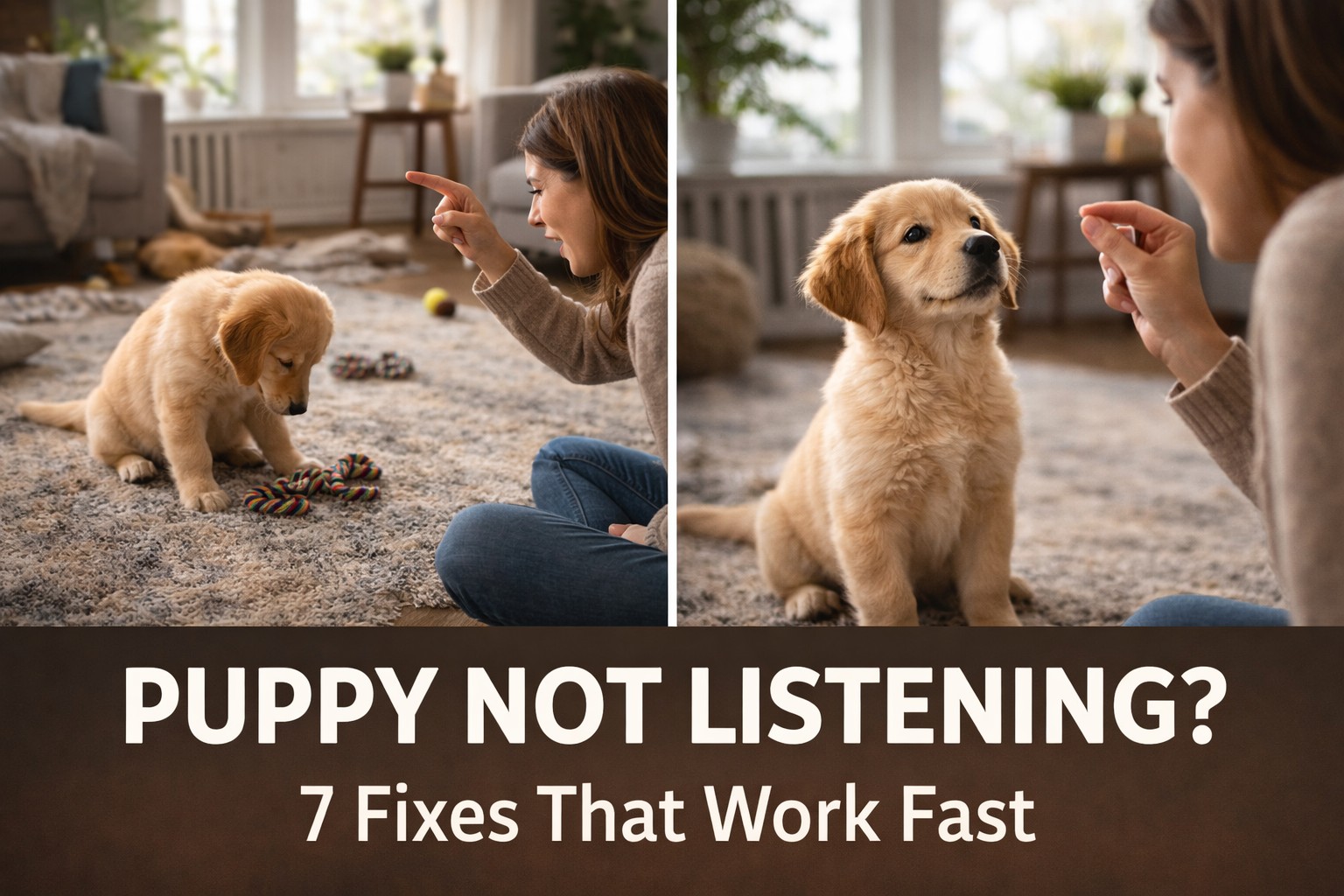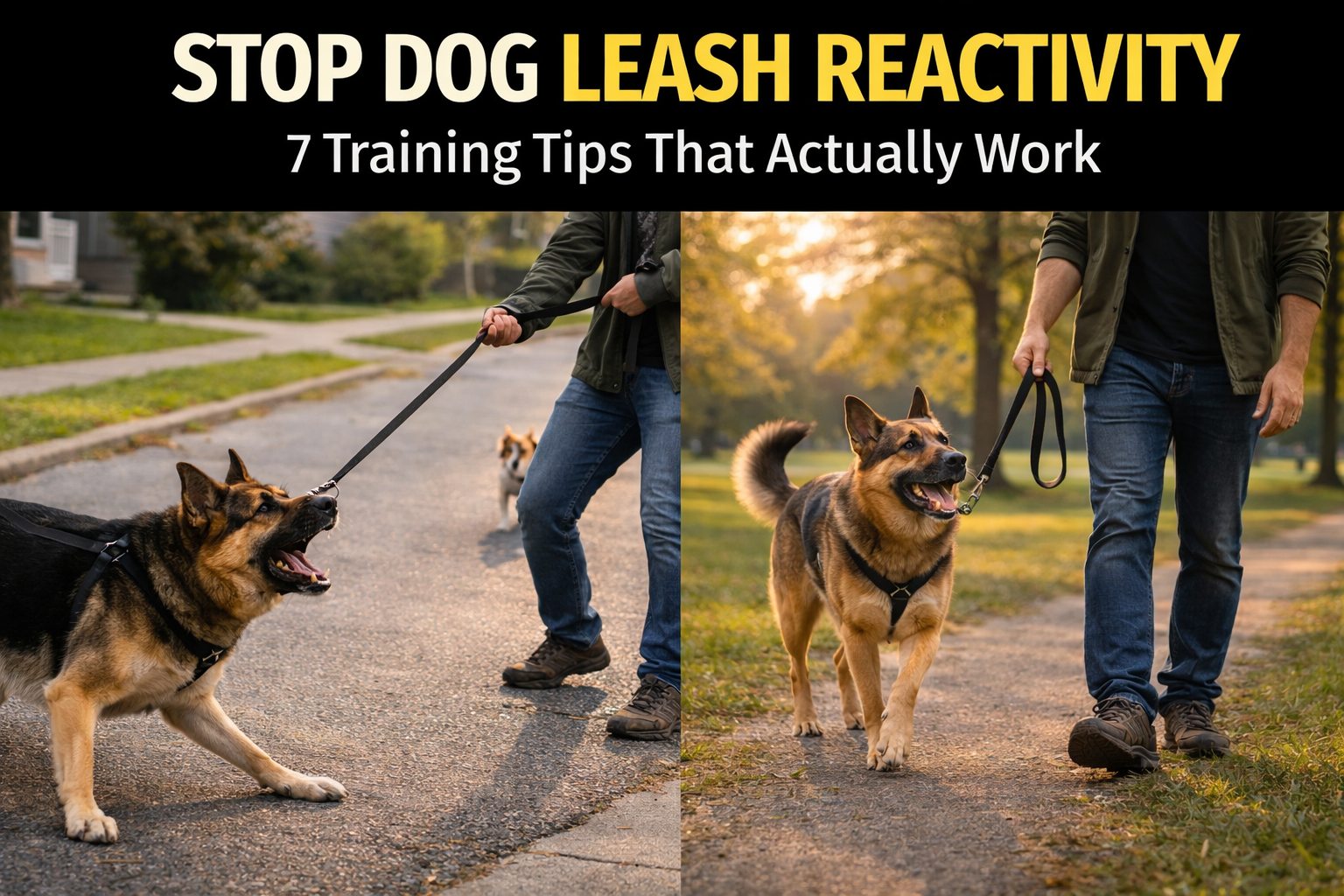
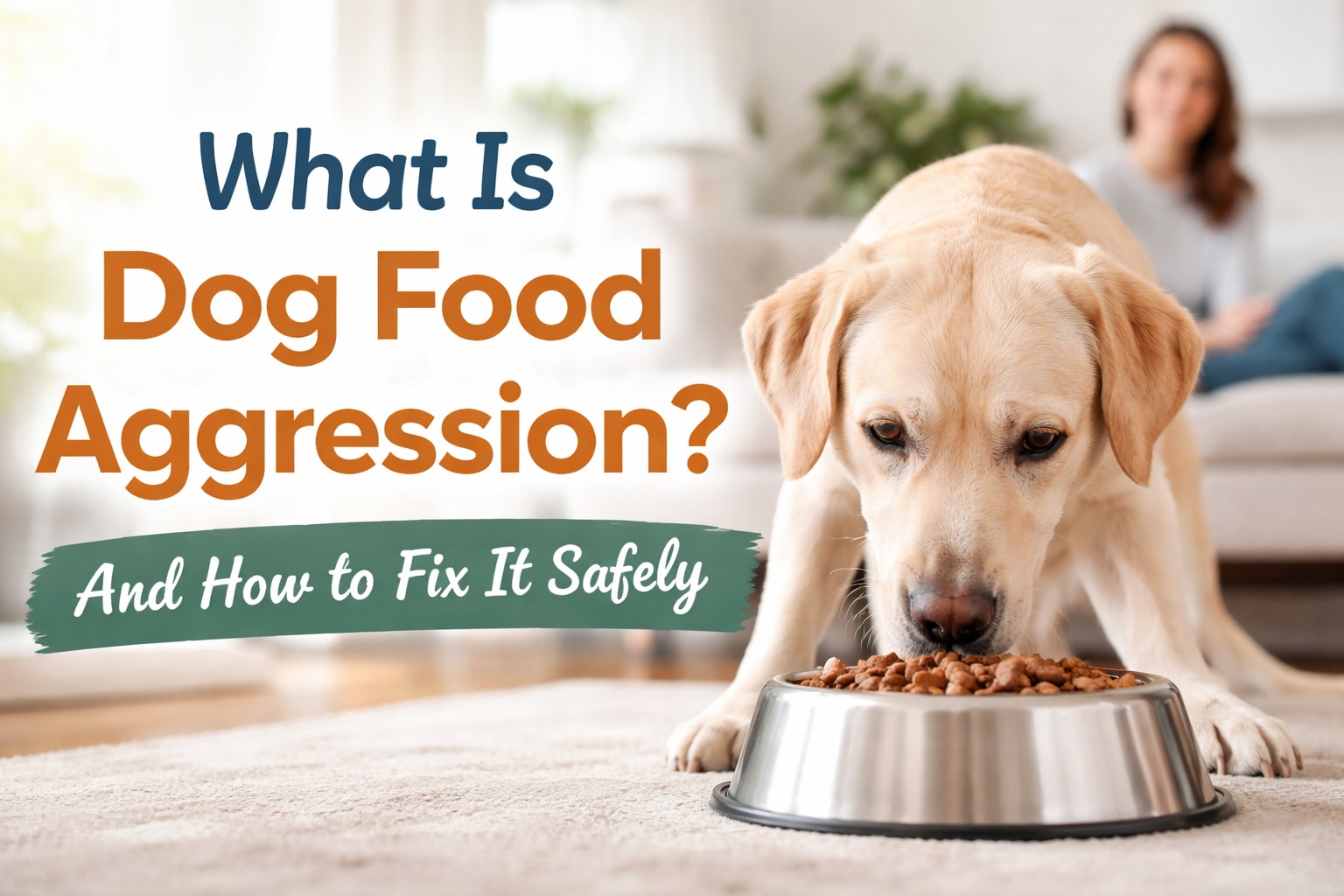
One of the most common behavioural disorders is dog food aggression. When their dog barks, stands up or comes near food, a lot of owners feel bewildered or even terrified. This attitude often comes out of nowhere, but in actuality, dog food aggressiveness builds up over time due to emotional, environmental, or learning concerns. To fix the situation carefully, you need to know why dogs guard their food.
A dog who is aggressive towards food is not awful, bossy, or impossible to train. Most of the time, it’s a protective reaction based on fear, insecurity, or past traumas. When dogs sense their food is at threat, they utilise violence to converse to each other. When owners reprimand this behaviour without knowing why, the issue frequently grows worse instead of better.
This in-depth guide will explain why dogs act violently around food and provide you with proven, gentle, and effective strategies to address the situation. Every part tackles the main question directly and talks about reasons, signs, psychology, prevention, and step-by-step remedies that work in actual homes.
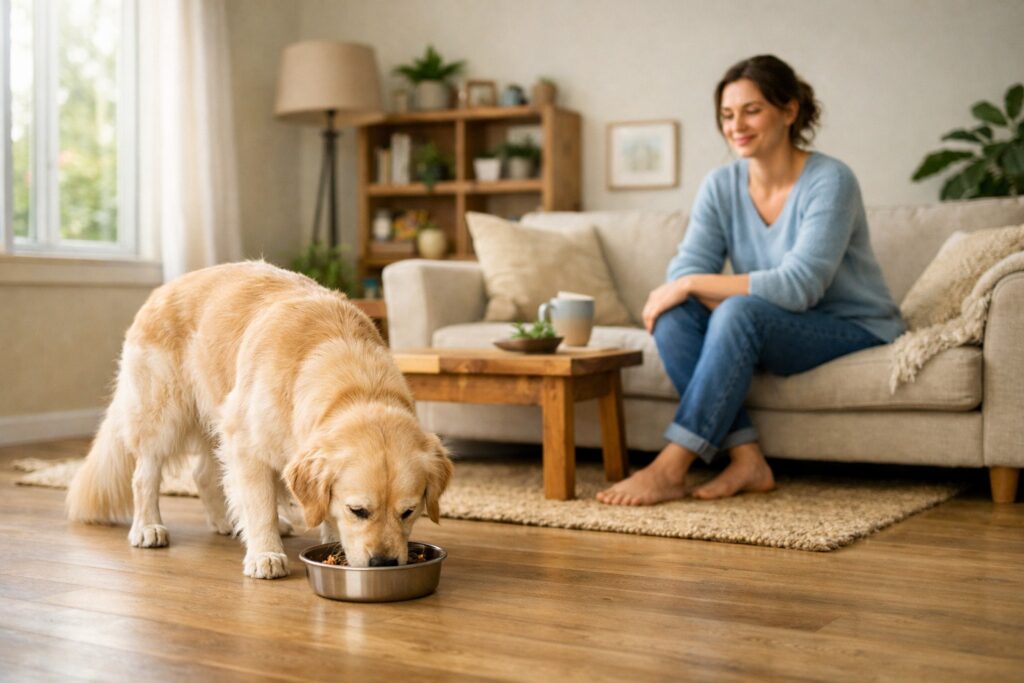
What Dog Food Aggression Really Is?
Dog food aggression is a sort of resource guarding in which a dog acts defensively around food. When someone approaches near the dog’s food bowl, treats, or chew toys, the dog may growl, freeze, snap, bark, or bite.
Food aggression doesn’t mean being in charge. It has to do with feeling like you’ve lost something. The brain activates a survival response when a dog fears that food might be taken away. This can happen with pups, mature dogs, dogs who have been rescued, or even dogs that have grown up in loving families.
Dog food anger might be addressed at:
- Owners
- Kids
- Other dogs
- Guests or strangers
The intensity can be anything from small stress to serious bites, which is why it’s crucial to understand and correct things early.
Why Dogs Get Angry Over Food
There are various reasons why dogs display food aggressiveness, and it’s not generally just one thing that causes it. Most of the time, emotional learning and environmental triggers function together.
Fear of Losing Food
The most prominent reason for dog food aggression is fear. Dogs may feel that their food is scarce or harmful. This anxiety can develop from:
- Fighting with other puppies
- Living with multiple dogs
- Past cases where food was taken away
Once fear is learnt, the dog may guard food even when there is no genuine threat.
Past Trauma or Neglect
Rescue dogs may display dog food hostility because they previously encountered hunger or competition. If a dog once had limited access to food, the brain retains that stress. Even after living in a safe home, the behaviour can continue unless retrained.
Different Human Behaviour
Dogs are bewildered when humans sometimes withhold food, tease them, or interrupt meals unpredictably. Inconsistency teaches dogs that people near food are risky.
Genetics and Temperament
Some canines are naturally more sensitive or cautious. These dogs may acquire dog food hostility faster than confident dogs, especially if early training was missing.
Signs of Dog Food Aggression You Should Never Ignore
Dog food hostility always starts with minor warning signs. Ignoring these indicators invites the conduct to intensify.
Common early indicators include:
- Eating more quickly when someone approaches
- Freezing over the bowl
- Side-eye or hard staring
- Growling or lip rising
- Standing over food with a tight posture
Advanced indicators include snapping, lunging, or biting. Dogs typically do not bite “without warning.” They bite because earlier signals were dismissed or penalised.
The Psychology Behind Dog Food Aggression
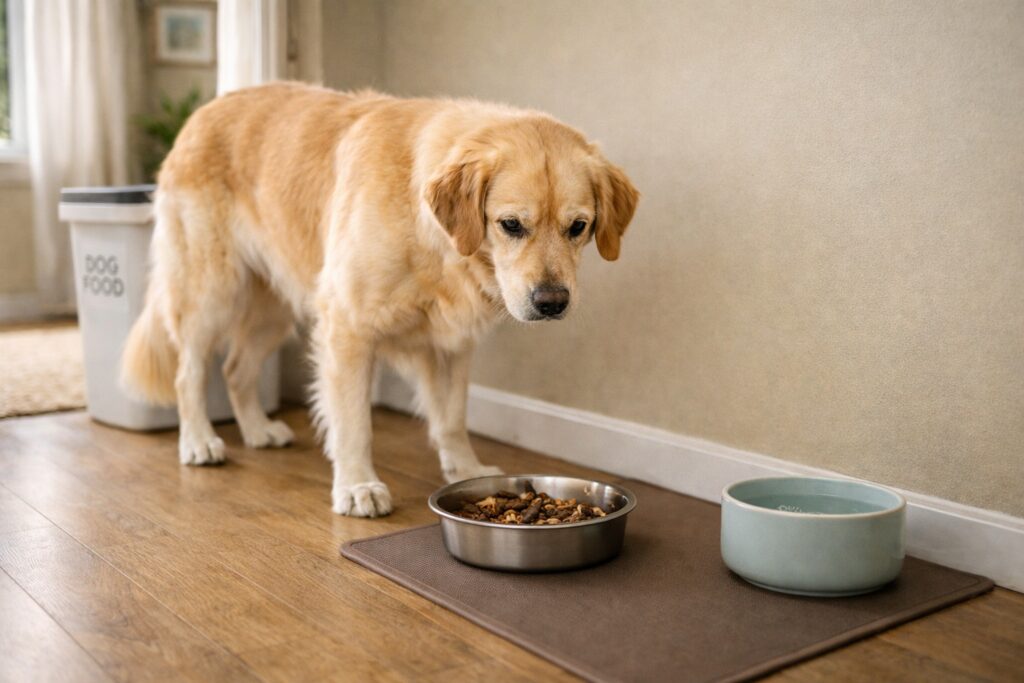
To restore a dog’s food aggression, you must understand how a dog’s brain processes food. Food activates survival instincts. When a dog feeds, the brain goes into defence mode. If the dog feels threatened, the stress hormones increase. This makes learning impossible at that moment.
Punishment during feeding:
- Increases dread
- Confirms the dog’s assumption that humans are dangerous around food
- Makes future violence greater and faster
Effective correction works by shifting emotional associations, not by demanding obedience.
Common Myths That Make Dog Food Aggression Worse
Many owners unknowingly worsen dog food aggression by following antiquated suggestions.
“Take the Bowl Away to Show Dominance”
This method teaches the dog that humans steal food. It raises guarding behaviour and the risk of biting.
“Growling Means the Dog Is Bad”
Growling is communication. Removing the growl through punishment removes the warning, not the problem.
“This Is Just a Puppy Phase”
Puppy food aggressiveness generally develops into adult aggression if neglected. Early intervention is crucial.
How Dog Food Aggression Affects Household Safety
Dog food hostility is not merely a training issue; it is a safety one. Children, guests, and other pets are at risk when animosity stays unrestrained.
In multi-dog families, food aversion can cause:
- Serious fights
- Continuous stress
- Injury requires animal care
Addressing dog food aggression protects both the dog and the household environment.
How to Fix Dog Food Aggression Step by Step
Fixing dog food aggression involves time, patience, and trust-building. The idea is not to manage the dog but to make the dog feel safe.
1. Stop Triggering the Aggression
Do not touch, stare at, or remove food while the dog eats. Prevent reactions before training begins.
2. Create a Safe Feeding Environment
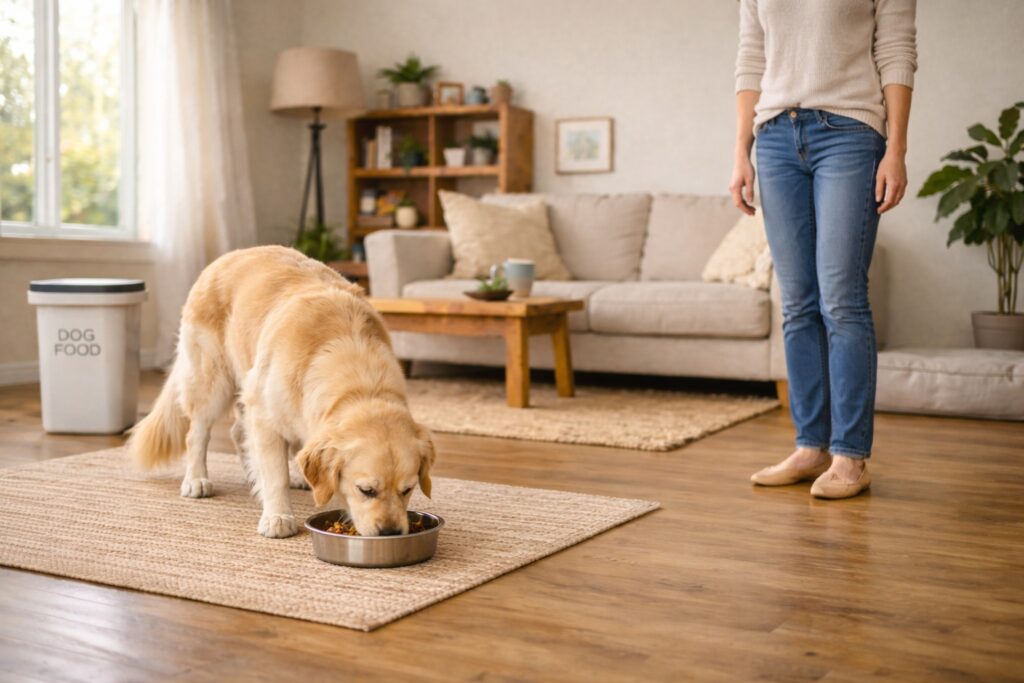
Feed the dog at a tranquil spot with no foot traffic. Certainty lessens anxiety.
3. Use Distance-Based Desensitisation
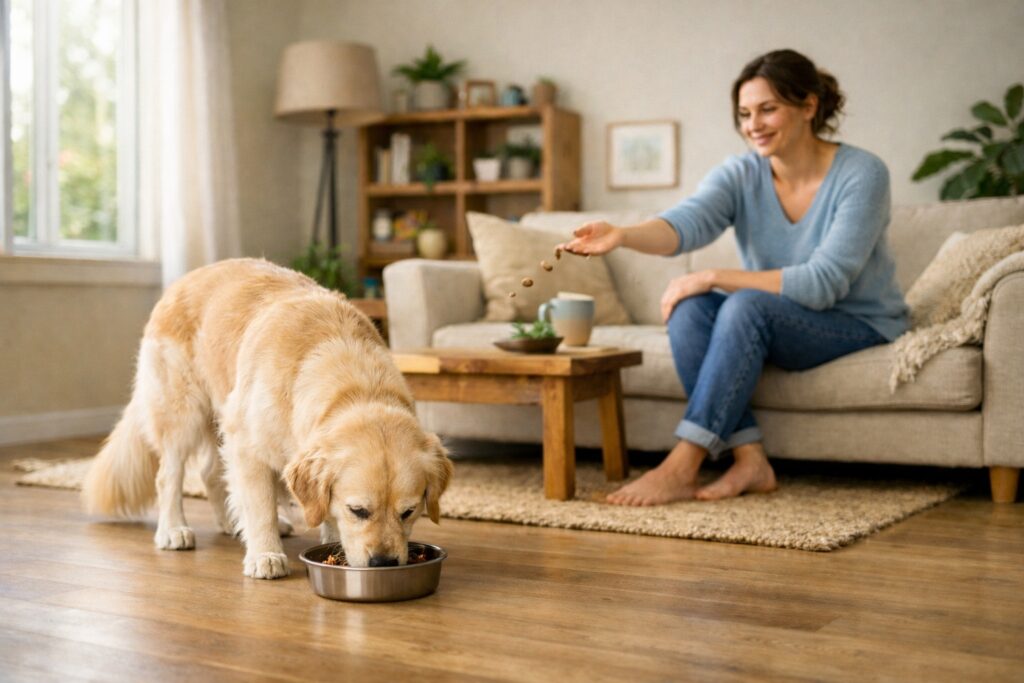
Start by standing far away while the dog eats. Toss high-value treats calmly, then step back. Over time, the dog learns that people near food offer nice things.
Trading Games That Reduce Food Aggression
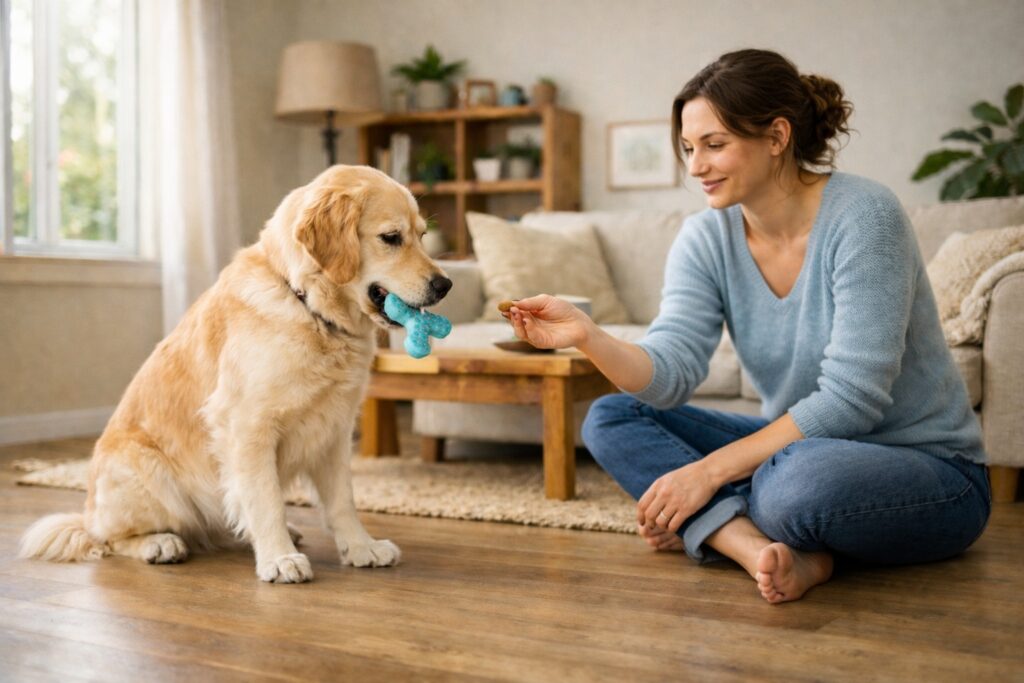
Trading teaches dogs that giving something up leads to something better.
How to do it correctly:
- Offer a higher-value treat
- Let the dog drop the food voluntarily
- Give the award calmly
- Return the original item
This method promotes trust instead of fear.
Managing Dog Food Aggression in Multi-Dog Houses
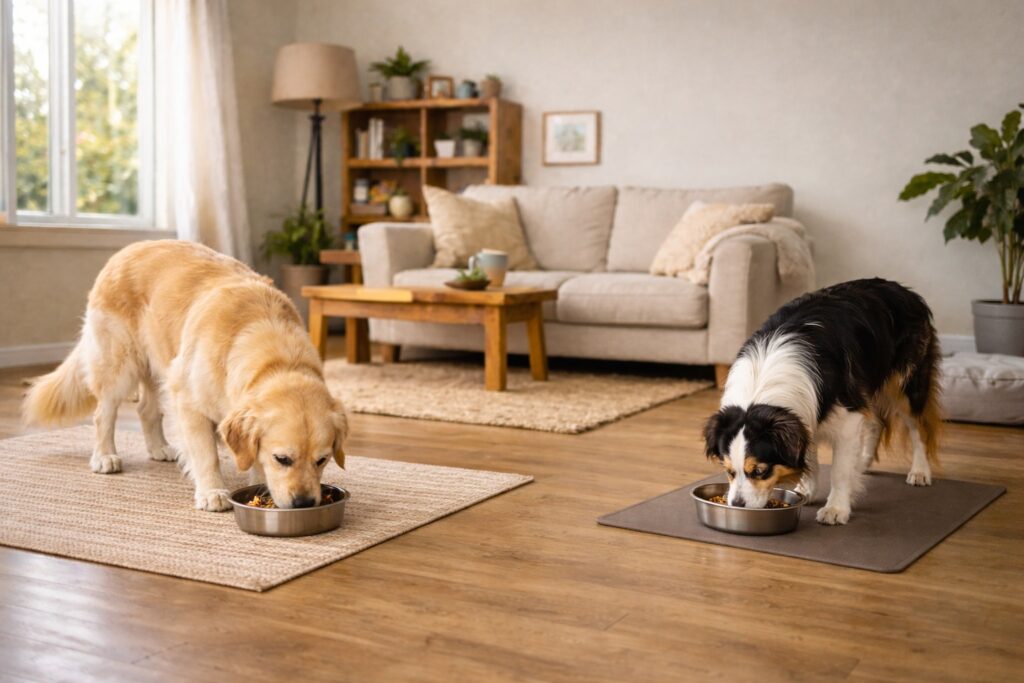
Dog food aggression is frequent in houses with several dogs due to competitiveness.
Best practices include:
- Feeding dogs in separate rooms
- Removing bowls after meals
- Never allowing dogs to “finish” each other’s meals
- Supervising treat time closely
Structure prevents conflict before it starts.
How Long Does It Take to Fix Dog Food Aggression
Dog food animosity may not fade overnight. The timeline depends on:
- Severity of the conduct
- The dog’s past experiences
- Consistency of training
Mild occurrences may improve in weeks. Severe examples may take months. Progress is assessed by decreasing tension, not instant obedience.
When Professional Help Is Necessary
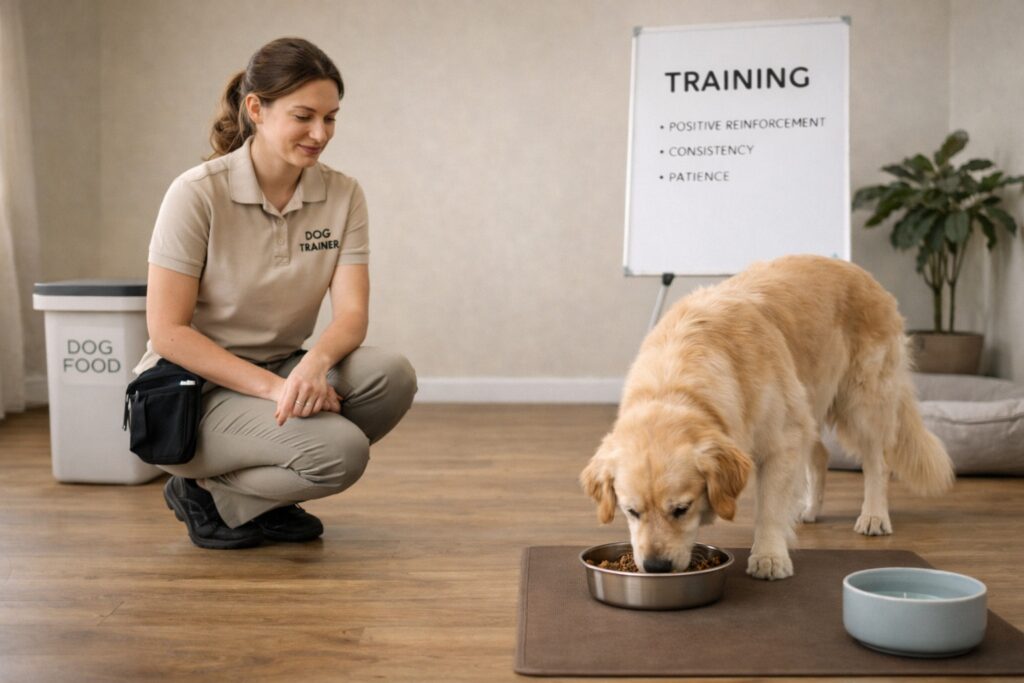
If dog food aggression includes biting, violent snarling, or lunging, professional therapy is recommended.
A skilled behaviour expert can:
- Create a personalised strategy
- Ensure safety during training
- Address emotional triggers correctly
Seeking aid early prevents long-term damage.
Preventing Dog Food Aggression Before It Starts
Prevention is easier than correction.
Key preventative habits:
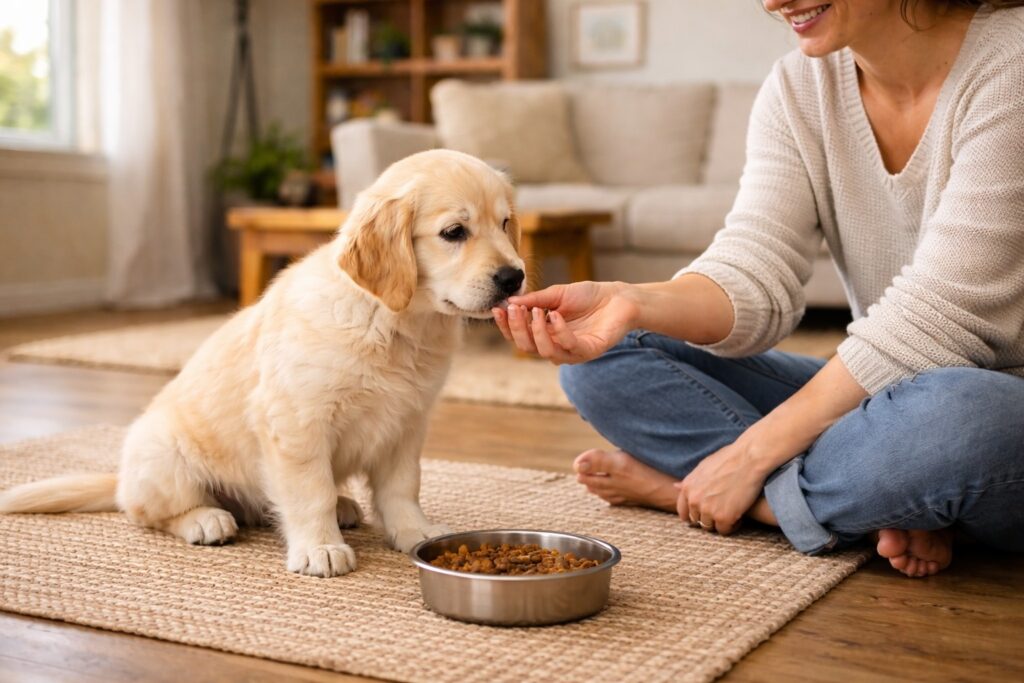
- Teach puppies positive food associations
- Never tease or interrupt eating dogs
- Hand-feed sometimes to create trust
- Reward calm behaviour near food
Prevention develops lifetime confidence.
Why Punishment Fails to Fix Food Aggression
Punishment reduces signals but does not remove fear. Dogs learn to ignore warnings and bite faster. True correction affects how the dog feels, not just how it behaves.
Realistic Expectations for Owners
Fixing dog food aggression requires consistency, patience, and emotional awareness. Setbacks are normal. Progress is gradual. Calm leadership promotes permanent transformation.
Conclusion
Dog food aggression is not a symptom of a bad or domineering dog. It is a trained response induced by fear, insecurity, or experience. When owners understand why dogs display food aggression, they may stop reacting emotionally and start teaching efficiently.
By adopting trust-based tactics, safe management, and positive reinforcement, dog food aggression can be lessened and frequently eradicated. The key is early intervention, consistency, and respect for the dog’s emotional state. When treated appropriately, dogs learn that food is safe, people are safe, and hostility is no longer necessary.