One common behavioural issue in dogs is resource guarding. It occurs when a dog tries to protect people, food, toys, or sleeping areas. This behaviour is frequently seen by dog owners as a signal of aggression. This is usually fake. Dogs that guard their resources do so out of fear and insecurity rather than selfishness.
Usually, this behaviour begins slowly. The dog might initially only become upset when someone approaches. Over time, the behaviour could get worse if the warning signs are ignored. Owners may respond by yelling or removing items. This frequently exacerbates the issue.
Owners need to know why resource guarding occurs in dogs to safely stop it. Safe training techniques, trust, and calm handling may reduce this behaviour. Many dogs get better and feel more at ease in their everyday lives with the correct approach.
What is Resource Guarding in Dogs?
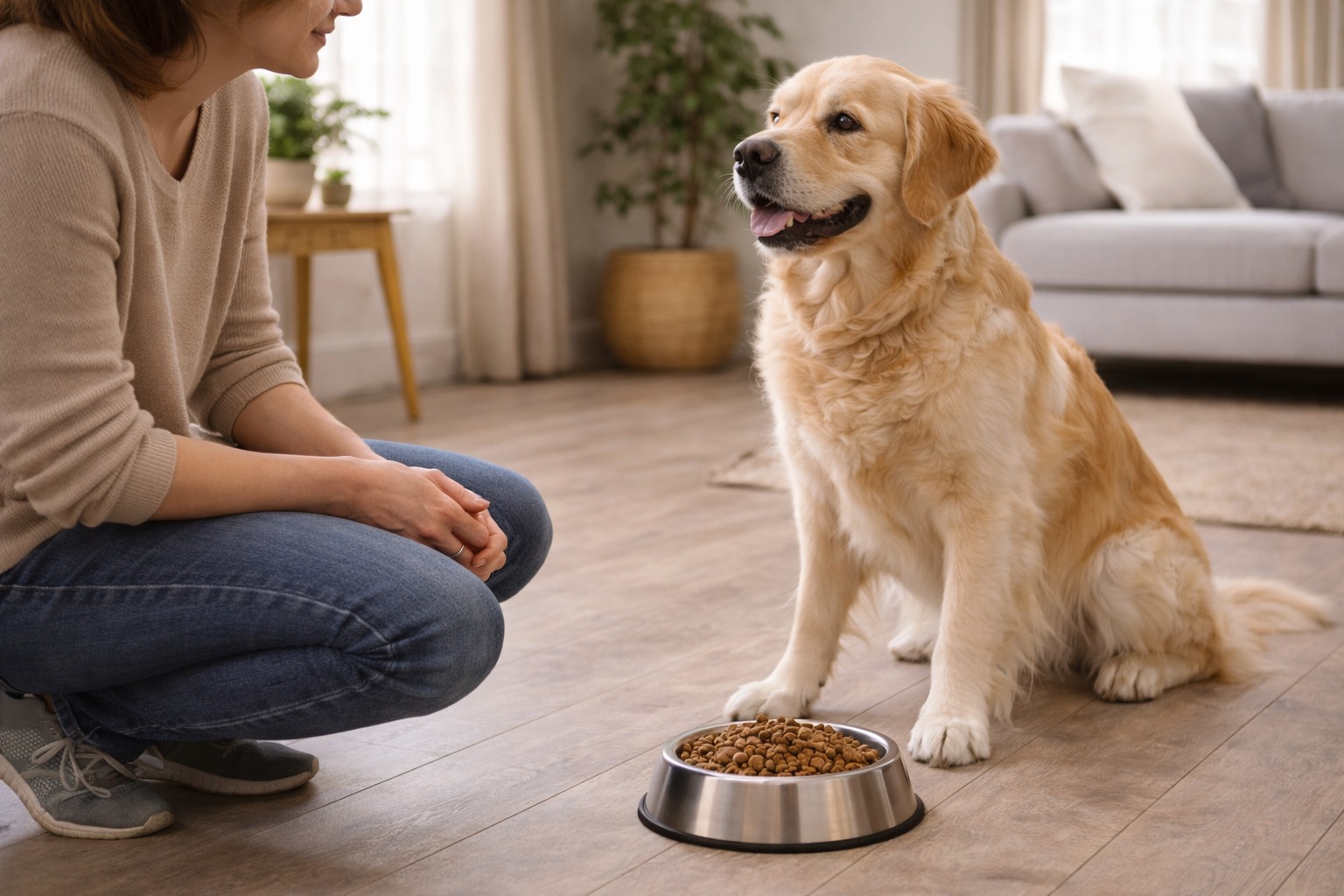
Dogs that participate in resource guarding try to defend something they respect. When someone comes near that object, the dog could throw out warning signs. The dog wants space with these signs.
Dogs can protect a lot of things. Food bowls, candies, toys, beds, or even their owners are typical items. While some dogs protect numerous objects, others only protect one. This does not imply that the dog is in charge. It indicates that the dog feels scared of losing that resource.
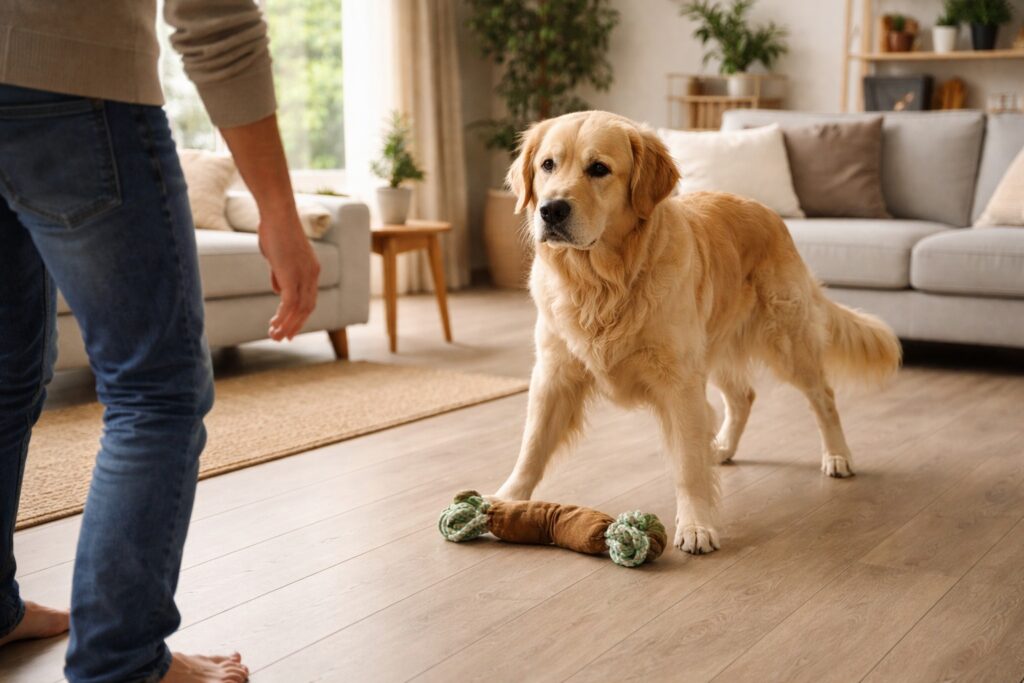
Dogs may show mild or severe resource guarding. Fixed positions and avoiding people are examples of mild guarding. If the dog feels seriously threatened, strong guarding may involve pulling, growling, or biting.
Why Resource Guarding in Dogs Develops
Dogs develop resource guarding for a variety of reasons. Certain dogs are genetically more sensitive. Others take up nervous behaviours from earlier interactions.
Puppies may begin guarding early if they compete with other puppies for food. Dogs who frequently lose food or do not receive regular meals may be afraid to lose it again. Levels of anxiety can rise, and guarding behaviour can result from rapid changes in routine.
It becomes worse with punishment. Dogs learn that people create loss when they are made to give up things. The dog becomes extra careful the next time because of this fear.
Resource guarding in dogs can be increased by hunger for food, uneven access to resources, anxiety, or training based on punishment.
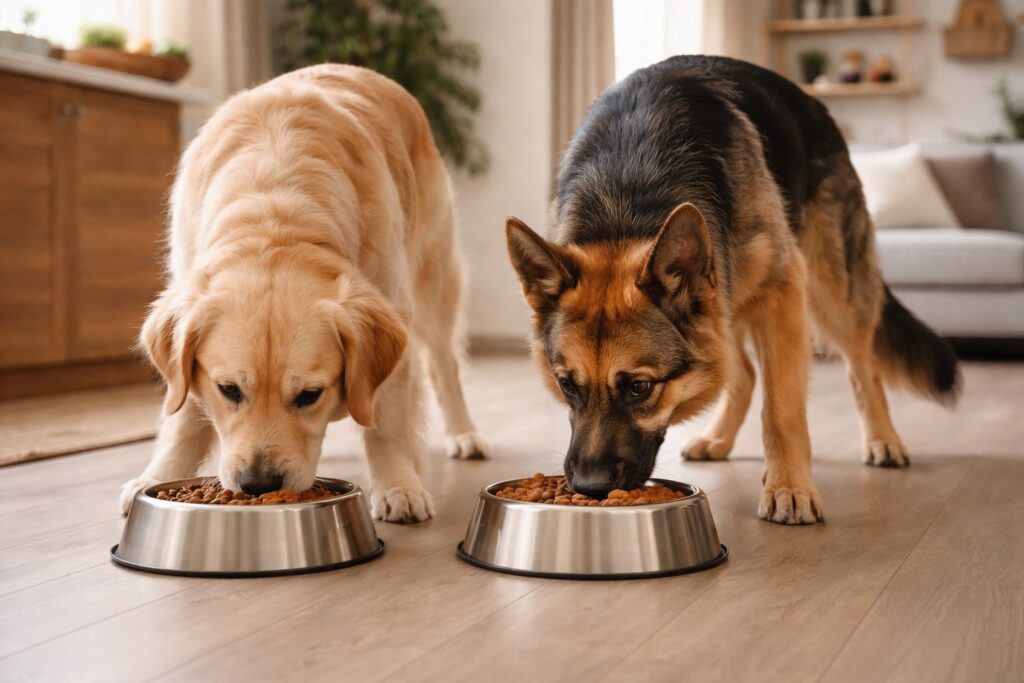
Early Signs of Resource Guarding in Dogs
Early indicators of resource guarding in dogs are frequently subtle and difficult to spot. These indicators show up before biting or growling.
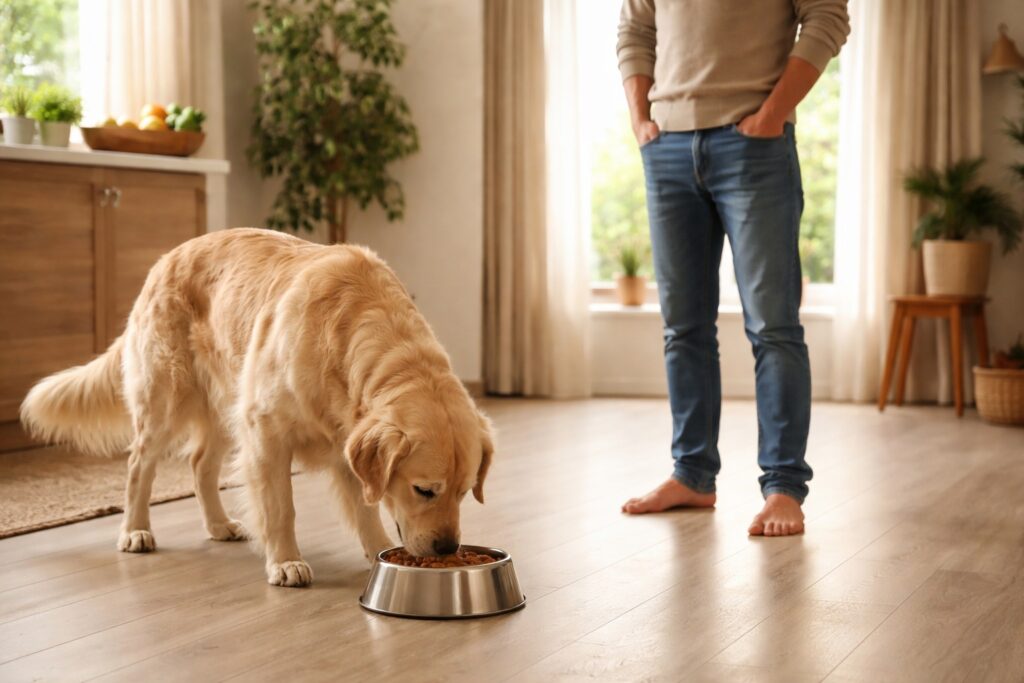
When someone walks nearby, a dog may eat more quickly. The dog might freeze in place or lower its head over the food. Some dogs stop moving altogether or give a sideways glance. These are not signs of bad behaviour but warning signs.
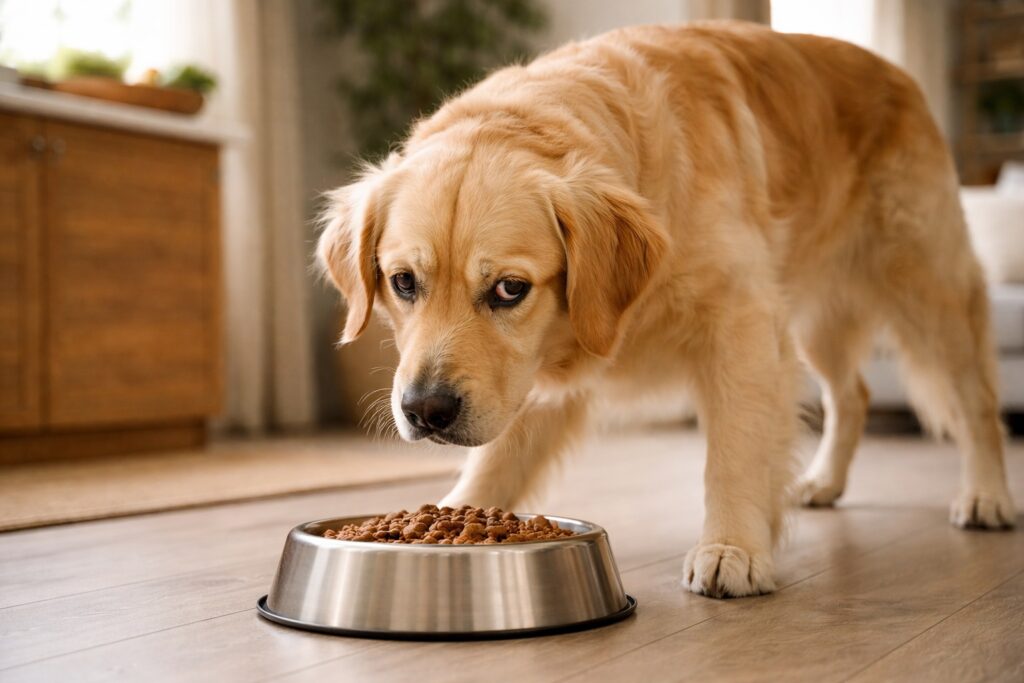
Early detection of these indicators allows owners to respond composedly. At this point, safe handling helps prevent the issue from getting worse.
Eating more quickly, lowering the head over food, stiff body positions, side-eye glances or freezing when approached are examples of early warning signs.
Is Resource Guarding in Dogs Dangerous?
If resource guarding in dogs is not managed correctly, it can become hazardous. Strong guarding can result in bites, but mild guarding is typical. This is more dangerous in homes with lots of pets or kids.
The majority of issues arise when people try to force the dog or ignore warning signs. When they are trapped or extremely afraid, dogs will bite. This does not imply that the dog is evil. It indicates that the dog doesn’t feel secure.
Owners can concentrate on safety rather than blame by being aware of the risk.
What Not to Do When Resource Guarding in Dogs
Particular behaviours cause resource guarding in dogs. Fear is increased when someone yells, hits, or takes something by force. Additionally, using alpha or dominance techniques undermines trust.
Another error is repeatedly testing the dog by having them reach for food or toys. The dog learns that guarding is necessary with each test. The behaviour intensifies over time.
For safe progress, avoiding these errors is crucial.
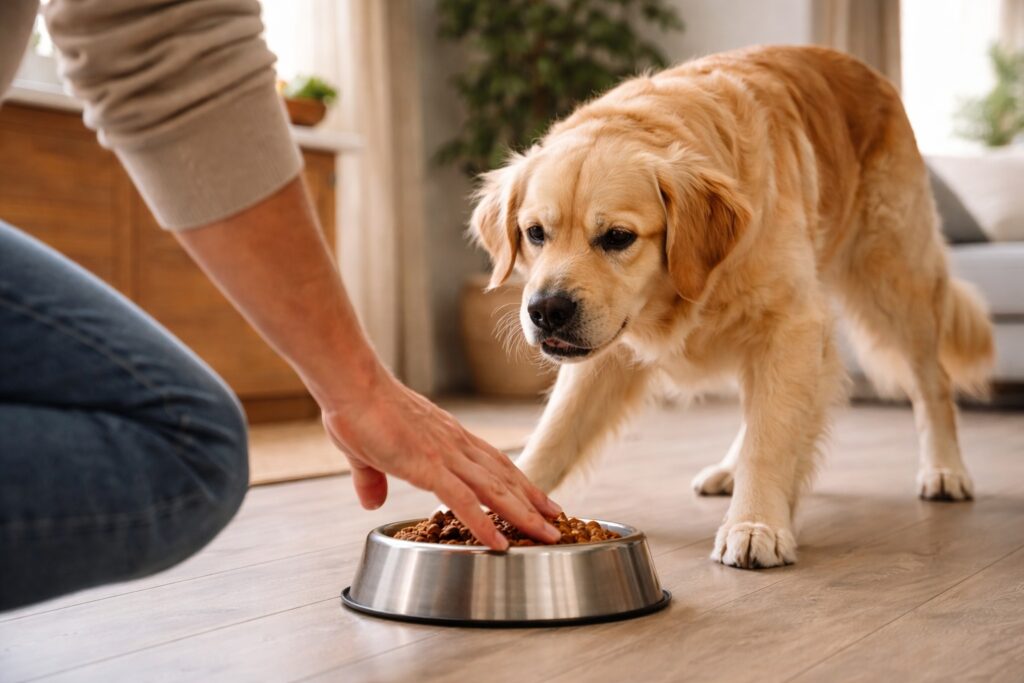
How to Stop Resource Guarding in Dogs Safely
To safely stop it in dogs, it is necessary to alter the dog’s emotions and behaviour. Making the dog feel secure when people are close to its resources is the aim.
Positive training is most effective. Moving slowly and rewarding calm behaviour are examples of this. There may be setbacks if the process is hurried.
Desensitisation and Counterconditioning
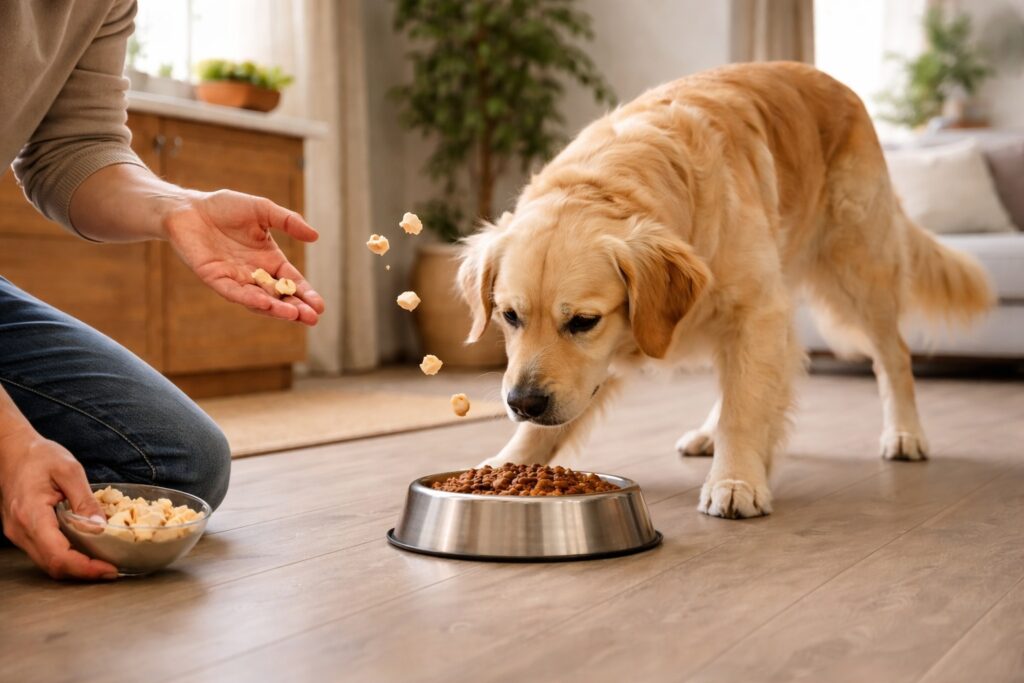
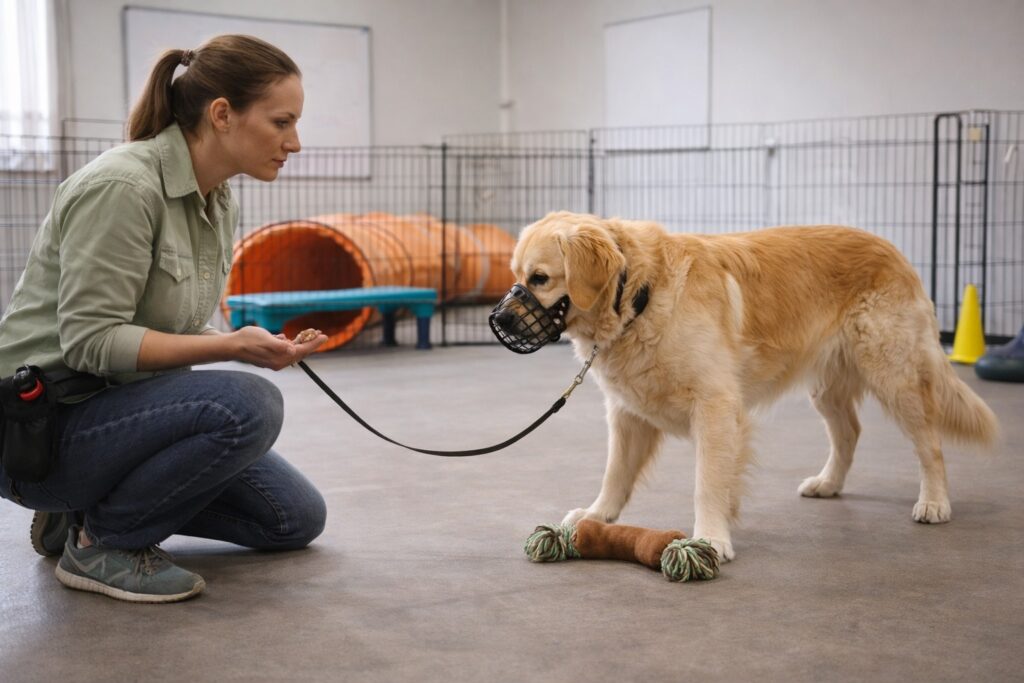
This technique keeps dogs calm when humans come close. The owner begins by throwing delicious foods from a distance. As long as the dog remains calm, the owner becomes closer. The dog finds out that people who are close to food or toys bring advantages, not problems.
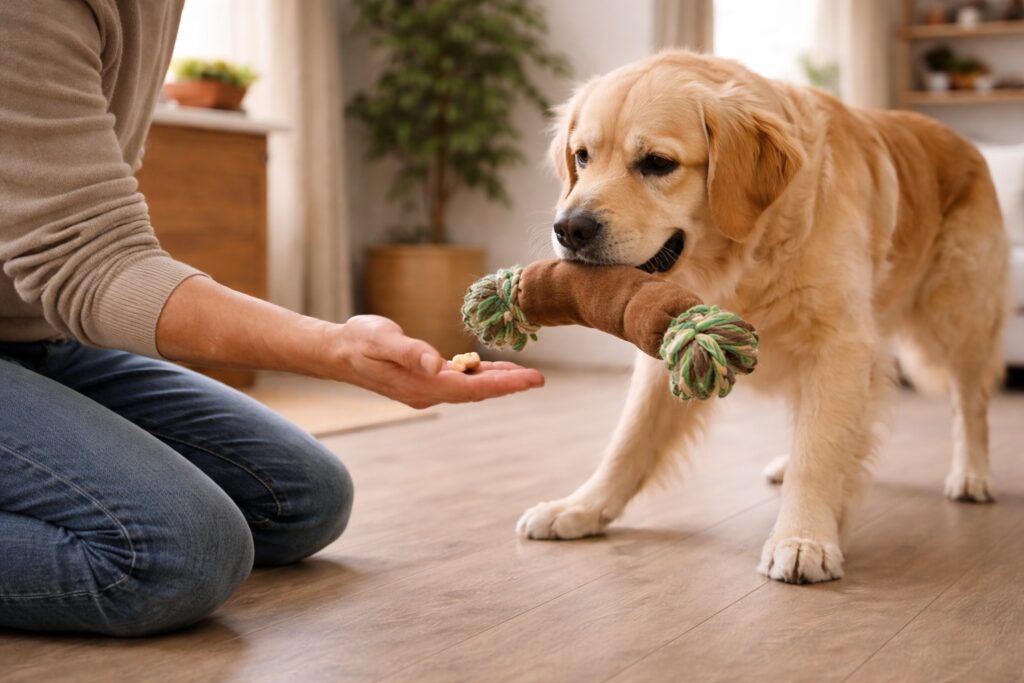
Dogs can give up things without fear through trade-up training. In return for the item, the owner offers a better reward, like a treat. The item is returned to the dog whenever it is feasible. This gives the dog confidence that it’s safe to give things up.
Teaching Trade-Ups
Dogs can give up things without fear through trade-up training. In return for the item, the owner offers a better reward, like a treat. The item is returned to the dog whenever it is feasible. This gives the dog confidence that it’s safe to give things up.
Managing Resource Guarding in Dogs at Home
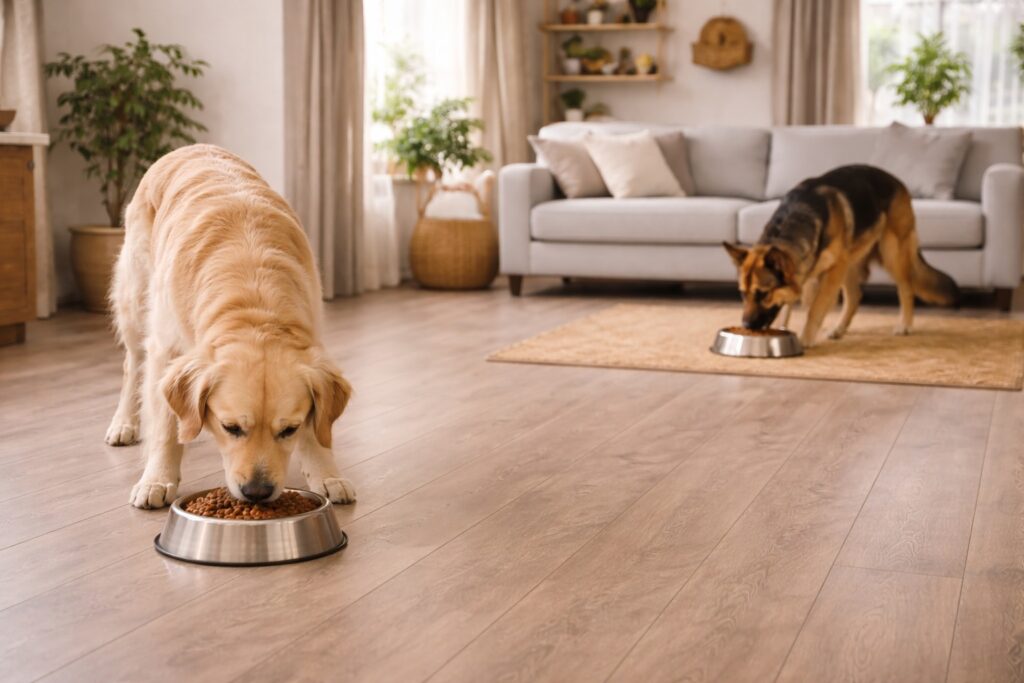
While training is in progress, management helps guarantee everyone’s safety. Dogs who are fed separately feel less stress. Only when control is possible should high-value items be distributed. Accidents are avoided, and long-term progress is supported by effective management.
Preventing Resource Guarding in Dogs From Puppyhood
It is much easier to prevent it in dogs than to treat it after the fact. Puppies pick up knowledge quickly from their first days. Puppies do not feel the need to defend resources when they are comfortable around food, toys, and people.
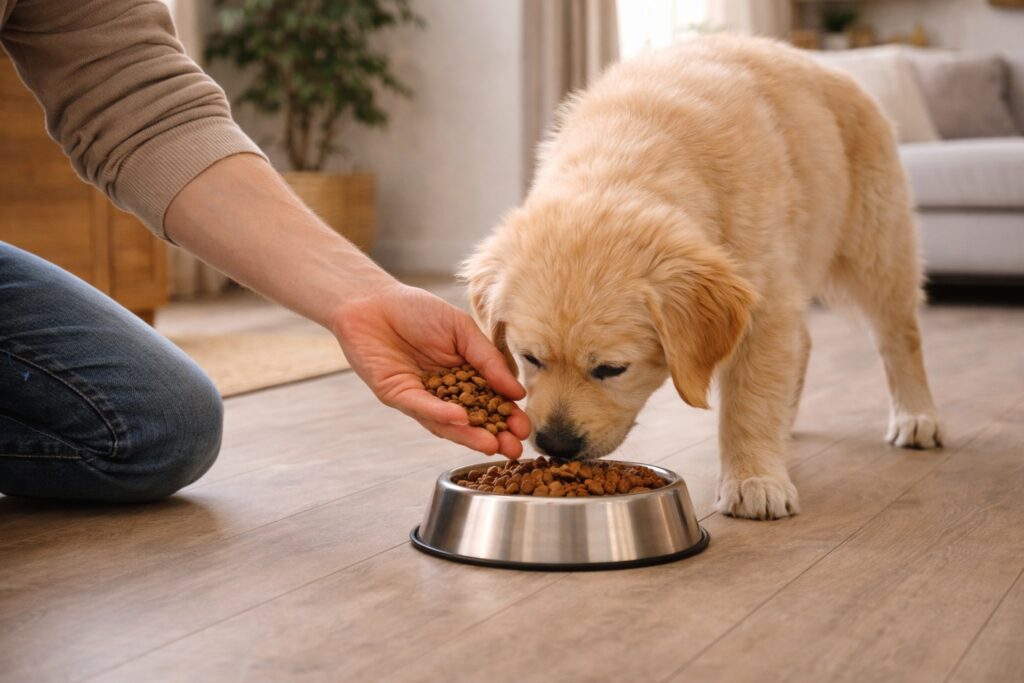
Giving yourself a small amount of the puppy’s meals is one useful method. The puppy learns from this that human hands are beneficial instead of dangerous. In addition, gentle handling during feeding fosters trust. Puppies should be taught that it’s safe and normal for people to approach their food.
It’s crucial to reward peaceful conduct around food and toys. Praise or treats can help reinforce a puppy’s ability to remain calm when someone walks close by. Steer clear of removing things abruptly, as this may instil fear and early guarding tendencies.
Resource Guarding in Dogs and Children
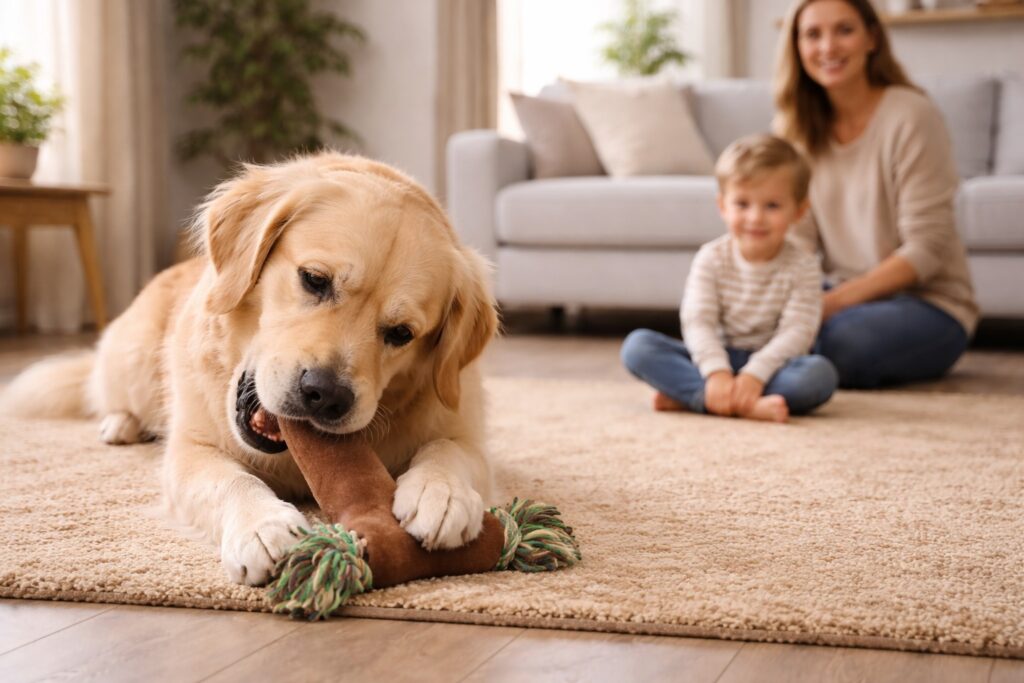
Special attention must be given to resource guarding in children and dogs. Youngsters may be unable to read dog body language and may inadvertently cross boundaries. Children touching food bowls, toys, or resting areas may cause stress in dogs.
It is easier to avoid issues when children are taught basic rules. Dogs that are eating or chewing should not be touched by children. Additionally, they should refrain from removing toys from a dog’s mouth. Even with friendly dogs, there is always a need for supervision.
Additionally, dogs ought to have secure areas free from children’s interference. Respecting these limits lowers stress levels at home and safeguards both the dog and the child.
When to Seek Professional Help for Resource Guarding in Dogs
In some situations of resource guarding in dogs, it is necessary to seek professional assistance. This occurs in circumstances when a dog bites others, displays extreme aggression, or excessively guards different resources. In such situations, it is not advisable to rely on personal efforts to address the problem.
Professionally qualified dog trainers and animal behaviour experts employ safe and well-structured approaches. They reduce fear and help with step-by-step instructions for handling the dogs safely. Professional handling of the dogs avoids errors that may worsen the guard function of the dogs.
Early intervention often leads to a better outcome and a less stressful process for everyone.
What is resource guarding in a dog?
Resource guarding in dogs is a behaviour where a dog tries to control, protect, or defend something it considers valuable. That “resource” can be food, treats, toys, bones, a sleeping spot, territory, or even a person.
When a dog feels that someone might take this resource away, it may respond with behaviours meant to warn others to stay away. These behaviours exist on a spectrum from mild to severe.
What is resource guarding in dog behaviour?
Resource guarding in dog behaviour is when a dog defends or protects something it values because it fears that the item may be taken away. The dog uses warning signals to keep people or other animals at a distance from that resource.
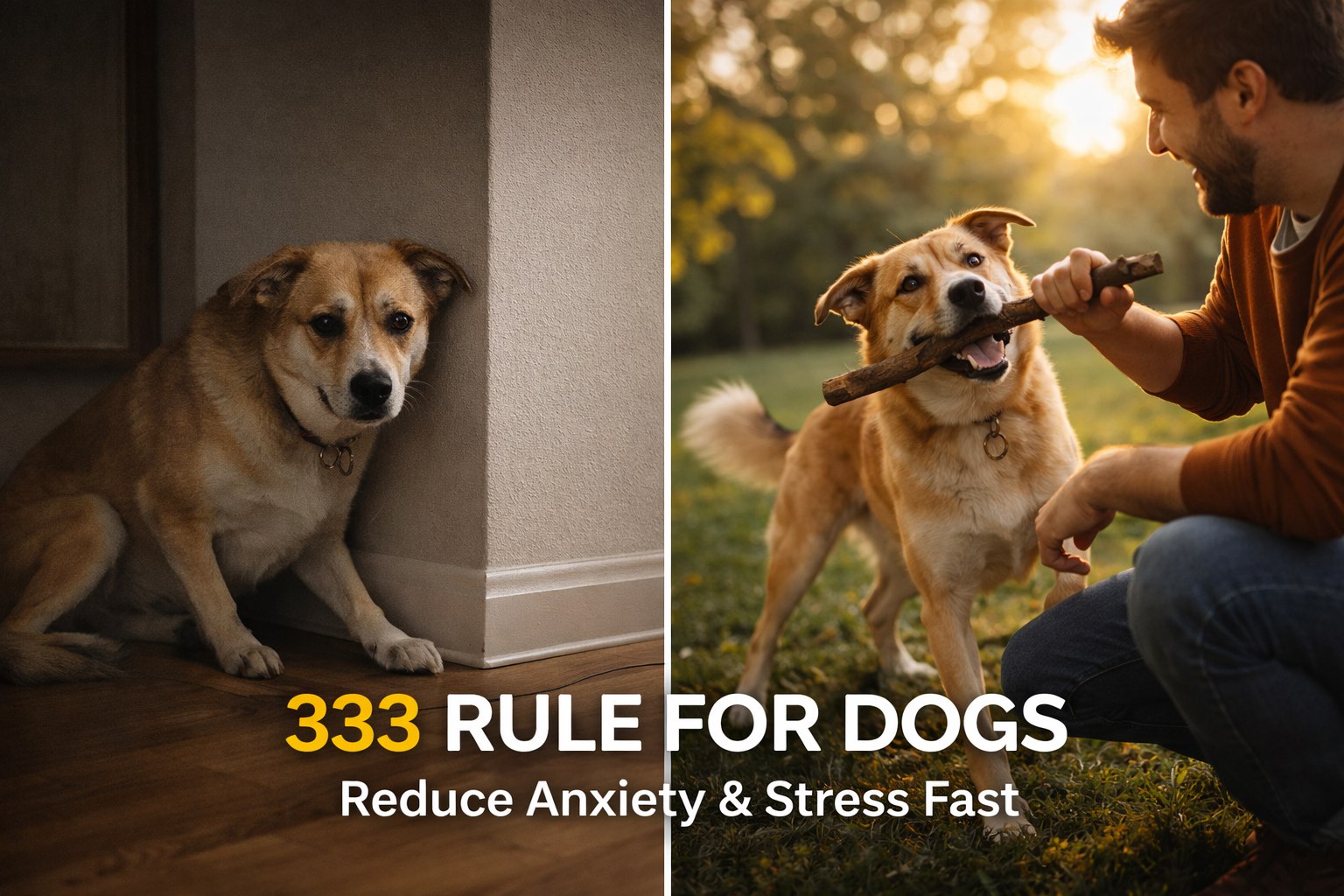
What is the 3-3-3 rule for dog anxiety?
The 3-3-3 rule for dog anxiety is a guideline used to describe how a dog, especially one that has been rescued, rehomed, or newly adopted, typically adjusts to a new environment over time. It helps set realistic expectations for behaviour and emotional changes.
What is the cause of resource guarding?
The cause of resource guarding in dogs is primarily fear of losing something they value. The behaviour is driven by emotional insecurity, not dominance or stubbornness.
Conclusion
Guarding resources in dogs is an instinctual behaviour that is fear-based rather than spite-based. This means that dogs are resource guarding because they are unsure or apprehensive of losing that resource. When owners become aware of this concept, they can react in a non-reactionary manner rather than punishing their dog for it.
Removing it in dogs safely requires time, patience, and trust-building. With positive reinforcement and effective management, most dogs will see significant improvement. When done calmly and respectfully, this helps build confidence and leads to a safer, happier home.